What Can This Equipment Do? DSC 250 and DMA 850 Expand Material Analysis Capabilities
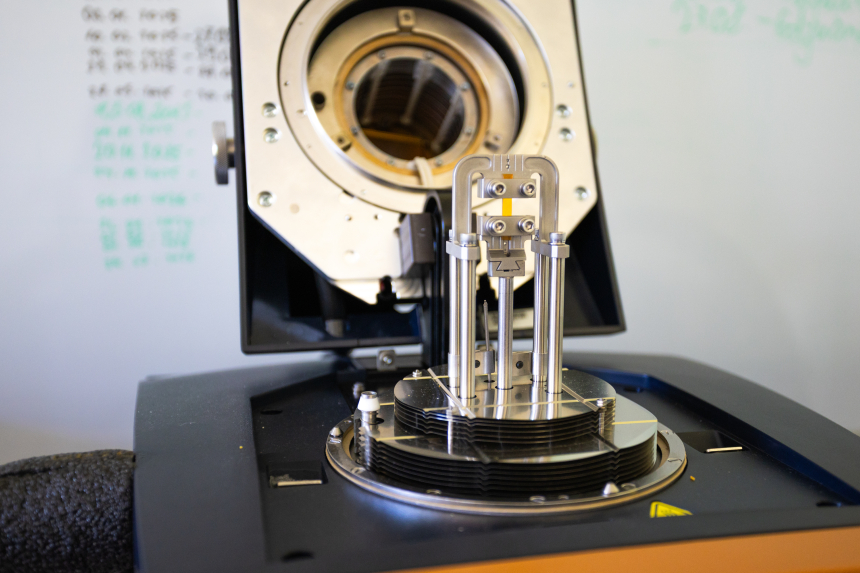
Materials science laboratory equipment is often key to gaining a deeper understanding of how substances behave under extreme conditions or during different transformation processes. Just as a microscope provides insight into microstructure, the TA Instruments Discovery DSC 250 differential scanning calorimeter and DMA 850 dynamic mechanical analyser allow researchers to “see” the thermal and mechanical properties of materials that cannot be observed with the naked eye.
Together, these two instruments form a powerful analytical toolkit that provides comprehensive information about material behaviour.
Discovery DSC 250: A Detector of Thermal “Behaviour”
The DSC 250 differential scanning calorimetry (DSC) instrument is designed for the precise study of thermal transitions in materials. It operates as a sensitive instrument that measures the heat flow associated with changes in a material during heating or cooling.
- What does it reveal? Researchers can determine a material’s melting temperature, crystallisation processes, glass transition temperature (Tg), and other thermal effects.
- Why is this important? This information is critical for understanding how polymers, natural substances such as lignin, pharmaceutical preparations, or composite materials will respond under real operating conditions – for example, whether a material will become brittle at low temperatures or lose its shape at high temperatures.
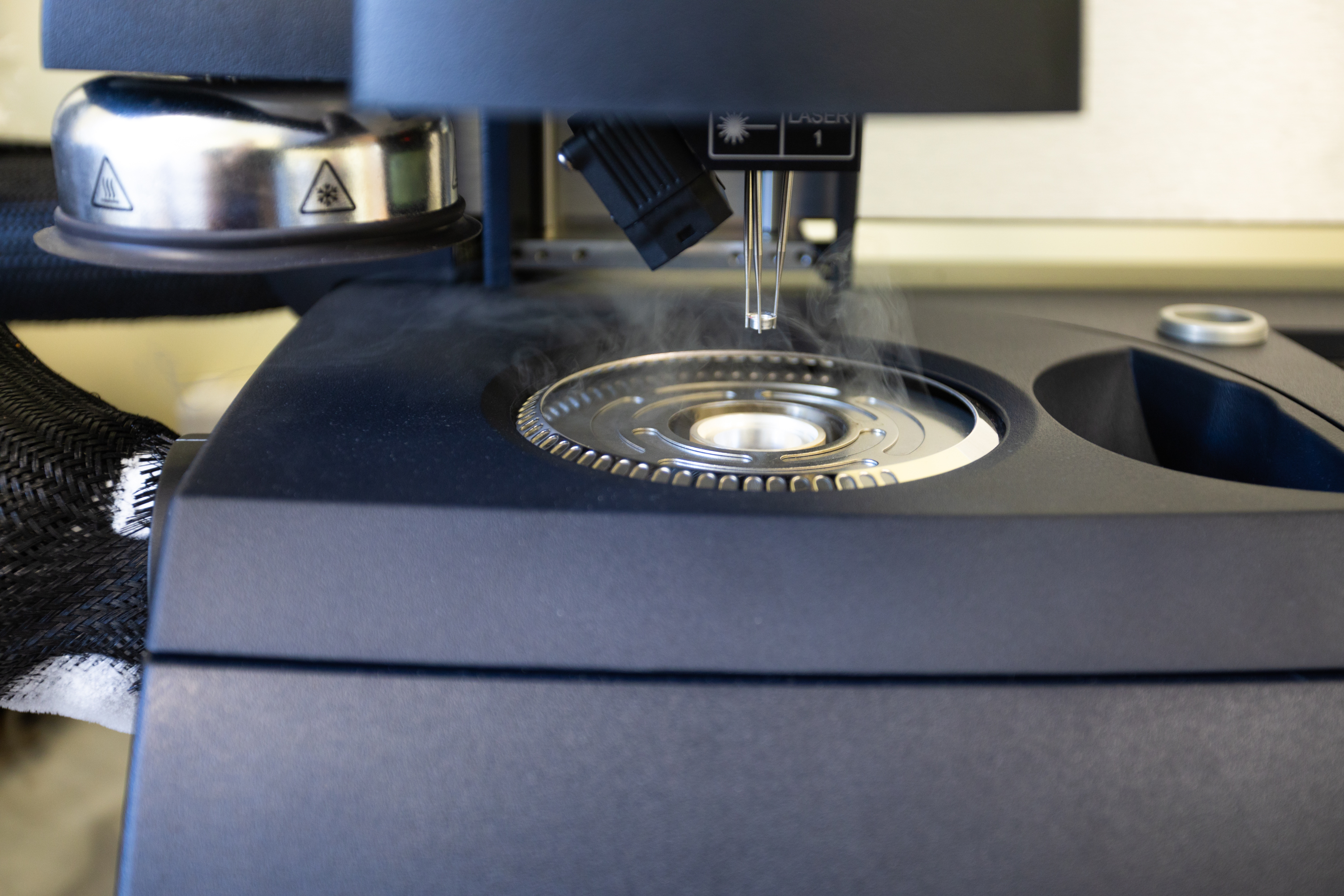
Discovery DSC 250
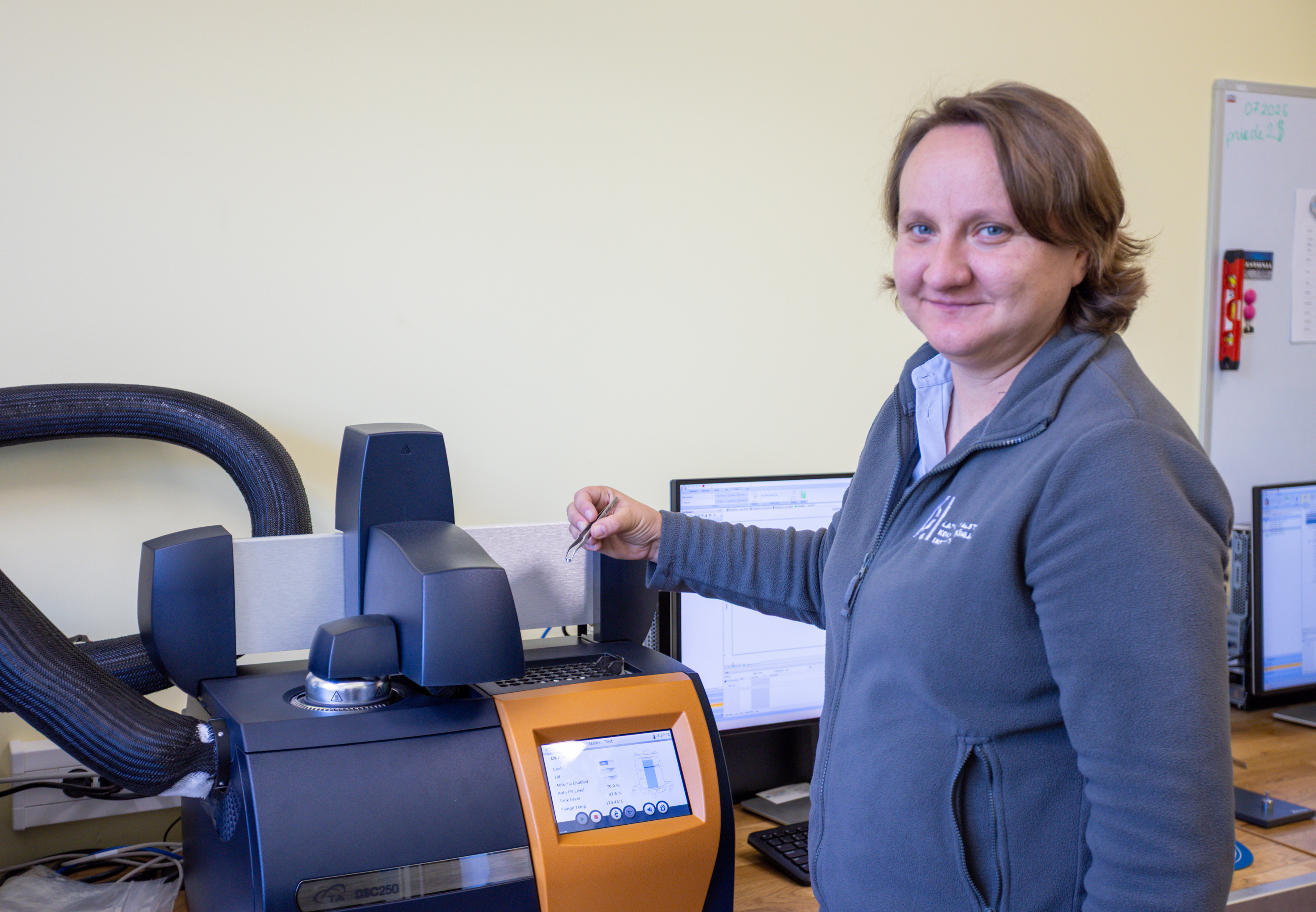
Researcher Laima Vēvere next to the new DSC instrument
Discovery DMA 850: A Measure of Mechanical Strength and Viscoelasticity
The DMA 850 dynamic mechanical analyser, meanwhile, focuses on how materials respond to mechanical loading. It allows researchers to accurately measure how a material’s stiffness and elasticity change depending on time, temperature, or frequency.
- What does it reveal? The DMA 850 reveals the viscoelastic properties of a material – the extent to which a material can recover its shape after loading (elasticity) and how much energy it dissipates as heat (viscosity/damping). It can work with different types of deformation, such as tension, compression, or bending.
- Why is this important? The instrument is essential for the development of new, durable materials. It helps predict how long a material will withstand fatigue loading, whether it will retain its properties under vibration, and how its mechanical stability will change in response to temperature fluctuations.
Just as a microscope reveals the physical “landscape” inside a material, the DSC 250 and DMA 850 reveal the material’s “personality” – how it responds to environmental conditions and mechanical forces. By using these tools together, scientists and engineers gain a complete picture needed to create next-generation materials with precisely the properties required by modern industry.
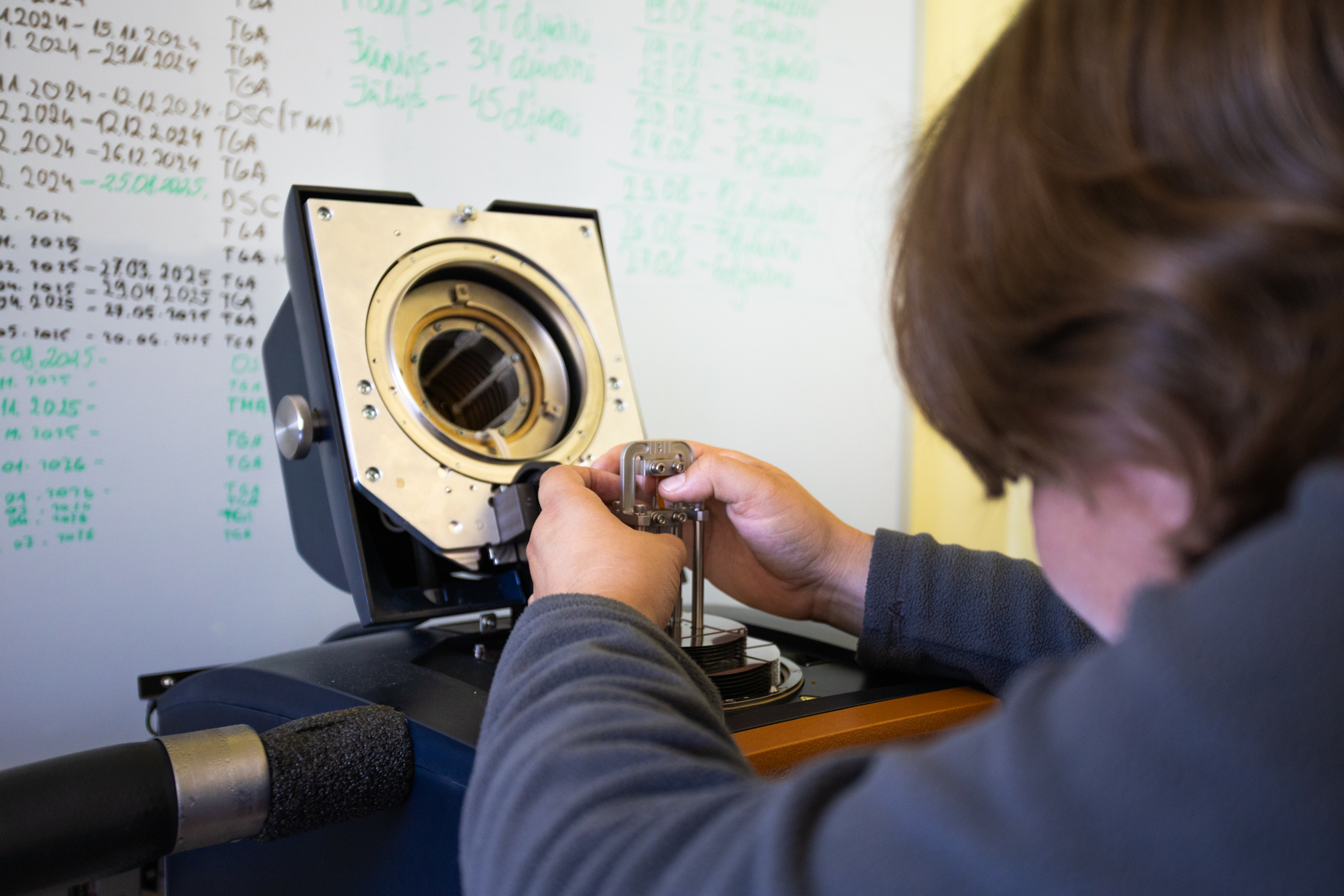
Researcher Laima Vēvere placing a sample into the Discovery DMA 850
Applications in the Analysis of Polymers from Renewable Raw Materials
Both instruments will help researchers investigate the behaviour of various polymers in several projects.
In the fundamental and applied research project “Solid Polyurethane Foam as Cryogenic Insulation for Future Zero-Emission Commercial Aircraft (PUR4LH2)”, the instruments will help determine whether polyurethane derived from renewable raw materials can withstand cryogenic temperatures below –150 °C.
In the fundamental and applied research project “Thermally Reprocessable β-Amino Polymers with a High Degree of Crosslinking Derived from Renewable Raw Materials (TreResin)”, materials known as vitrimers are being studied, which can be reprocessed multiple times. DSC enables researchers to assess the effect of each reprocessing cycle on the material’s thermal properties and glass transition temperature (Tg). Similarly, DMA tests are used on repeatedly reprocessed samples to assess their viscoelastic properties and changes in crosslinking density after each reprocessing cycle.
In the postdoctoral research project SuReComp (1.1.1.9/LZP/1/24/031), the instruments will play an important role in the development and characterisation of new thermosetting polymers and natural fibre-reinforced composite materials derived from renewable raw materials. The Discovery DSC 250 will be used to determine the glass transition temperature of the developed polymers and to evaluate how the chemical structure of the raw materials affects the thermal properties of the materials. The DMA 850, meanwhile, will be used to characterise the viscoelastic properties and stiffness of polymers and composite materials, as well as changes in these properties under the influence of temperature, and to provide a deeper assessment of the polymer network structure. The combined use of both instruments is essential for establishing relationships between the chemical structure of the synthesised components, the structure of the polymer network, and the final properties of the resulting materials.
In the M-ERA.NET project “Development of bio-based polymers with covalently adaptable networks for recyclable natural fiber reinforced composite production” (BioCAN) and the Horizon Europe project “Synthesis of bio-based and biodegradable polymers from monomers derived from renewable biological waste using biocatalysis and green chemistry to advance the European circular bioeconomy” (Polymers-5B), DMA will help determine how stiff or flexible the new polymers and composite materials are and how their properties change under mechanical loading and temperature. DSC, meanwhile, will be used to study material behaviour during heating and cooling in order to identify suitable conditions for their production and processing. In the BioCAN project, both methods will help assess the retention of properties of materials intended for transport components after repeated recycling, while in the Polymers-5B project, they will help evaluate the potential of materials derived from renewable raw materials to replace fossil-based polymers in textiles, automotive components, and furniture.
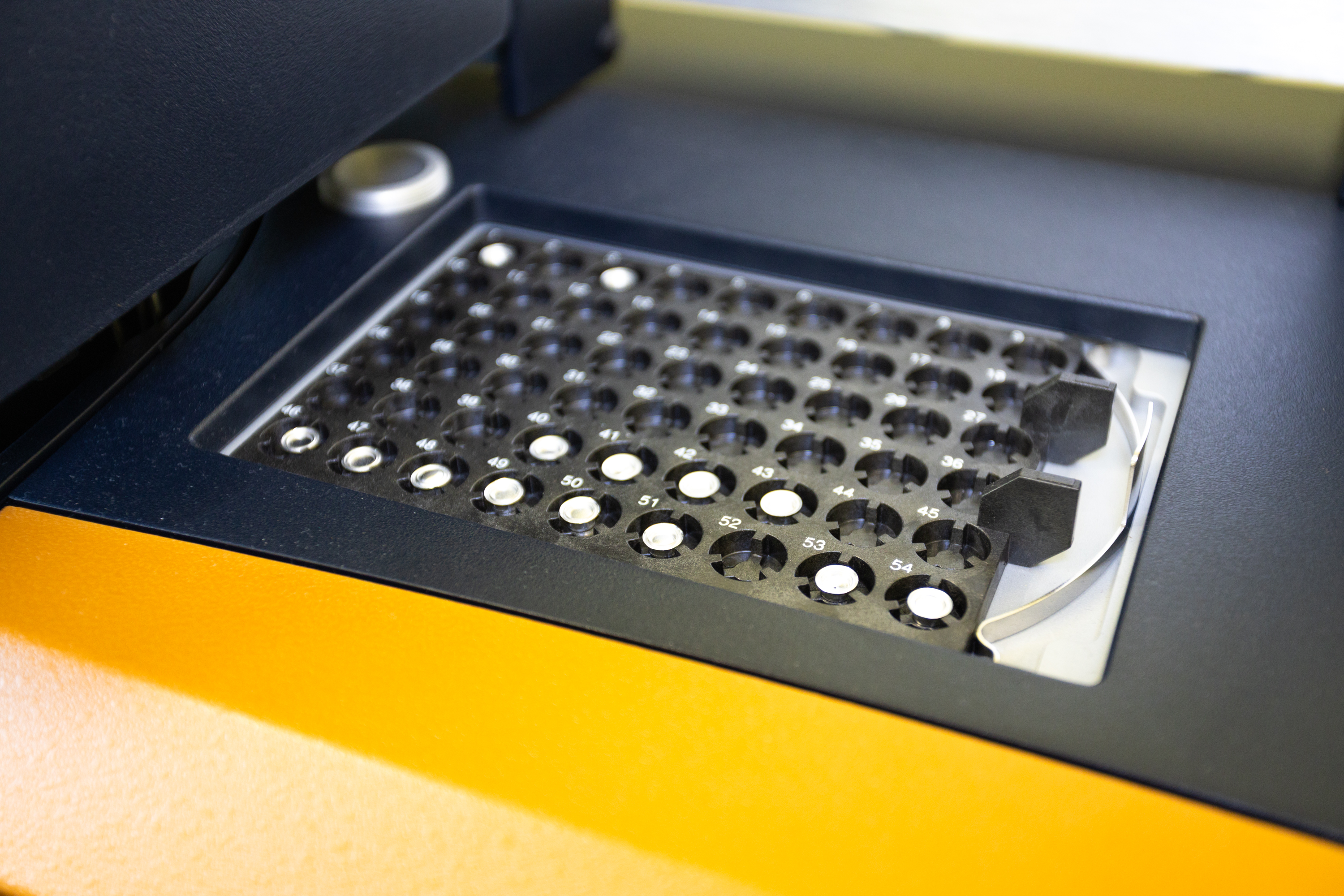
Prepared samples for DSC analysis
The equipment was purchased within Project No. 1.1.1.2/1/25/I/003 “Development of the Bioeconomy Excellence Centre at the Latvian State Institute of Wood Chemistry (WoodChemPlus)”. The project is co-financed by the European Union.