Shadow Day 2026 at the Latvian State Institute of Wood Chemistry: students explore science firsthand
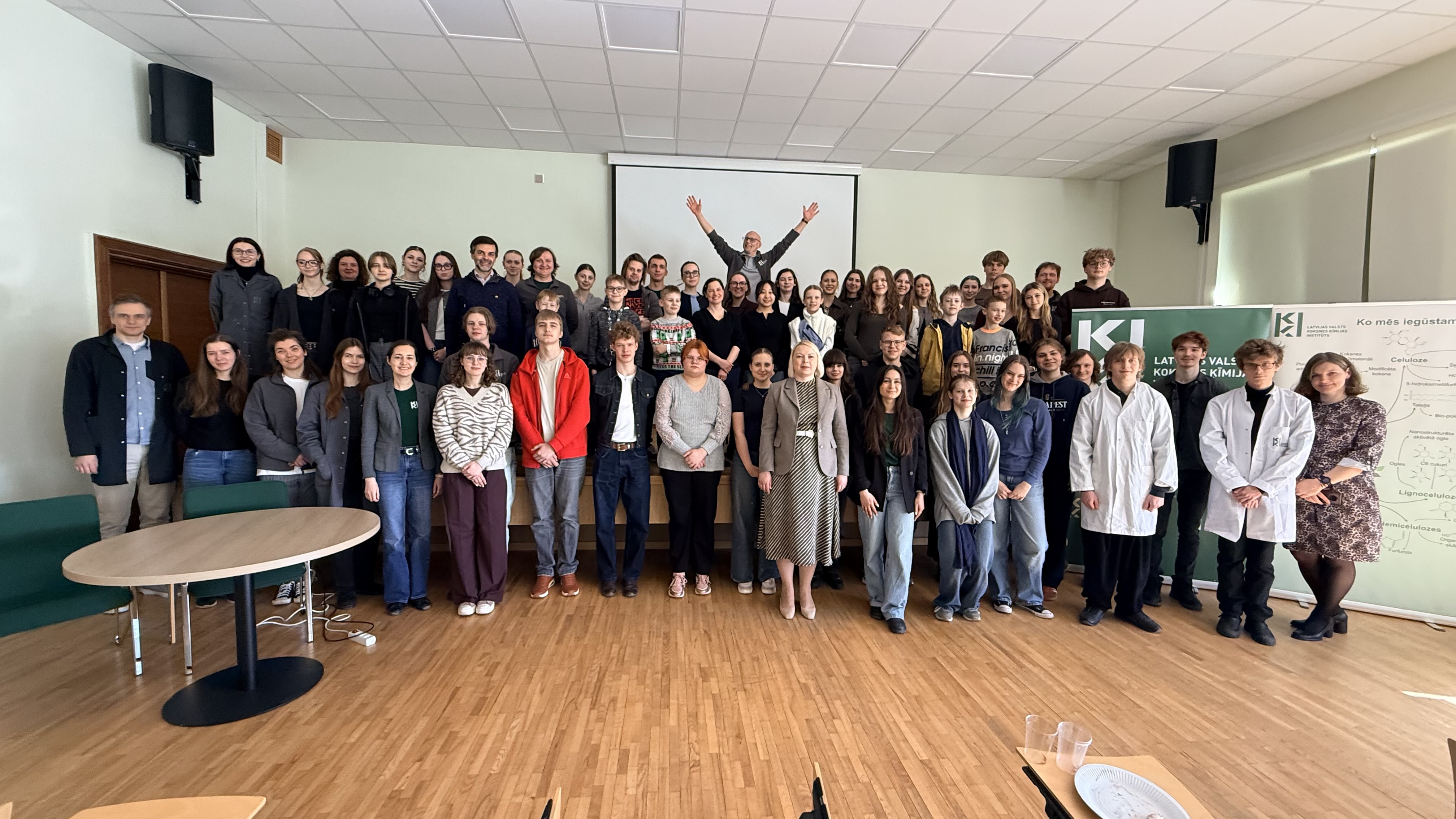
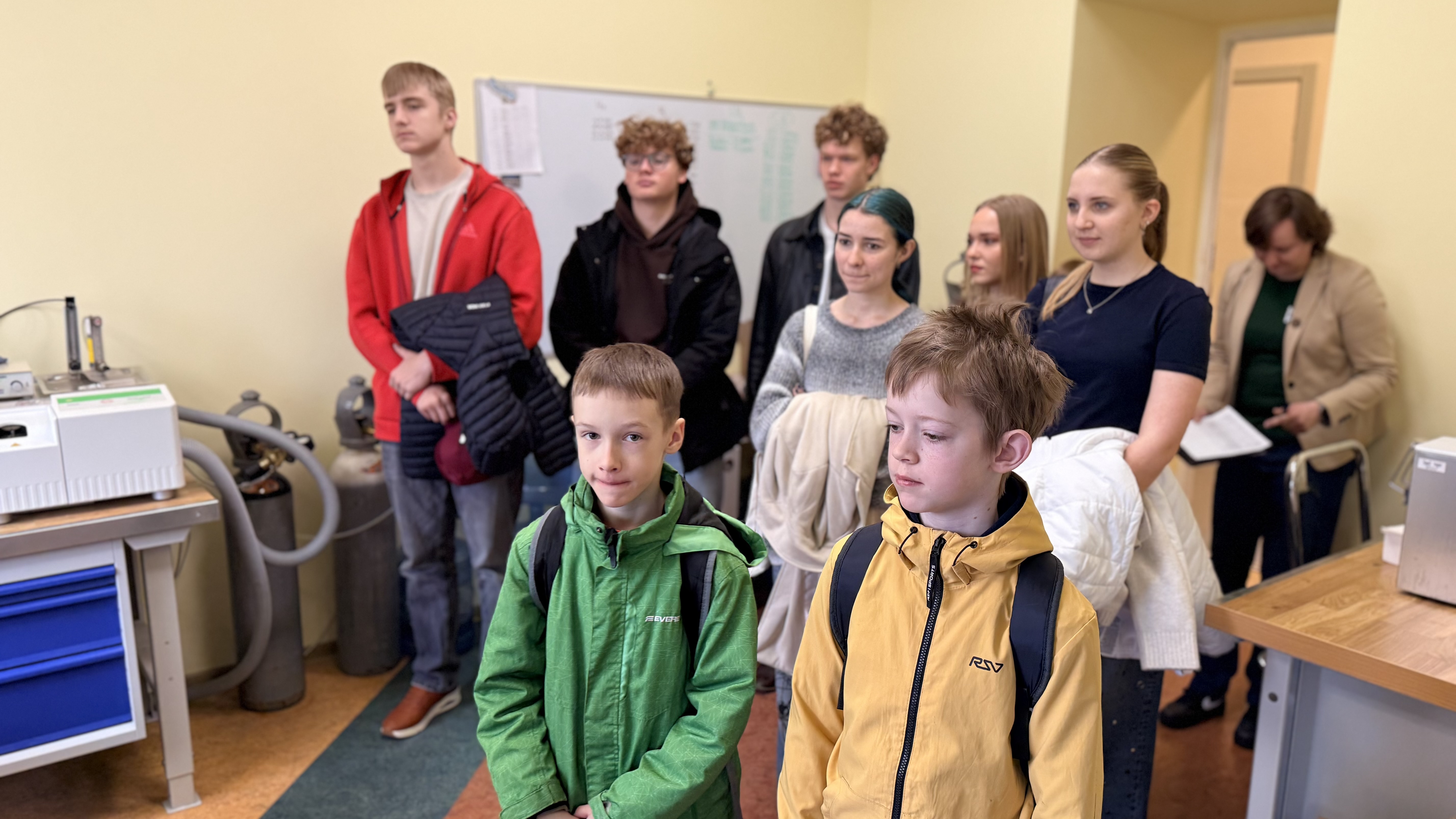
Today, as part of Shadow Day, the Latvian State Institute of Wood Chemistry (LSIWC) opened its doors to students interested in experiencing the world of science firsthand.
A total of 37 students from various schools across Latvia – including Riga, Jelgava, and other regions – visited the institute. Most participants were in grades 10–11, although younger students also took part, demonstrating an early interest in science.
Throughout the day, students visited laboratories, met scientists and engineers, and learned how work is carried out with wood, polymers, and other materials. They also toured the LSIWC Pilot-Scale Hangar, where they could observe how technologies are scaled up from laboratory research to practical applications.
“Each student was accompanied by a researcher throughout the day, providing an opportunity not only to observe but also to ask questions and discuss study and career opportunities in science. At the same time, Shadow Day activities also served as part of ongoing research projects, contributing to knowledge dissemination,” said LSIWC Shadow Day coordinator Mg. chem. Laima Vēvere.
Polymer Laboratory
Shadow Day in the Polymer Laboratory took place in a particularly dynamic and hands-on atmosphere. Students had the opportunity not only to observe laboratory work but also to actively participate in experiments and gain a practical understanding of the fundamentals of materials science.
Under the supervision of PhD Aiga Ivdre, students were introduced to the development of bio-based composites (No. lzp-2024/1-0071, TOMPosite), while in the project led by PhD Anda Fridrihsone (LZP FLPP No. lzp-2024/1-0333, TReResin) the synthesis and properties of polymers derived from renewable raw materials were demonstrated.
Within the project led by Dr. sc. ing. Jānis Andersons (LZP FLPP No. lzp-2025/1-0404, BARRIER) students shadowed engineer Mg. sc. ing. Nanija Dambe. In the project led by Dr. sc. ing. Vladimirs Jakušins (LZP FLPP No. lzp-2024/1-0652, PUR4LH2), researcher Mg. chem. Laima Vēvere demonstrated the development of cryogenic insulation materials. In the project led by Dr. sc. ing. Uģis Cābulis (LZP FLPP No. lzp-2024/1-0277, RecPUR), students, together with researcher Mg. sc. ing. Beatrise Stūre-Šķēla, explored the recycling possibilities of polyurethane materials.
Additionally, the project led by Dr. sc. ing. Uģis Cābulis, Building Healthy Beverage Ecosystems to Prevent Childhood Obesity (4Sir2, No. 101181746), was highlighted, demonstrating how polymer research can also be linked to public health and the development of sustainable products.
Students were also introduced to microwave-assisted synthesis, which enables chemical reactions to proceed faster and more efficiently, and took part in titration experiments, where precision and color change reveal the visual side of chemistry.
Through foaming experiments, students discovered that science can be engaging and exciting, while density determination using samples of different shapes helped them understand the physical properties of materials in practice. They also gained insight into life cycle assessment, which allows the evaluation of a product’s environmental impact.
In addition to laboratory work, students were introduced to the less visible side of a scientist’s profession – securing research funding, preparing scientific publications, and participating in conferences.
Laboratory of Wood Biodegradation and Protection
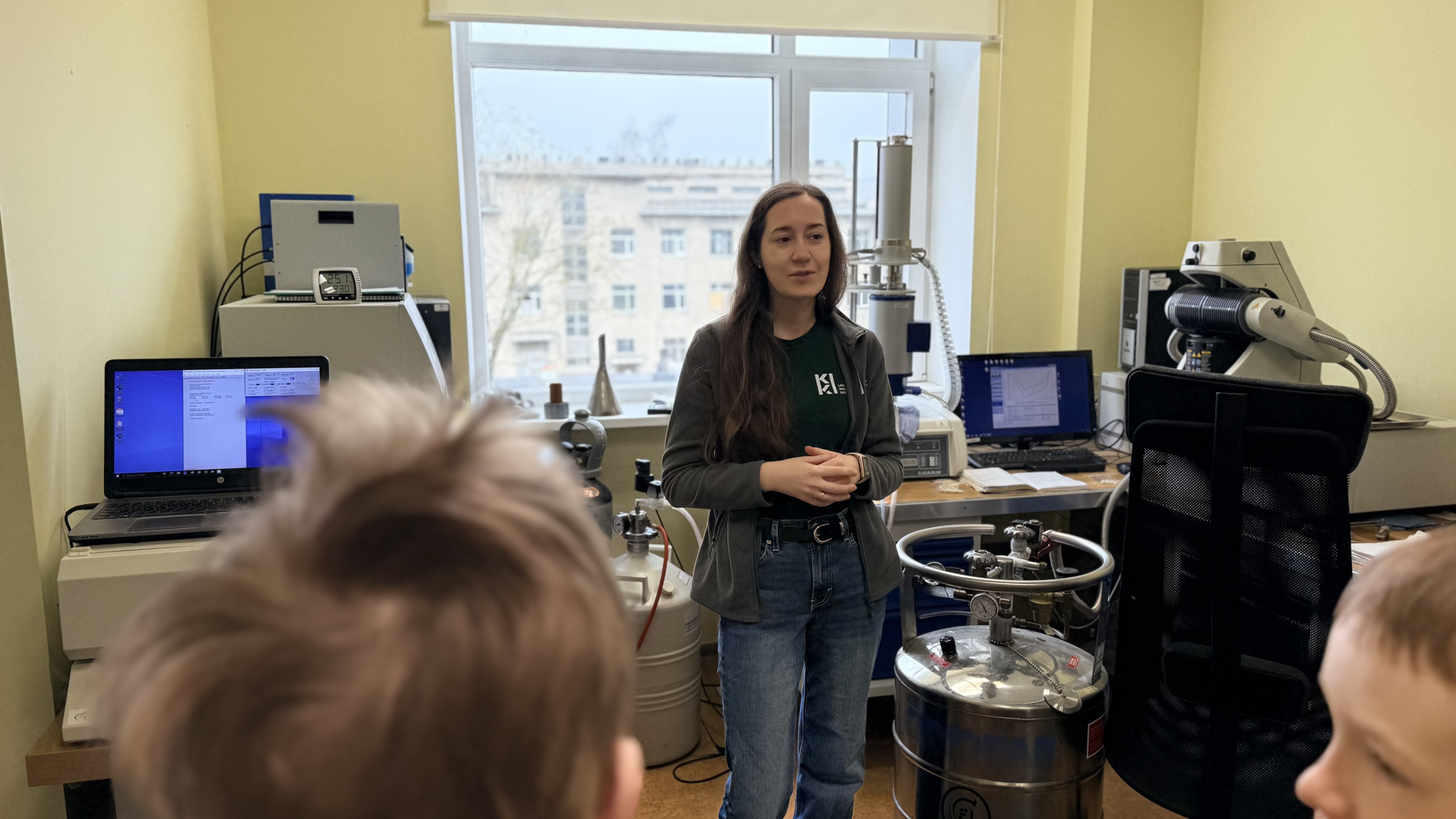
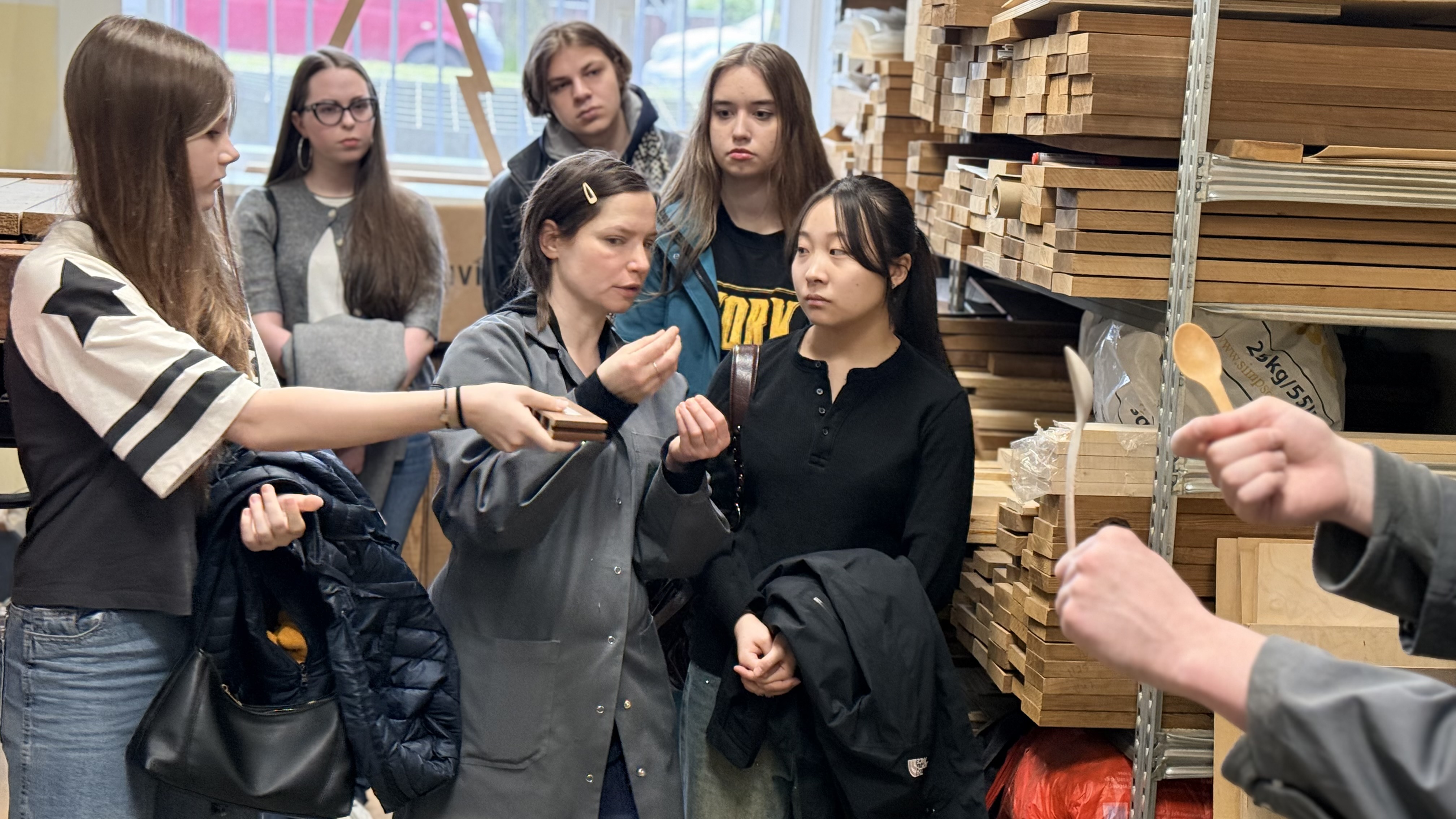
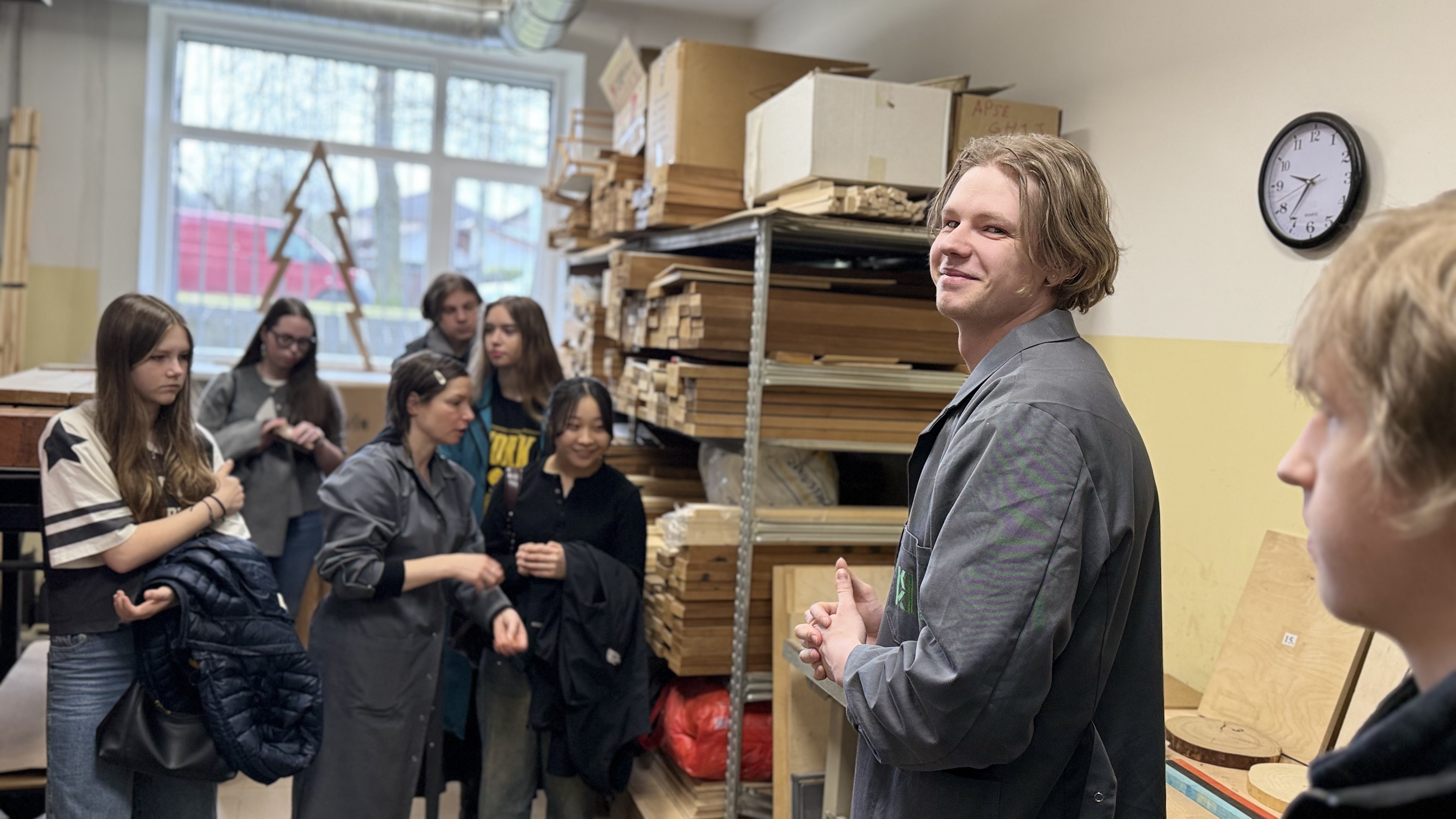
At the Laboratory of Wood Degradation and Protection, students were welcomed by researcher PhD Errj Sansonetti, scientific assistant Mg. chem. Lotārs Olivers Vasiļjevs, and student Monta Druviņa, who demonstrated how research is applied to develop sustainable solutions.
The activities were related to the projects Sustainable reuse of wood from removed utility poles (SuReUP, No. 1.1.1.3/1/24/A/012) and “Development of Wood Surface Structures for Sustainable Outdoor Products” (WOODy, No. 1.1.1.3/1/24/A/011). Students learned how the lifespan of wood materials can be extended and how new, durable wood products for outdoor applications are developed.
Biorefinery laboratory
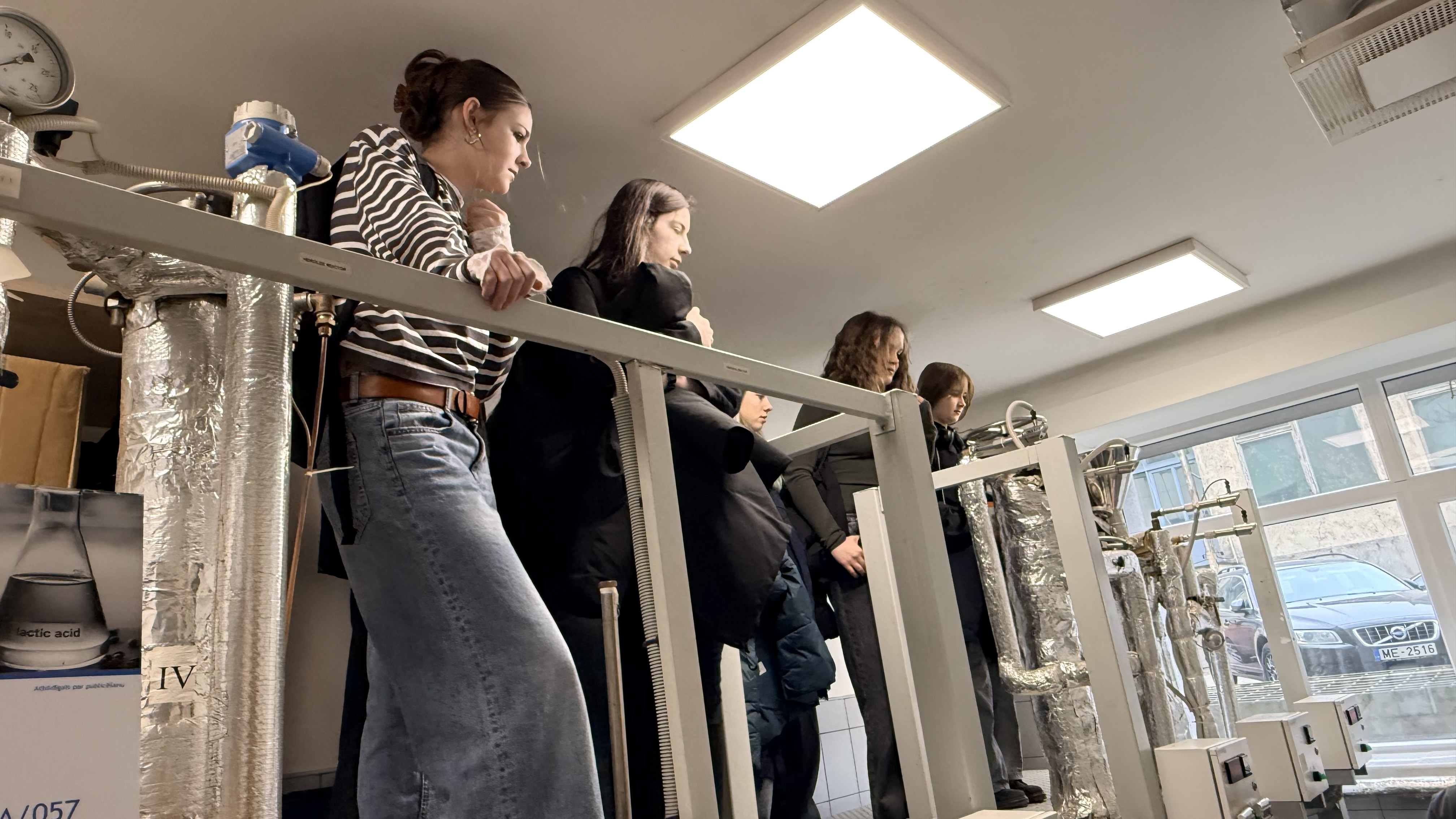
In the Biorefining Laboratory, students were introduced to biomass processing and the development of new high value-added products.
Under the supervision of Dr. chem. Kristrīne Meile, the project SugarPot (Nr. 1.1.1.9/LZP/1/24/005)was presented, focusing on the utilization of anhydrosugars obtained from wood pyrolysis. In the project led by PhD Daniela Godiņa, “Bio-based polymer sorbent synthesis from extractives derived from birch bark” (BirchSorb, Nr. 1.1.1.9/LZP/1/24/029), students learned about the development of new sorbent materials from natural raw materials.
Meanwhile, in the ERAF project led by Dr. sc. ing. Māris Puķe (Nr. 1.1.1.3/1./24/A/057), it was demonstrated how underutilized raw materials can be transformed into valuable resources for the bioeconomy.
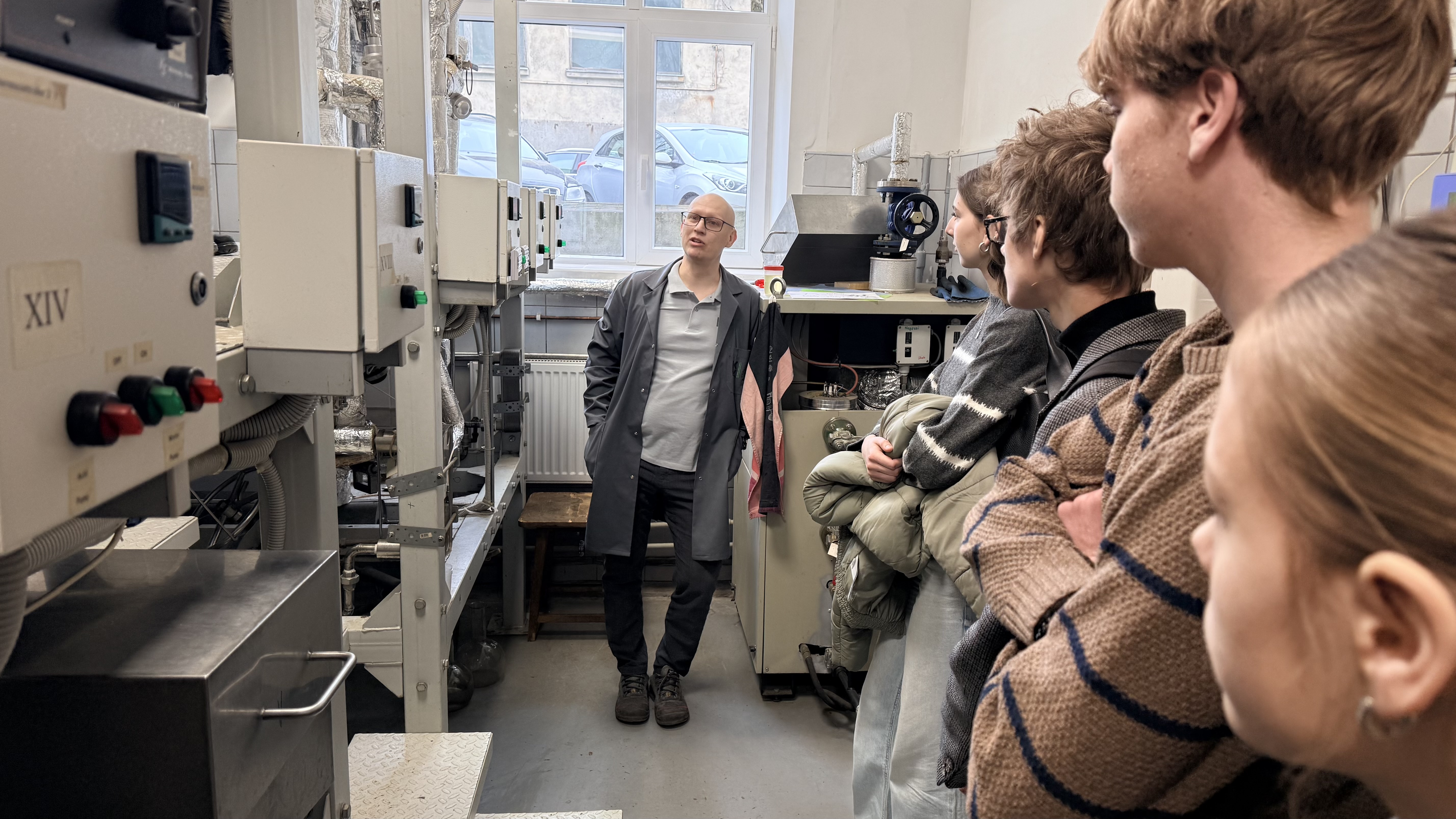
“Research assistant of Biorefinery laboratory Kalvis Liepiņš demonstrated to the students how laboratory samples are prepared and how scanning electron microscopy (SEM) is performed. The SEM analysed samples included birch outer bark depolymerization products investigated within the project Upcycling of extracted birch outer bark into innovative bio-based polyol suitable for industrial application of rigid polyurethane insulation foam (SAMPUR, No. 1.1.1.3/1./24/A/040), as well as lignin samples required for the Horizon 2020 project VIOBOND – sustainable binder: Upscaling new lignin-phenol-formaldehyde resin production with wood-based biorefinery lignin (Project No. H2020‑101022987).”

Researcher Dr. sc. ing. Ramūnas Tupčiauskas also introduced two of the youngest Shadow Day participants – 4th grade students – to the development and properties of binderless wood particle boards. The students learned how panel materials can be produced without additional binders and how such solutions can be applied in construction. The demonstrations were related to the project "Investigation of innovative biomass-based panels for application in external building facade" (Nr. lzp-2023/1-0348), which focuses on the development of new environmentally friendly building materials.
Meanwhile, PhD Prans Brazdausks presented research on the use of lignin biochar in furfural production within the project "Investigation of functionalised lignin-based biochar impact on the furfural production from the xylo-oligosaccharides derived from steam-exploded oat hulls" (StexFur, Nr. 1.1.1.9/LZP/1/24/036).
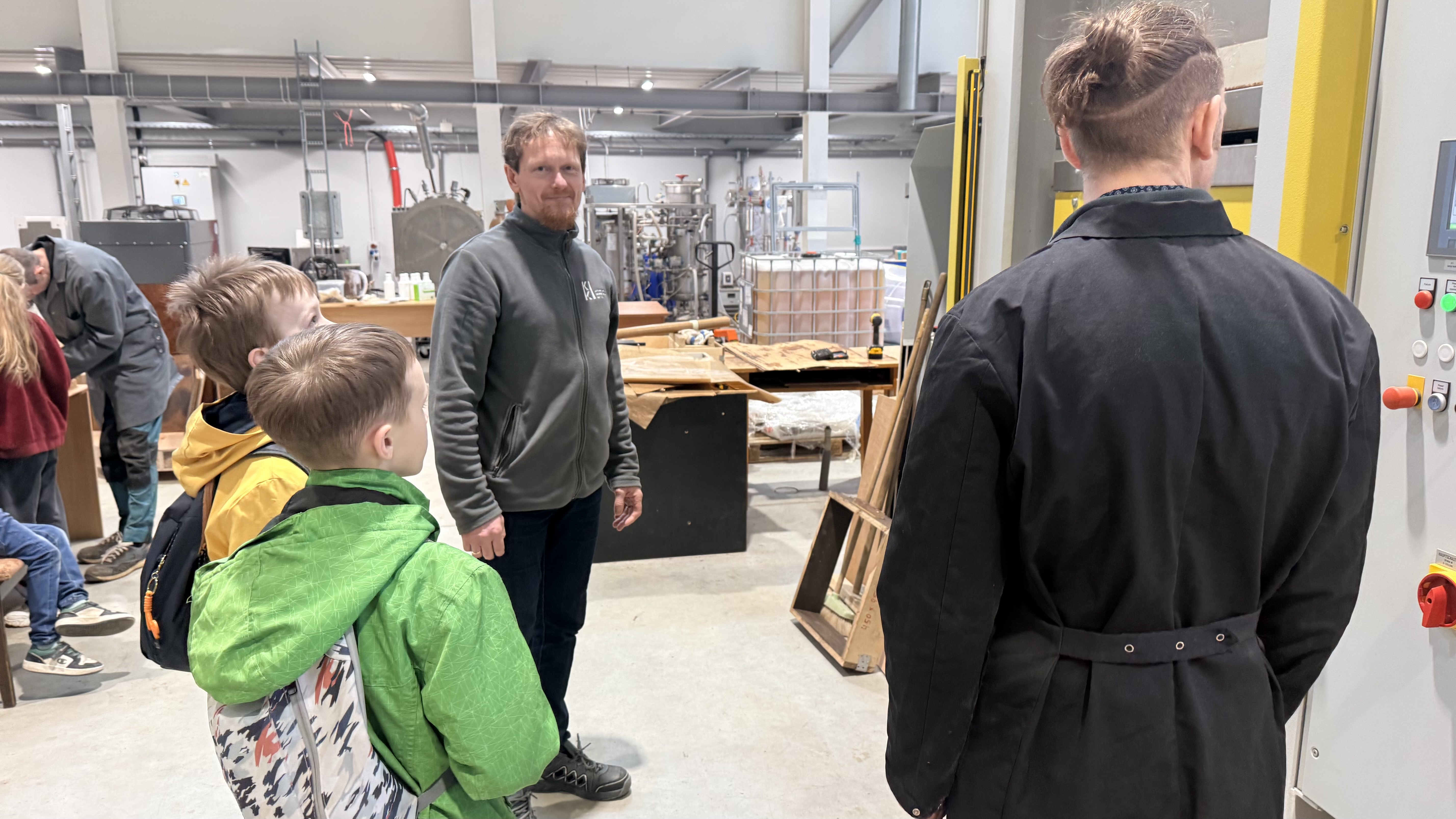
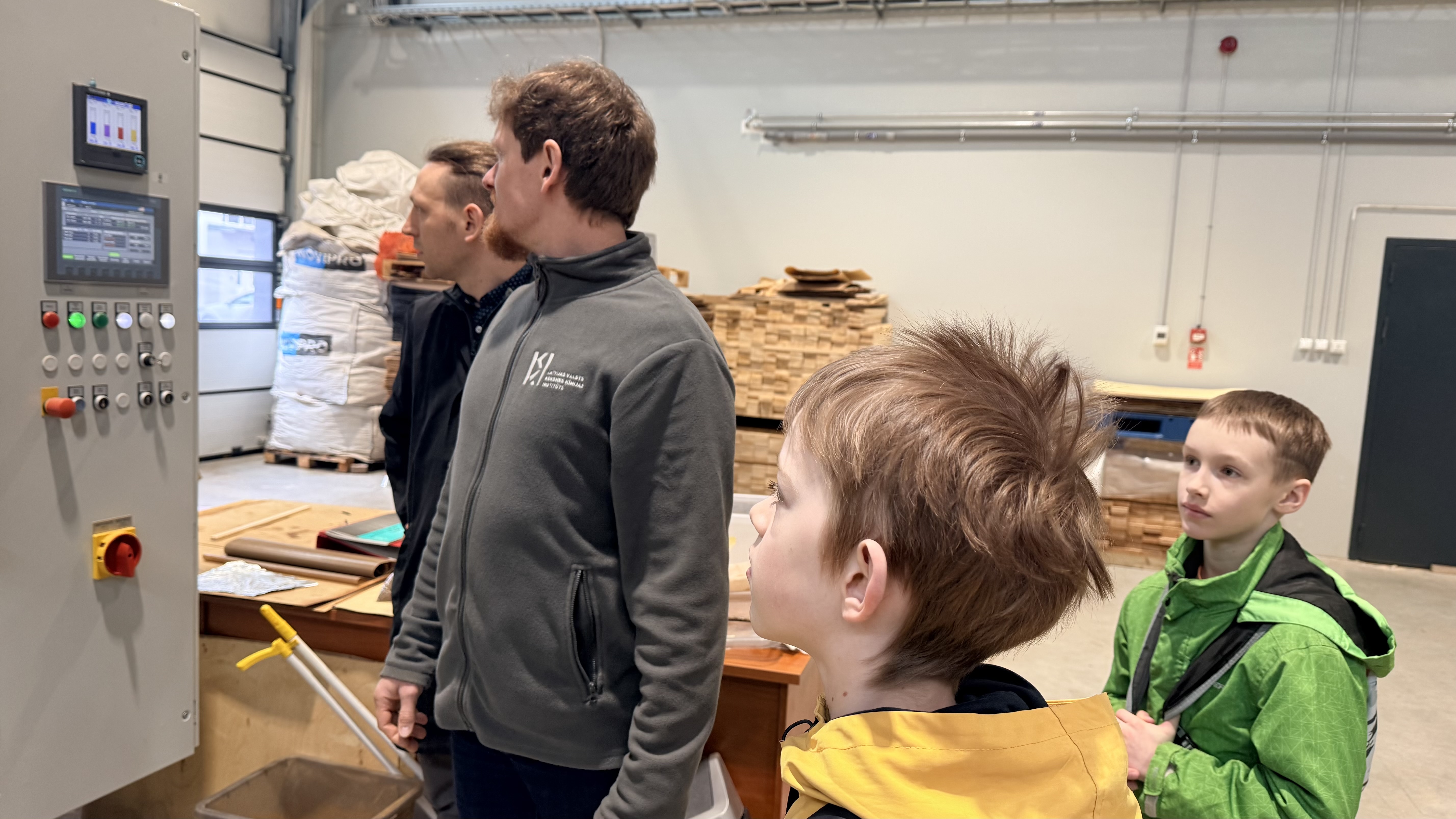
PhD Ance Pļavniece also introduced her postdoctoral project "Hydrothermal processing as a platform for valorization of value added solid and liquid biomass based products" (HTCelect, Nr. 1.1.1.9/LZP/1/24/007), demonstrating how hydrothermal treatment methods can be used to obtain new, functional biomass-based products.
The laboratory activities clearly illustrated how the biorefinery approach enables the efficient use of biomass, reduces waste, and supports the development of practical, environmentally friendly solutions.
Cellulose Laboratory
In the Cellulose Laboratory, students were introduced to the use of natural polymers and the development of new materials from renewable raw materials.
Researcher PhD Ulla Milbreta presented an LAD project (Nr. 25-00-C0LA1602-000001), which focuses on developing solutions to reduce bee mortality by using thermoreflective surfaces. This example demonstrated how materials science can be applied in non-traditional fields to address challenges related to climate change.
Meanwhile, Dr. biol. Ilze Irbe presented the project "Innovative mycelium biocomposites (MB) from plant residual biomass with enhanced properties for sustainable solutions" (LZP FLPP, Nr. lzp-2023/1-0633), demonstrating how biologically derived materials can be used to create functional and environmentally friendly products.
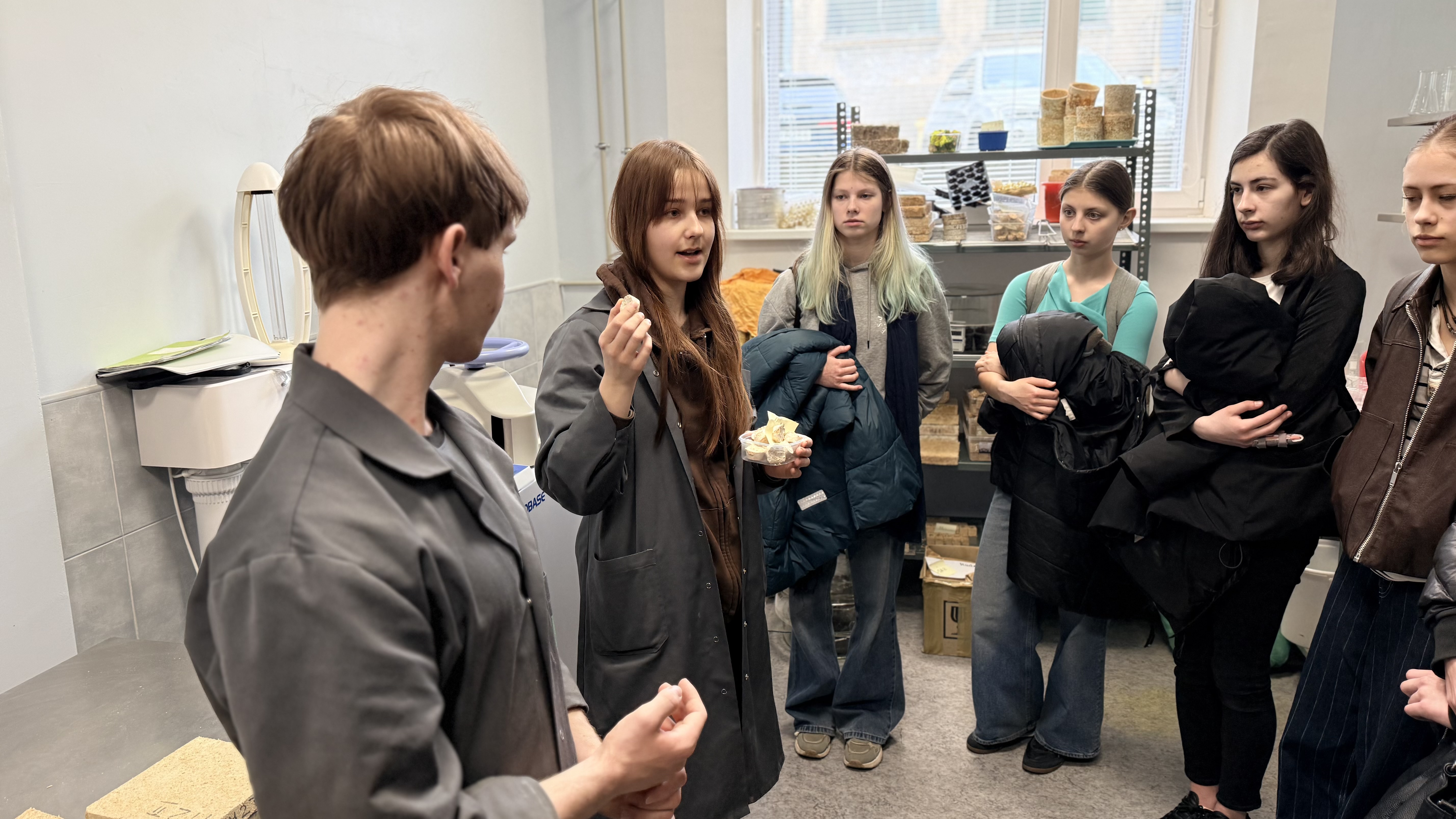
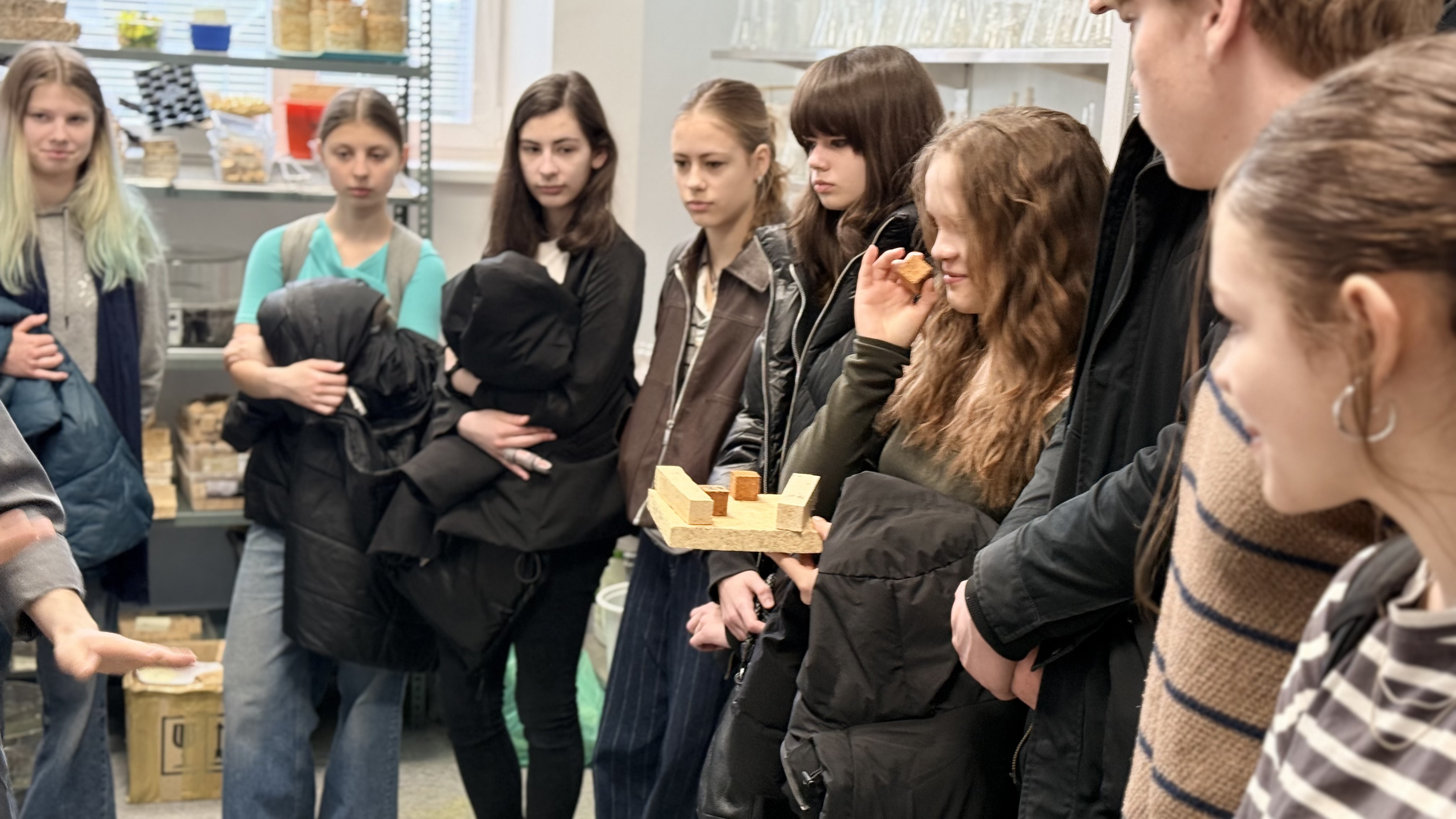
The practical part was led by LSIWC scientific assistant Bc. biol. Mikus Kampuss and student Emīlija Skrupsa, who demonstrated mycelium composite samples and their properties, allowing students to gain a closer understanding of the structure and applications of these materials.
The laboratory activities helped students understand how cellulose and other natural polymers are used in the development of new materials that can replace conventional synthetic solutions across various industries.
Laboratory of Lignin Chemistry
Shadow Day participants were also introduced to the work of the Lignin Chemistry Laboratory, presented by researcher Mg. chem. Matīss Pāls. The laboratory’s research covers a wide range of applications—from the development of environmentally friendly adhesives and polymer composites to soil improvement, wastewater treatment, and the extraction of biologically active compounds. Lignin is also studied as a functional additive, sorbent, or surfactant, as well as for the potential of plant-derived compounds in medicine, agriculture, and other fields.
During Shadow Day, students gained insight into how a seemingly underutilized natural resource—lignin—can be transformed into a variety of high value-added products for diverse practical applications.
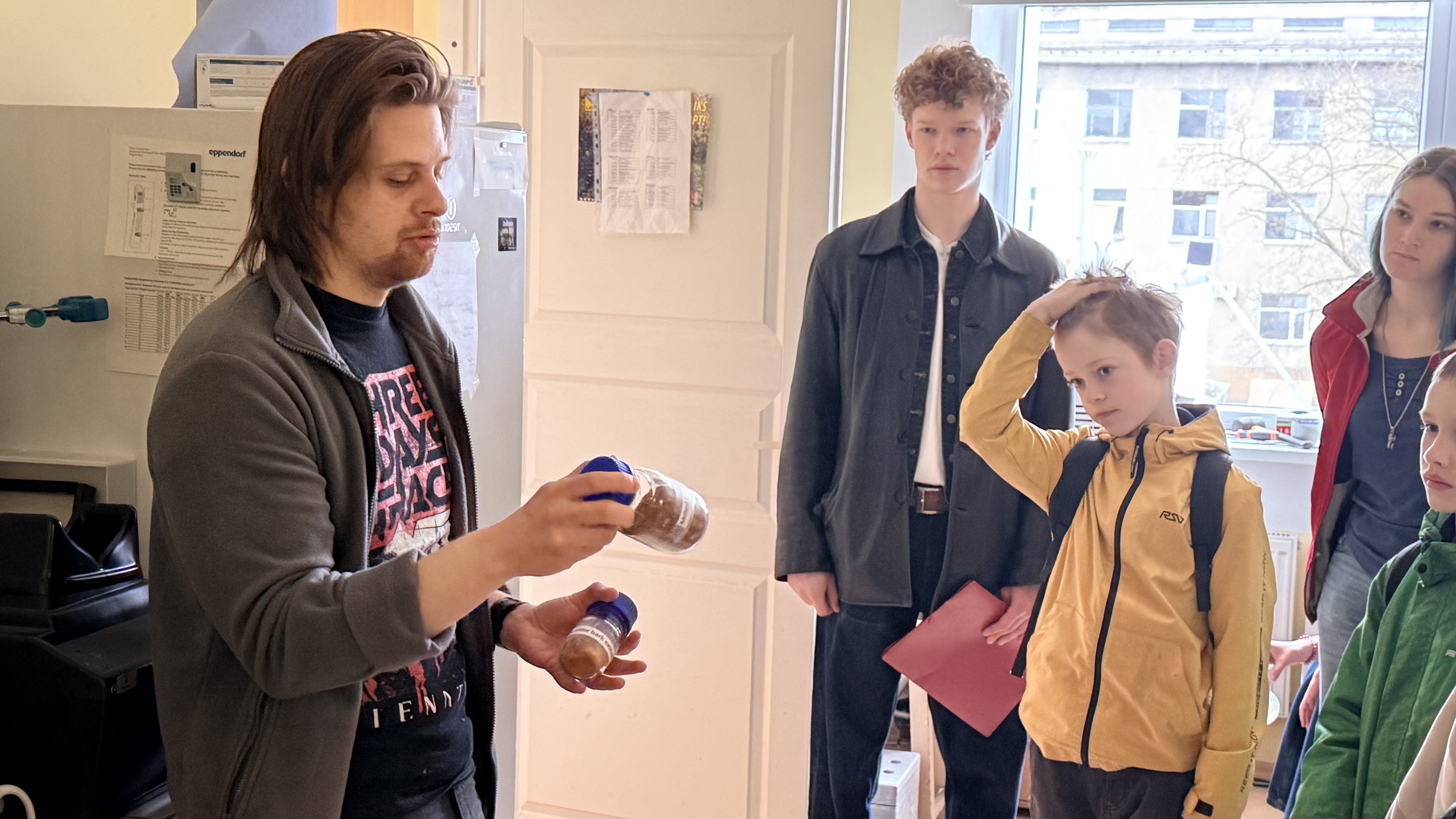
At the end of Shadow Day, students and researchers gathered in an informal setting to share a meal, exchange impressions, and continue their conversations—this time over pizza.
The day provided a clear view of how theoretical knowledge is transformed into real solutions—from idea to technology. It offered insight into the research process and helped students better understand the skills required for a career in science.
Thank you to all the students for their interest and active participation, and to the institute’s researchers for their time and engagement!