HTCelect
Project summary
The main objective of the project proposal is to simultaneously obtain value-added solid and liquid products by hydrothermal processing of biomass carbohydrates, thus promoting the development of new biorefinery pathways. The solid products will be used as a new type of carbon electrode material, while the liquid by-products will be investigated as a resource for the chemical industry. The use of lignocellulosic sugars is a new approach to obtain innovative carbon materials which after heat treatment will provide new efficient materials for energy related devices. By implementing the biorefinery approach, which maximises the value of the obtained materials and reduces wastes, the project is in line with the Latvian Smart Specialization Strategy (RIS3) in the field of "Knowledge-intensive Bioeconomy" in creating carbon materials that could compete with commercial ones as electrodes and catalysts.

Within the framework of the project, new renewable carbon materials will be obtained at the Latvian State Institute of Wood Chemistry, which will be further heat treated and used in mobility as fuel cell electrocatalysts and battery electrode materials. This work not only provides a study of the properties of solid and liquid products after hydrothermal treatment of biomass, but also a theoretical platform for obtaining new efficient carbon materials for energy.
Call: Specific Objective 1.1.1 “Strengthening of Research and Innovation Capacities and Introduction of Advanced Technologies in the Common R&D System” of the European Union's Cohesion Policy Programme for 2021-2027.
Activity: 1.1.1.9 “Post-doctoral Research”
Total eligible costs of the project: 184 140 EUR, including funding from the European Regional Development Fund in amount of 85 % – 156 519 EUR.
Project implementation period: 36 months
Project Partners:
- Lead Partner – Latvian State Institute of Wood Chemistry
- Cooperation Partner – Center for Physical Sciences and Technology, Vilnius, Lithuania (FTMC)
Place of implementation: Latvian State Institute of Wood Chemistry
Project implementation
15.08.2026.
Project progress report for the period of 01.04.2026.-14.08.2026.
Work package 2 “Hydrothermal synthesis to spherical biochar and liquid by-products on the base of, anhydrosugars and Fibenol syrup (FS).”
- Spruce lignocellulose bio-oil was obtained through two sequential processes: preliminary wood catalytic pretreatment with sulfuric acid and subsequent pyrolysis of lignocellulose in a flow of superheated steam, where the target substance was anhydrosugars, specifically levoglucosan (LG).
- The resulting liquid pyrolysis products—in the form of an aqueous condensate—were evaporated to obtain bio-oil, and the anhydrosugar fraction was separated from the remaining condensate using ion-exchange resins.
- Hydrothermal carbonization of anhydrosugars has been initiated.
Work package 3 "Development of thermal and thermochemical treatment process of SB and its impact on electrochemical parameters. " was started.
- Thermal treatment of biochar derived from monosaccharides at 600–1000 °C and electrochemical testing in coin cells are ongoing. Elemental analysis, porous structure characterization, and comparison of the specific charge capacity (after 10 cycles) have been carried out.Preliminary results indicate that the sample with the lowest oxygen content exhibits the highest specific charge capacity, reaching 256 mAh g⁻¹.
Sample | N, % | C, % | H, % | O,% | Specific surface area (BET), m²g¯¹ | Specific charge capacity, mAh/g (after 10 cycles) |
G-250 | 0.1 | 73.0 | 4.5 | 22.4 | 1 |
|
G-300 | 0.0 | 77.0 | 4.7 | 18.2 | 35 |
|
G-250-1000 | 0.2 | 97.4 | 1.1 | 1.2 | 211 | 248 |
G-300-1000 | 0.5 | 97.8 | 0.7 | 1.0 | 35 | 256 |
LG-250 | 0.1 | 72.6 | 4.7 | 22.6 | 8 |
|
LG-300 | 0.0 | 77.1 | 4.9 | 18.0 | 9 |
|
LG-250-1000 | 0.7 | 94.8 | 0.5 | 4.0 | 110 | 220 |
LG-300-1000 | 0.7 | 97.4 | 0.6 | 1.3 | 8 | 245 |
- Thermochemical activation of monosaccharide-derived biochars usin NaOH as the activating agent at 800 °C is ongoing. Elemental analysis of the obtained activated carbons has been performed. The activated carbons retain a relatively high oxygen content after activation, suggesting that the precursor materials contain a significant amount of oxygen-containing functional groups that are not reactive toward NaOH under the applied activation conditions. To verify this hypothesis, a new series of samples was prepared with thermal pretreatment at 400, 500, and 600 °C, and the changes in surface functional groups were investigated
Sample | N, % | C, % | H, % | O,% | Specific surface area (BET), m²g¯¹ |
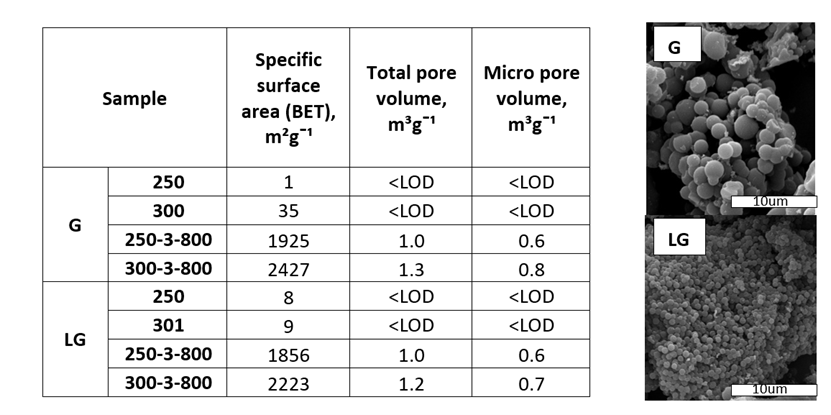
| G-250-600-3-800 | 0.51 | 79.97 | 1.20 | 18.32 | 1925 |
| G-300-600-3-800 | 0.33 | 90.88 | 0.95 | 7.85 | 2427 |
| LG-250-600-3-800 | 0.21 | 82.51 | 0.77 | 16.52 | 1856 |
| LG-300-600-3-800 | 0.39 | 87.65 | 0.54 | 11.41 | 2223 |
Work package 4 “Dissemination and outreach”
As part of Shadow Day 2026, two 9th-grade students were introduced to the work of a researcher at the institute, including project-related experimental methods such as hydrothermal carbonization and the use of scanning electron microscopy (SEM).
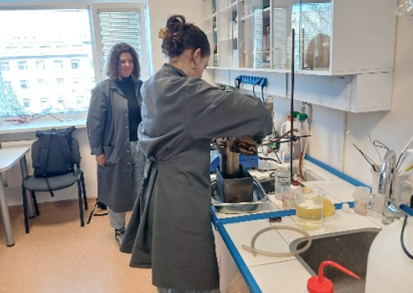
Figure 1. shadow days 2026 KKI
- Publications:
21 April 2026 – The article "Insights into Carbon Sphere Formation from Glucose and Levoglucosan During Hydrothermal Carbonisation" was published in the MDPI journal Molecules. https://doi.org/10.3390/molecules31081363
27 May 2026 – The article "Hydrothermal Synthesis of Carbon Microspheres from Lignocellulosic Bio-Oil" was published in the MDPI journal C. https://www.mdpi.com/2311-5629/12/2/47
- Participation in international conferences:
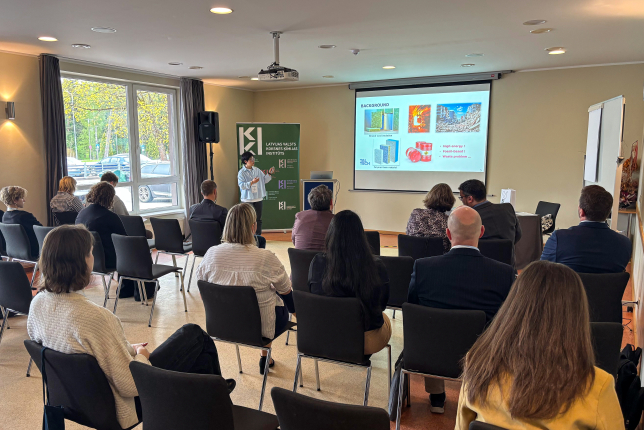
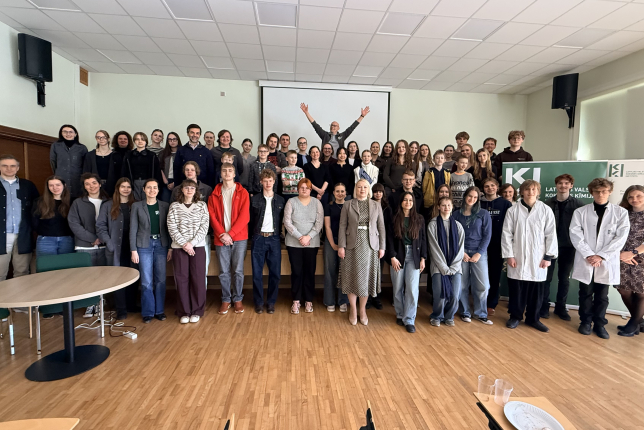
6–8 May 2026 – Participated in the organization of the International Conference for Young Scientists on Biorefinery Technologies and Products (BTechPro!) and served as a member of the jury for the Latvian final of the BisC-E 2026 competition held during the conference.
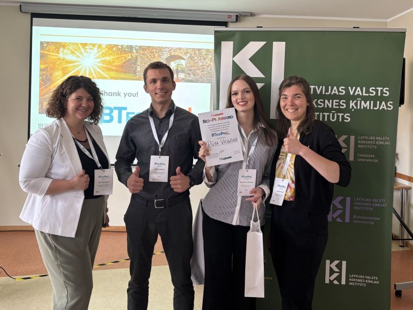
Figure 2. International Conference for Young Scientists on Biorefinery Technologies and Products BTechPro!.
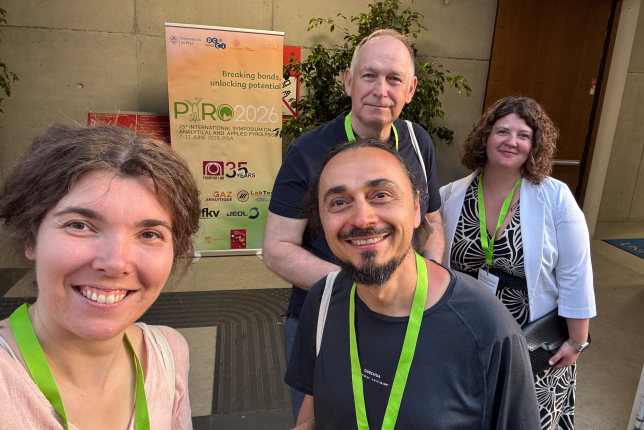
7–11 June 2026 – Presented a poster entitled "Comparative Study on the Hydrothermal Carbonization of Glucose and Levoglucosan: Understanding Carbon Sphere Formation Pathways" at the 25th International Symposium on Analytical and Applied Pyrolysis (PYRO2026).
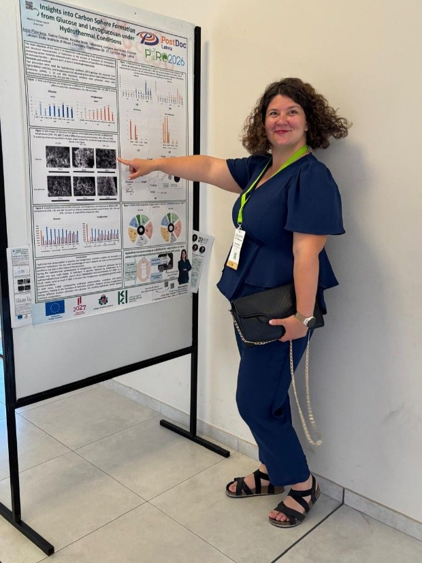
Figure 3. 25th International Symposium on Analytical and Applied Pyrolysis (PYRO2026).
- Participation in the BioSorbWatch seminar at the Maria Curie-Skłodowska University, Lublin, Poland, where the results of the postdoctoral research project "Hydrothermal Treatment as a Platform for the Valorization of Solid and Liquid Biomass-Derived Products" will be presented.
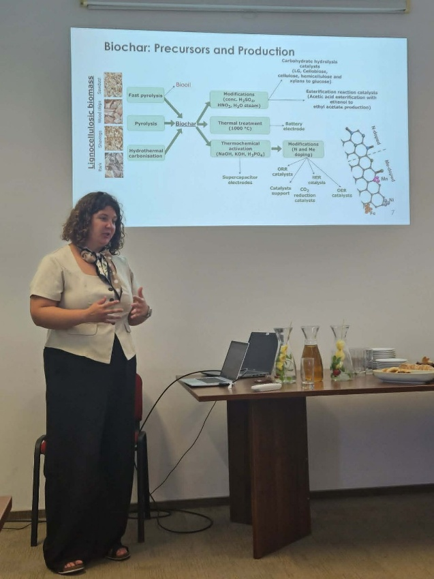
Figure 4. BioSorbWatch seminar.
2–6 August 2026 – Research mobility at the Center for Physical Sciences and Technology (FTMC), Vilnius, Lithuania. Electrochemical testing of full cells and half-cell cycling performance of monosaccharide-derived carbon materials.
31.03.2026.
Project progress report for the period of 01.10.2026.-31.03.2026.
Work package 3 "Development of thermal and thermochemical treatment process of SB and its impact on electrochemical parameters" was started.
- Thermal treatment of biochar derived from monosaccharides has been initiated at temperatures ranging from 600 to 1000 °C. As a result, dense carbon materials were obtained, and detailed analyses of their porous structure were carried out. The results demonstrate that biochar hydrothermally carbonized at 250 °C and subsequently treated at 1000 °C exhibits a significantly higher specific surface area compared to materials obtained at 300 °C. At 250 °C, the specific surface area reached 211 m² g⁻¹ when using glucose as a precursor and 110 m² g⁻¹ when using levoglucosan. In contrast, at 300 °C, the values were considerably lower—35 m² g⁻¹ and 8 m² g⁻¹, respectively.
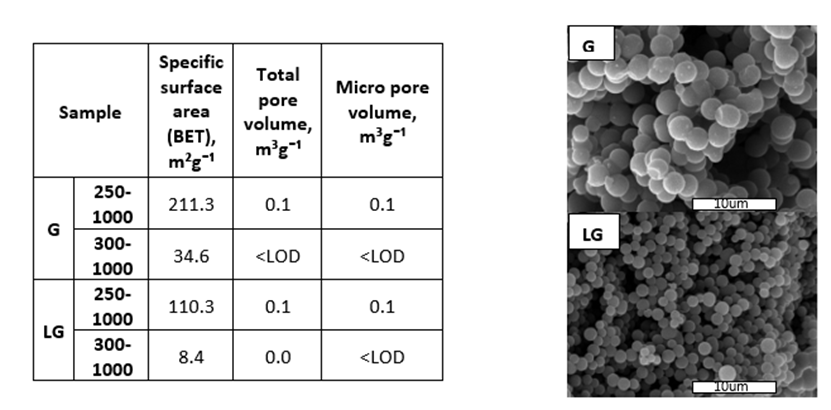
- Thermochemical activation of biochar derived from monosaccharides has been initiated using NaOH as an activating agent at 800 °C. To prevent particle disintegration, a thermal pre-treatment at 600 °C was applied prior to the activation step. As a result of successful activation, biochar with a high specific surface area (above 1900 m² g⁻¹) was obtained while preserving its spherical morphology.
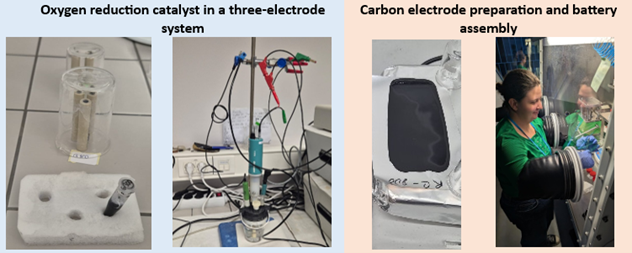
- During the mobility period, the electrochemical properties of thermally and thermochemically treated samples were evaluated. Samples thermally treated at 1000 °C were prepared for sodium-ion battery testing. This included mastering ink formulation, coating techniques, electrode preparation, and electrolyte preparation. Coin cell half-cells were assembled and tested using cyclic voltammetry and galvanostatic cycling methods. Thermochemically treated samples were prepared for catalyst evaluation and tested as oxygen reduction reaction (ORR) catalysts using the rotating disk electrode (RDE) method. Preparation of inks, electrodes, and electrolytes was carried out, followed by cyclic voltammetry and linear sweep voltammetry measurements.
Work package 4 “Dissemination and outreach”
30.11-20.12.2025- research mobility at Center for Physical Sciences and Technology (FTMC), Vilnius, Lithuania:
- The institute, the postdoctoral research project, as well as the objectives and expected outcomes of the mobility were presented.
- Preliminary oxygen reduction reaction (ORR) measurements and initial battery tests were conducted in order to optimize the synthesis process and subsequent thermal and thermochemical post-treatment conditions.
30.09.2025.
Project progress report for the period of 01.04.2025.-30.09.2025.
Work package 1 "Hydrothermal synthesis (HTC) basis of monosaccharides: process modeling" was carried out.
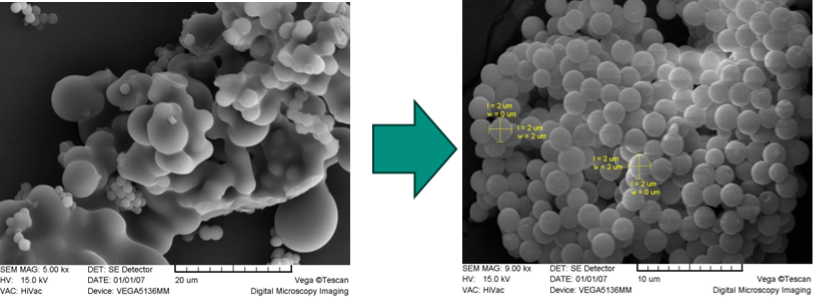
- HTC of monosaccharides. Glucose (G) and levoglucosan (LG) were used as reference materials and were HTC under different conditions (variables included temperatures 150, 200, 250 300 °C, reaction time 4, 8, 16 h, and raw material-to-water ratio). Particles were separated using filtration. Solid samples were obtained for subsequent modification.
- Investigation of liquid by-products . Liquid by-products were collected and tested by potentiometric titration of acids, aldehydes, phenols. dry matter content and pH were determined. It was found that increasing the synthesis temperature decreased the pH, dry matter content, and aldehyde concentration, while the amount of acids in the liquid sample increased.
- Biochar testing. After filtration and washing of solid particles collected and their characterization and comparison were carried out using elemental analysis, chemical composition (Py-GC/MS), identification of surface groups, and particle size and morphology via SEM. It was found that both concentration and processing temperature and time affected the morphology and composition of the material. Spherical biochar could be obtained at 250 and 300 °C, while the highest yield (28–45%) was achieved at 250 °C, depending on the raw material concentration.
WP4: Dissemination and outreach
- Interview with Latvian National Radio LR1, where she explained how biochar can be applied in electrical devices, including batteries, fuel cells, and supercapacitors.
- Participation in the international conference Carbon2025 with a poster presentation: “Study of liquid and solid product formation after hydrothermal processing of carbohydrate and aromatic biomass derivatives”.
- Participation in Researchers’ Night 2025, engaging the public with science communication activities.
01.04.2025.
Beginning of the project