LIGsp
Project summary
The utilization of biomass and its derivatives presents a partial solution to mitigate the greenhouse effect. While technologies for converting carbohydrates into value-added products are established, lignin valorization remains underdeveloped.
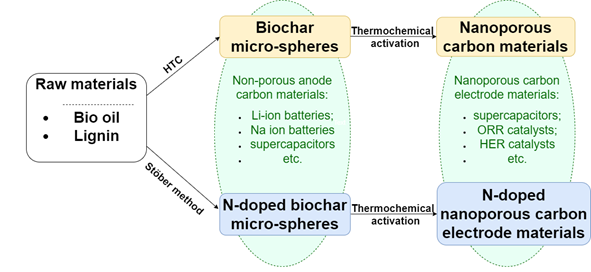
Project LIGsp aims to synthesize carbon microspheres from biorefinery byproducts, including lignin and phenolic-containing biooil fractions, using hydrothermal carbonization and a modified Stöber method.
These carbon microspheres have encapsulation properties, controlled permeability, functional surfaces, high surface-to-volume ratios, and thermal stability, making them promising materials for energy storage and environmental applications. The carbon microspheres will be additionally thermochemically activated, resulting in a nitrogen-doped carbon material with developed porosity that can be used in supercapacitors and fuel cells. LIGsp's work could significantly contribute to the sustainable utilization of lignin and other biomass residues, fostering a greener and more energy-efficient future.
Total funding of the project: 300 000
Project implementation period: 36 months
Place of implementation: Latvian State Institute of Wood Chemistry
Project implementation
01.07.2026.
Project progress report for the period of 01.04-30.06.2026.
Work package 1 “Study the synthesis of carbon microspheres from biooil ” .
Stöber's experiments were carried out:
- using the phenolic fraction obtained after the separation of sugars, but the yield of the synthesis for these syntheses was very low (10%).
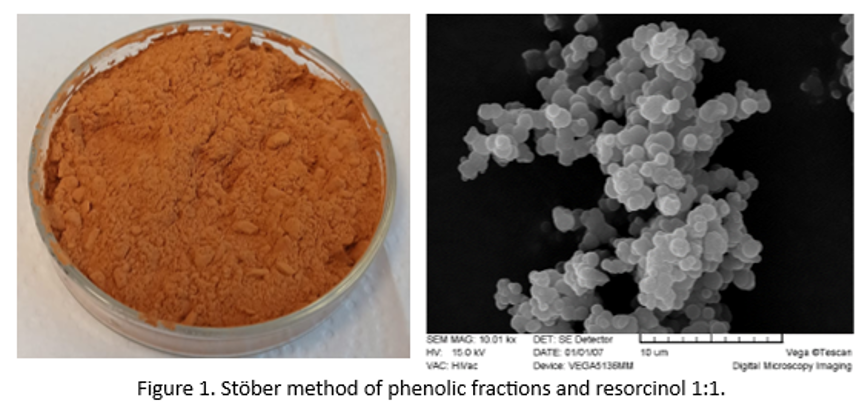
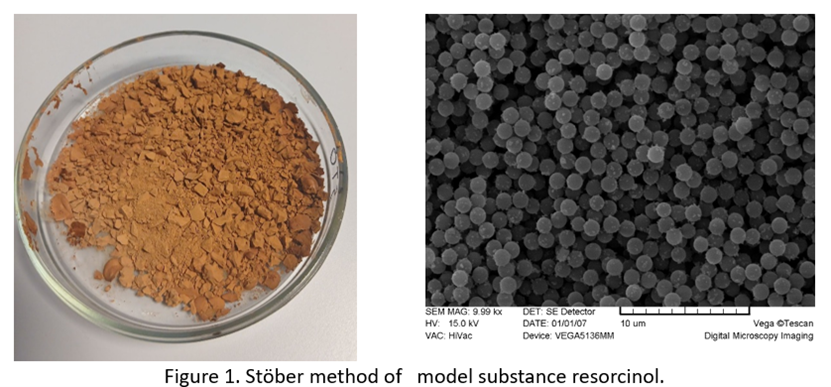
- using rezocin and phenolic fraction in equal proportions. Agglomerates of spheres were obtained, similar to those with vanillin in previous experiments, but the yield was very high (89%).
Work package 2 “Study the synthesis of carbon microspheres from SW-lignin”.
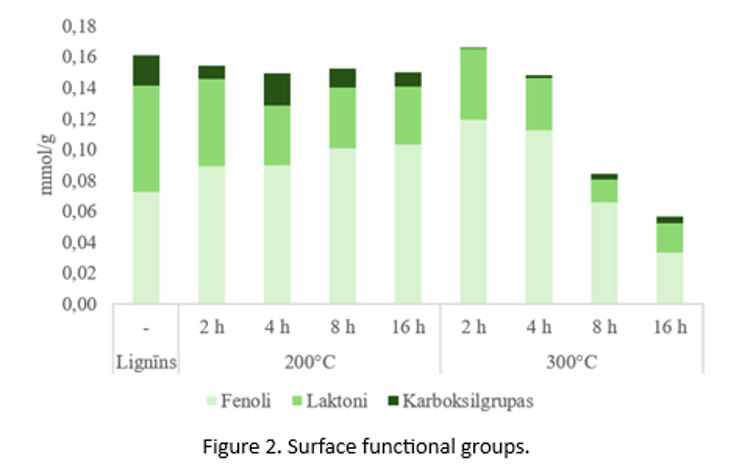
Surface functional groups of lignin particles hydrothermally carbonized in a water-ethanol medium were determined using a titration method.
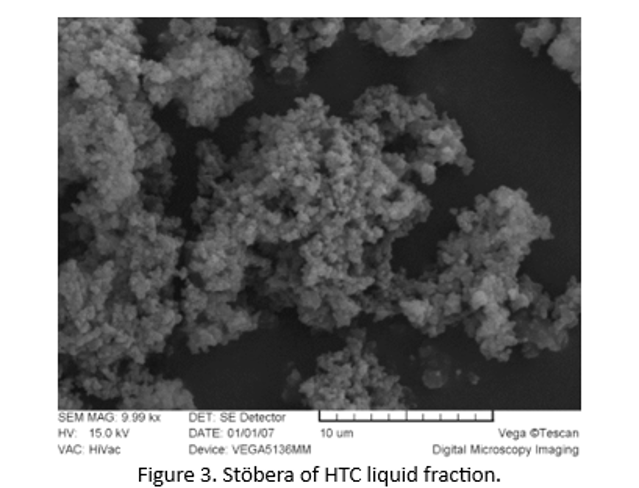
- Using HTC in liquid by-products from 10% lignin HTC in a water–ethanol medium, Stöber synthesis was performed and fine particles were obtained.
Work package 3 “Development of thermal and thermochemical treatment process of CS and it impact on electrochemical parameters” was started.
- Spherical particles obtained from resorcinol by the Stöber method were thermally stabilized, followed by thermochemical activation. During activation, the particles retained their spherical shape and a high surface area (BET = 2693 m2 g-1) and an average pore diameter of 2.009 nm were obtained.
Work package 4 “Dissemination and outreach ”
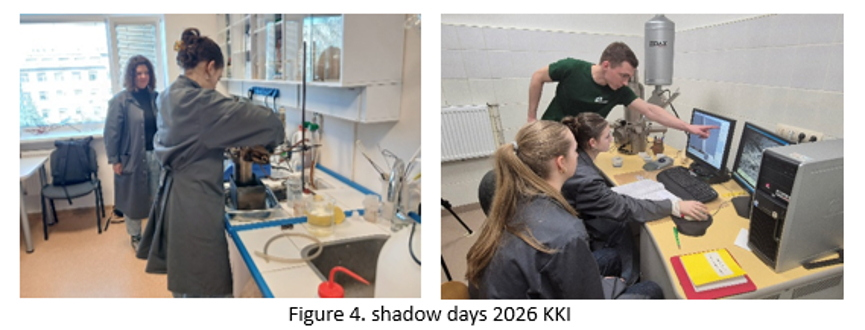
- As part of the shadow day 2026, two 9th grade students were introduced to the work of a scientist at the institute, including methods widely used in the LiGsp project, such as hydrothermal carbonization and the use of a scanning electron microscope (SEM).
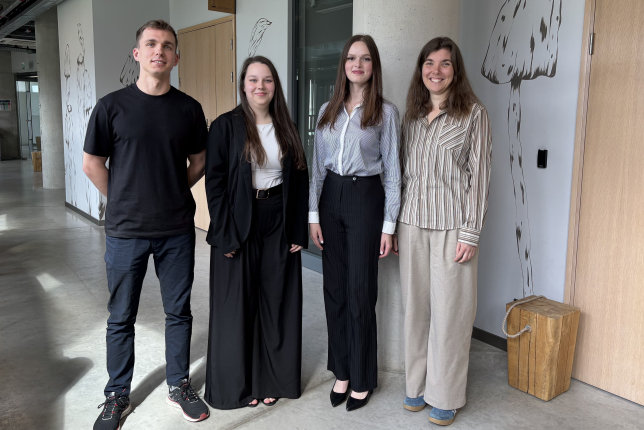
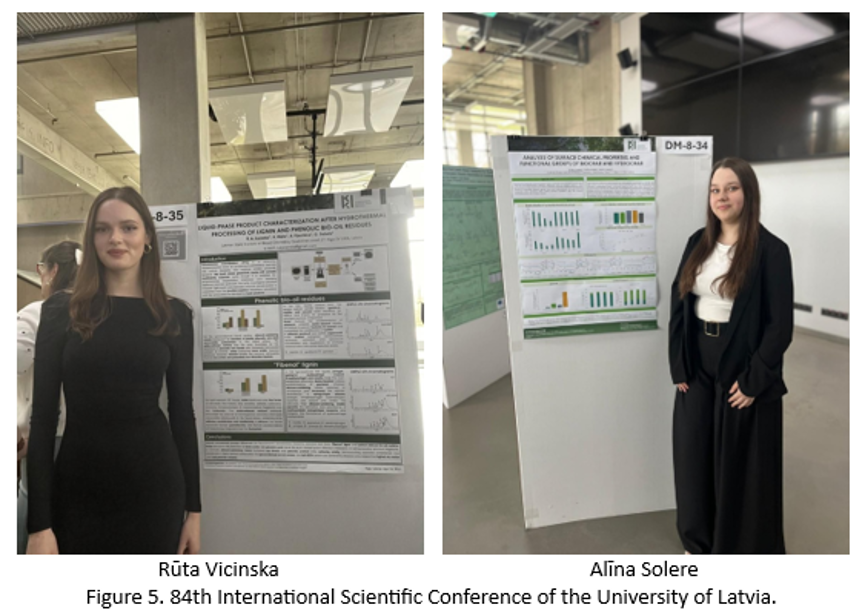
14-16.04 Rūta Vicinska with a poster presentation “LIQUID-PHASE PRODUCT CHARACTERIZATION AFTER HYDROTHERMAL PROCESSING OF LIGNIN AND PHENOLIC BIO-OIL RESIDUES” and Alīna Solere with a poster presentation “ANALYSIS OF SURFACE CHEMICAL PROPERTIES AND FUNCTIONAL GROUPS OF BIOCHAR AND HYDROCHAR” participated in the 84th International Scientific Conference of the University of Latvia.
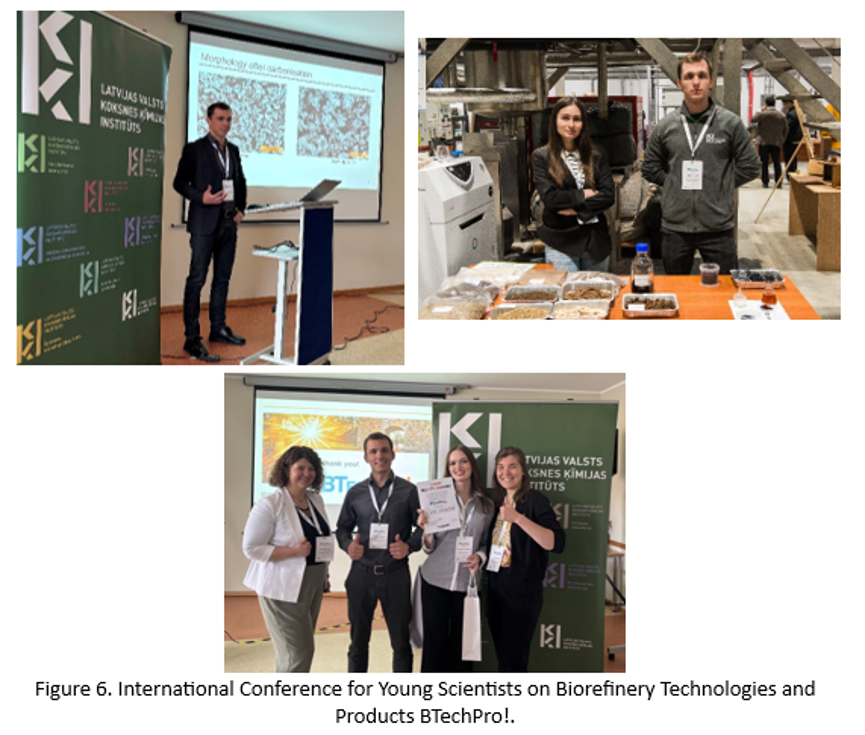
- 6-8.05.2026 Kalvis Liepiņš, a scientific assistant of the LIGsp working group, participated in the Conference “International Conference for Young Scientists on Biorefinery Technologies and Products BTechPro!” with an oral report “SYNTHESIS OF NITROGEN DOPED CARBON MICROSPHERES FROM PYROLYSIS BIOOIL FOR ELECTROCHEMICAL APPLICATIONS” presenting the results obtained in activities 1 and 3 of the project. Rūta Vicinska, in turn, presented “EFFECT OF REACTION MEDIUM ON THE HYDROTHERMAL CONVERSION OF LIGNIN AND PHENOLIC BIO-OIL RESIDUES”. In addition, within the framework of this conference, Kalvis participated in the exhibition organized by the institute, where he introduced the conference participants to various carbon materials obtained at the institute and the carbonization methods used.
- 27.05.2026 published article “HYDROTHERMAL SYNTHESIS OF CARBON MICROSPHERES FROM LIGNOCELLULOSIC BIO-OIL” in MDPI journal C; https://www.mdpi.com/2311-5629/12/2/47?utm_source=researchgate.net&utm_medium=article
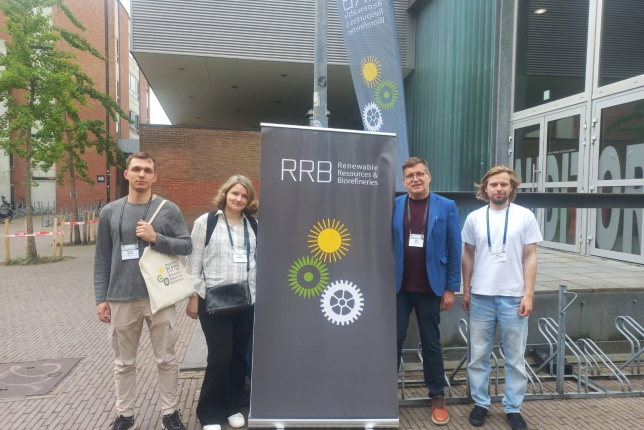
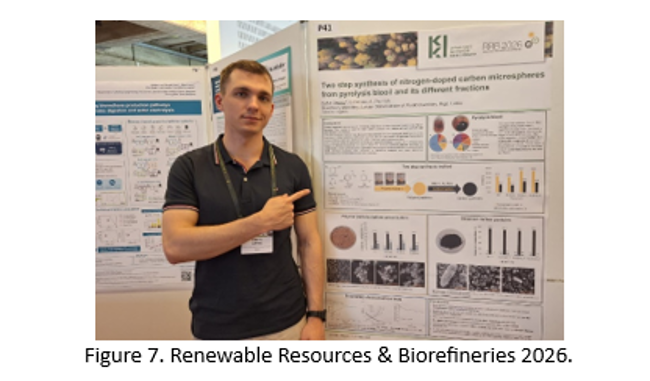
- 1-3.06.2026 Kalvis Liepiņš also presented the results obtained in the project at the conference “Renewable Resources & Biorefineries 2026” in Leuven, Belgium with a poster presentation “TWO STEP SYNTHESIS OF NITROGEN-DOPED CARBON MICROSPHERES FROM PYROLYSIS BIOOIL AND ITS DIFFERENT FRACTIONS”.
- On 4.06.2026, Alīna Solere defended her bachelor's theses on "CHARACTERIZATION OF FUNCTIONAL SURFACE GROUPS OF HYDROTHERMALLY CARBONIZED LIGNIN" and Rūta Vicinska on "CHARACTERIZATION OF THE LIQUID PRODUCT AFTER HYDROTHERMAL CARBONIZATION OF LIGNIN, PHENOL FRACTION" at the Faculty of Medicine and Life Sciences, Department of Chemistry, University of Latvia.
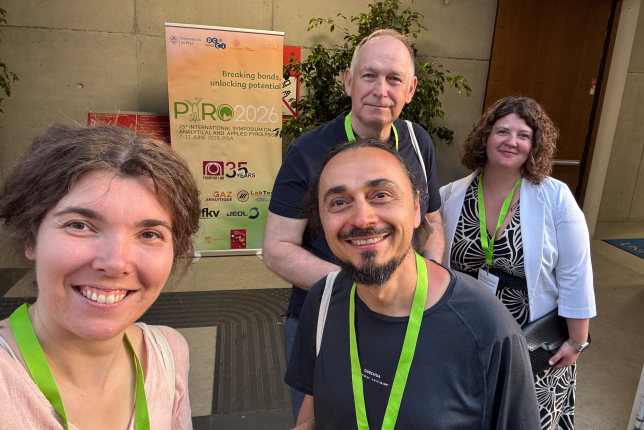
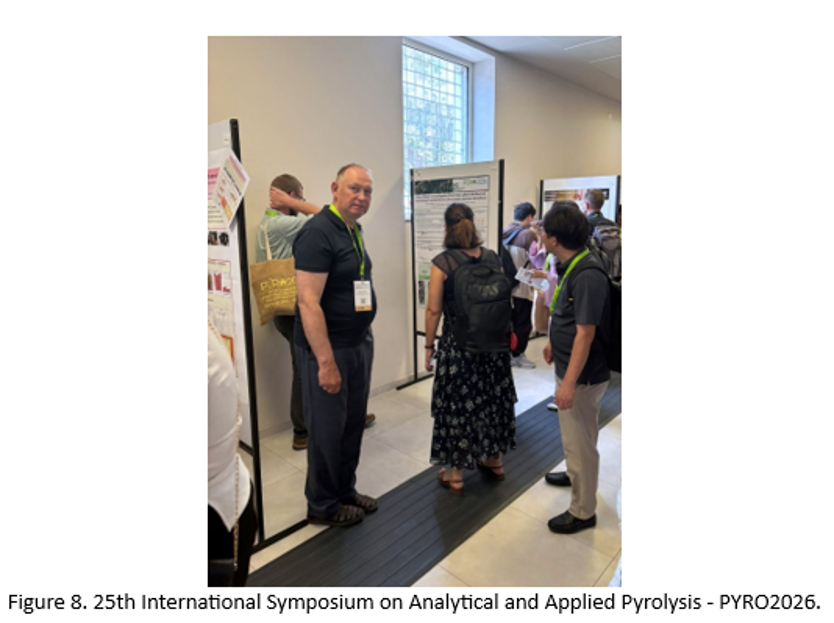
7-11.2026 Aivars Žūriņš participated in the conference "25th International Symposium on Analytical and Applied Pyrolysis - PYRO2026" with the standard report "STUDY OF LIQUID AND SOLID PRODUCT FORMATION AFTER HYDROTHERMAL PROCESSING OF CARBOHYDRATE AND AROMATIC BIOMASS DERIVATIVES".
31.03.2026.
Project progress report for the period of 01.01-31.03.2026.
Work package 1 “Study the synthesis of carbon microspheres from biooil ” .
- Experiments were continued with resorcinol. In addition, the effect of some synthesis conditions, such as time and solution concentration, on the yield was evaluated.
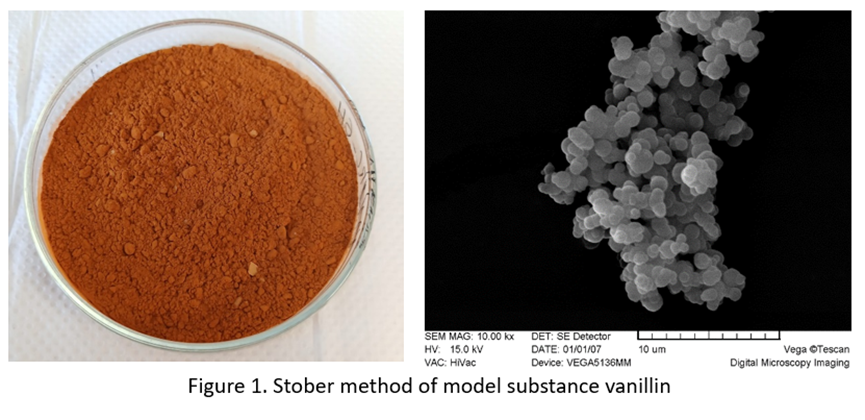
- Experiments were performed using vanillin, which is the dominant phenolic component in bio-oil, as a model substance. No solid products were obtained using vanillin as a model substance. Further experiments were performed using both resorcinol and vanillin in equal proportions. Partially agglomerated but pronounced spheres were obtained and the synthesis yield was slightly higher than using resorcinol alone.
Work package 2 “Study the synthesis of carbon microspheres from SW-lignin”.
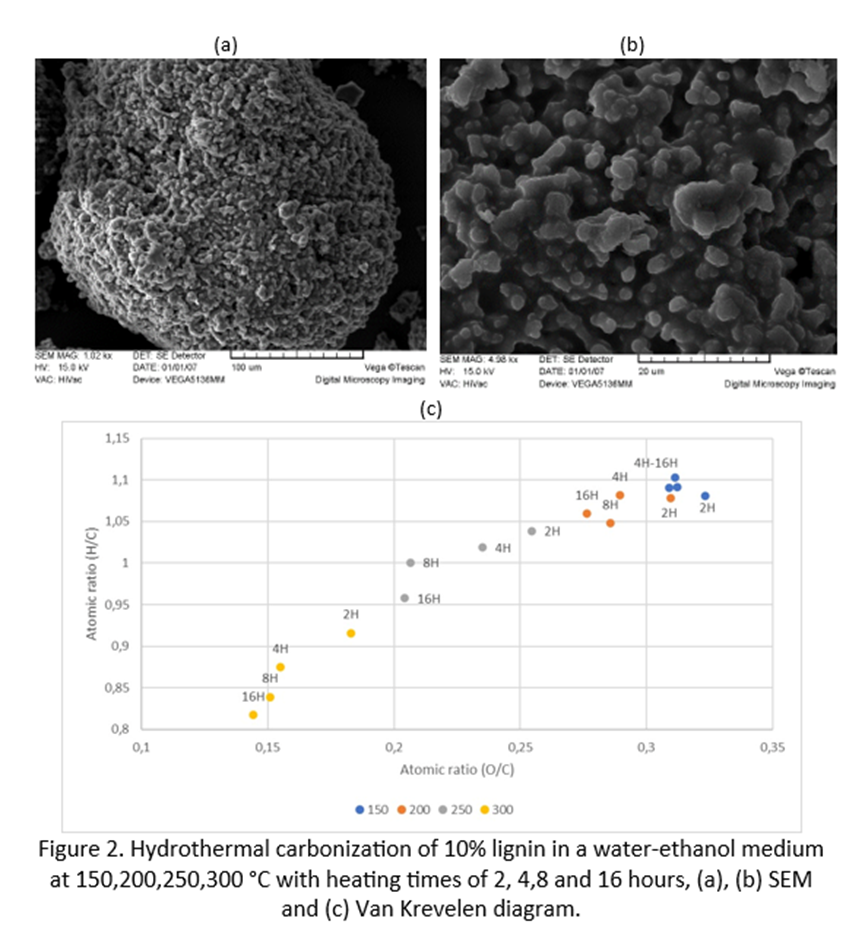
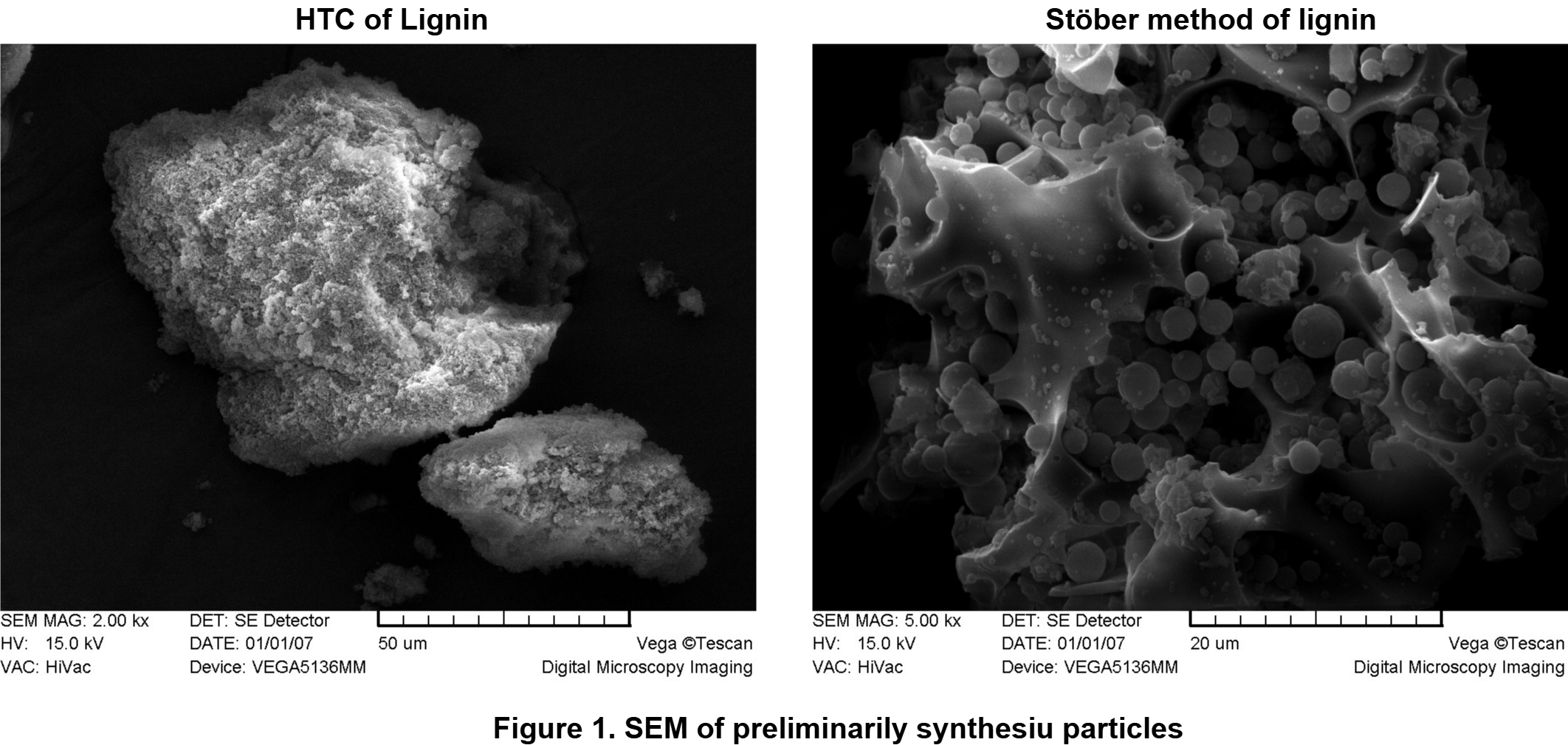
A comparison of the morphology (see Fig. 2 a,b) and chemical composition of particles obtained by hydrothermal carbonization of 10% lignin in an aqueous ethanol medium was performed in the Van Krevelene diagram.
- Lignin depolymerization in dimethylformamide was performed and a homogeneous solution was obtained. Stöber synthesis was performed and fine particles were obtained.
Work package 3 “Development of thermal and thermochemical treatment process of CS and it impact on electrochemical parameters” was started.
Thermochemical processing of spherical carbon model material continues.
30.12.2025.
Project progress report for the period of 01.10.2025.-30.12.2025.
Work package 1 “Study the synthesis of carbon microspheres from biooil ” .
- A comparison of the products of hydrothermal carbonization of bio-oil and its fractions has been made, which shows that carbon spheres are formed at lower temperatures (200-250 °C) for bio-oil and anhydrosugars, but at higher temperatures (300 °C) for the phenolic fraction.
- Experiments were conducted using resorcinol as a model substance, and it was shown that it is possible to obtain homogeneous spheres using the Stöber method. Solid products were not obtained using vanillin as a model substance.
Work package 2 “Study the synthesis of carbon microspheres from SW-lignin”.
- Experiments were carried out on hydrothermal carbonization of 10% lignin in a water-ethanol medium at 150, 200, 250, 300 °C with heating times of 2, 4, 8 and 16 hours.
- After hydrothermal carbonization, the liquid part, the lignin fraction dissolved in water and alcohol during the reaction, was subjected to Stöber synthesis.
- The chemical analysis of the obtained particles was performed using elemental analysis, Py-GC/MS, and the morphology and particle size were determined using SEM.
Work package 3 “Development of thermal and thermochemical treatment process of CS and it impact on electrochemical parameters” was started.
- Spherical carbon particles obtained from resorcinol and thermally stabilized by the Stöber method were used to prepare battery electrodes and initiate coin cell measurements.
- Thermochemical treatment of spherical carbon model material was initiated.
Work package 4 “Dissemination and outreach”
- A school project has been developed to produce biochar and bio-oil by pyrolyzing seaweed.
30.09.2025
Project progress report for the period of 01.07.2025.-30.09.2025.
Work package 1 “Study the synthesis of carbon microspheres from biooil ” .
- Seperatd phenol fraction analyzed with a combination of chemical analysis methods, such as, iodometric sugar titration, potentiometric titration of acids and aldehydes, spectrophotometric determination of phenols, with GC-FID/MS and HPLC-UV/ELSD/MS. Quantitative analysis will be aimed at evaluating the yields of the target chemical products for understanding the impact of components on the sphere.
- Synthesized carbon spheres from phenol fraction. Chemical analysis of the obtained particles was performed using element analysis, Py-GC/MS and morphology and particle size were determined using SEM.
- Experiments were started to obtain carbon microspheres by Stöber method of phenol fraction.
Work package 2 “Study the synthesis of carbon microspheres from SW-lignin”.
Experiments were started to obtain carbon microspheres:
- Stöber method of lignin fraction dissolved in water and ethanol,
- hydrothermal carbonization of lignin in the aquatic environment.
Chemical analysis of the obtained particles was performed using element analysis, Py-GC/MS and morphology and particle size were determined using SEM.
Work package 3 “Development of thermal and thermochemical treatment process of CS and it impact on electrochemical parameters” was started.
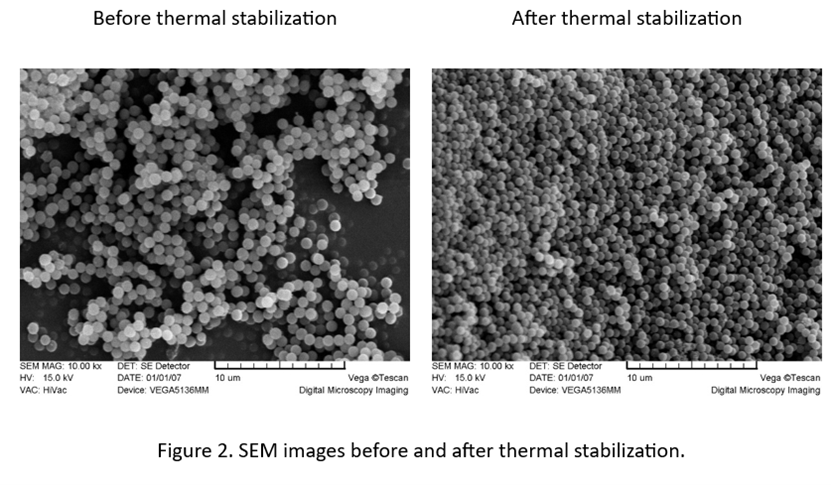
- The obtained particles were stabilized at 800 °C.
- It was found that after thermal treatment it is possible to preserve the morphology of the particles - spheres.
Work package 4 “Dissemination and outreach ”
Participation in Researchers’ Night 2025, engaging the public with science communication activities.
30.06.2025.
Project progress report for the period of 01.04.2025.-30.06.2025.
Work package 1 “Study the synthesis of carbon microspheres from biooil ”.
- Synthesized bio-oil analyzed with a combination of chemical analysis methods, such as, iodometric sugar titration, potentiometric titration of acids and aldehydes, spectrophotometric determination of phenols, with GC-FID/MS and HPLC-UV/ELSD/MS. Quantitative analysis will be aimed at evaluating the yields of the target chemical products for understanding the impact of components on the sphere.
- Carbon spheres synthesized from bio-oil by hydrothermal carbonization.
- Experiments were started to obtain carbon microspheres by Stöber method of biooil.
Work package 2 “Study the synthesis of carbon microspheres from SW-lignin”.
- Chemical analysis (Py-GC/MS ), elemental analysis, ash content was determined for lignin.
- Lignin samples were fractionated with water, ethanol.
Work package 4 “Dissemination and outreach ”.
- The charcoal factory SIA "KRK Vidzeme" was visited.
- Kalvis Liepiņš defended his master's thesis "Oxidation of activated carbon with hydrogen peroxide to improve surface hydrophilicity"
Work package 5 “Management and coordination”
Project meetings was held
30.03.2025
Project progress report for the period of 01.01.2025.-30.03.2025.
During the period, three project activities were started according to the work plan.
Work package 1 “Study the synthesis of carbon microspheres from biooil ” was started.
- During the reporting period, birch and spruce wood was prepared (material crushing, sieving, treatment with 0.5% sulfuric acid), biooil was obtained by fast pyrolysis (water vapor, 400°C).
- Separation of the phenolic fraction was started.
- Experiments were started to obtain carbon microspheres by hydrothermal carbonization of biooil.
Work package 2 “Study the synthesis of carbon microspheres from SW-lignin” was started.
5 kg of LIGNOVA™ Crude lignin was purchased from the Estonian company “Fibenol”.
Work package 5 “Management and coordination”.
Data Management Plan prepared and published: https://doi.org/10.5281/
01.01.2025.
Beginning of the project.