Birch Bark Extractives Open New Opportunities for More Sustainable Cosmetic Products
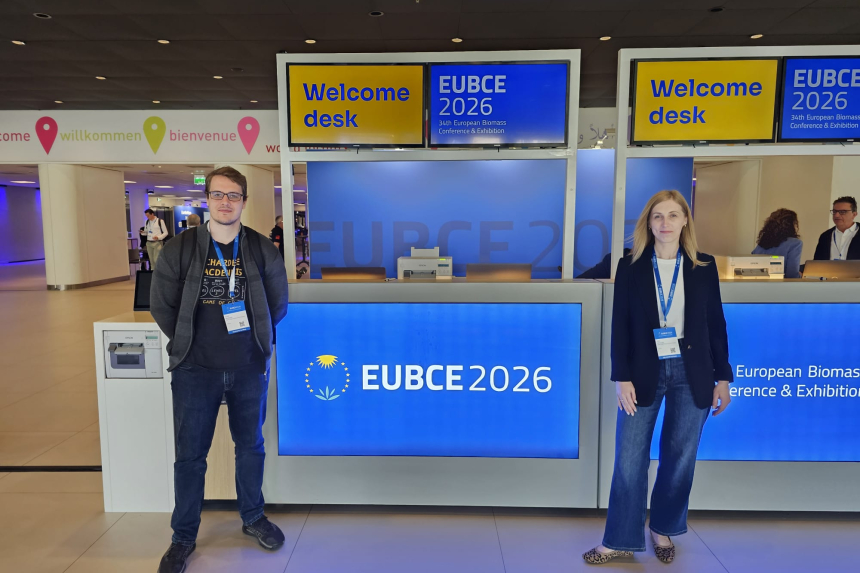
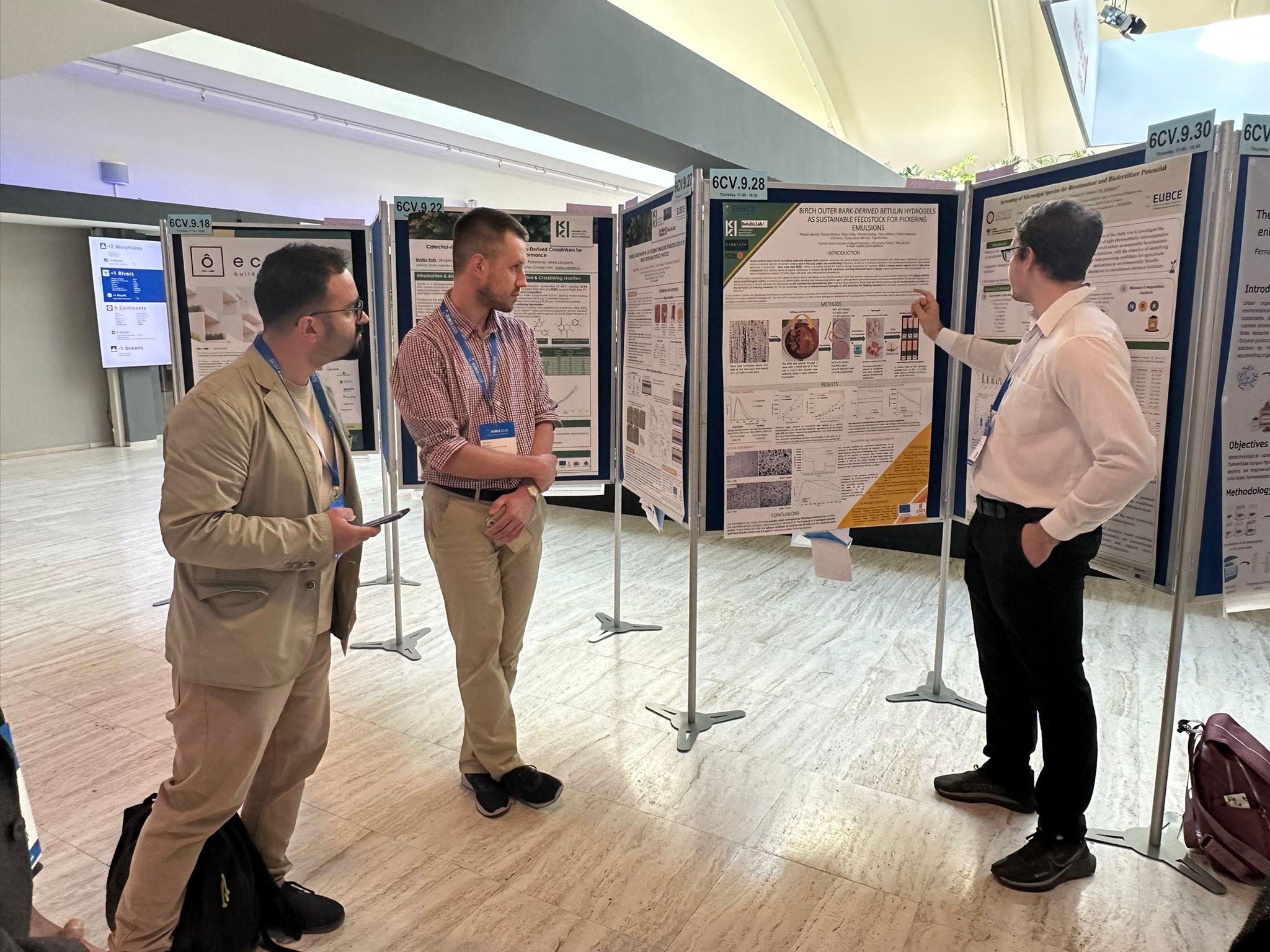
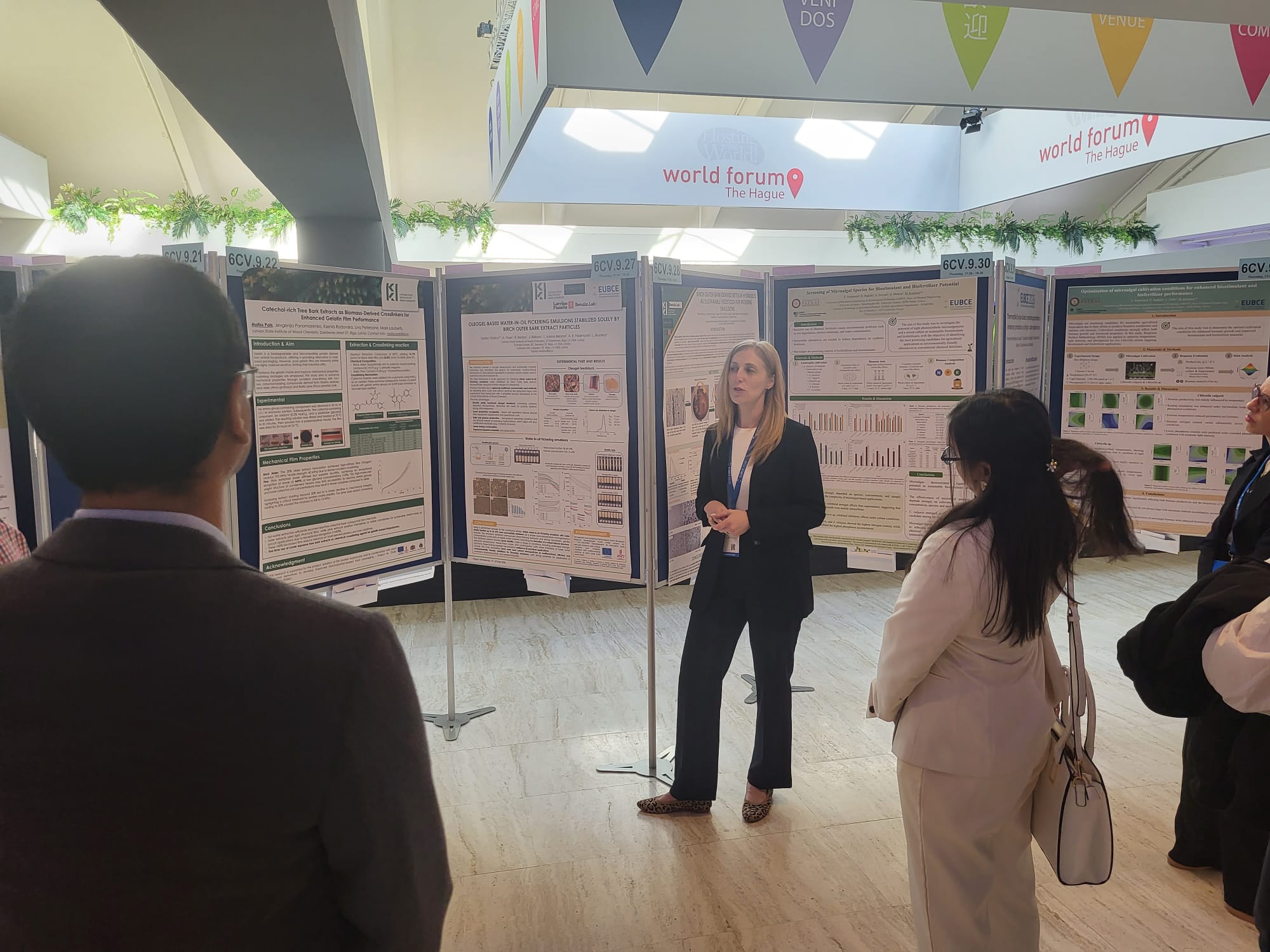
Researchers of the Latvian State Institute of Wood Chemistry, Sanita Vītoliņa and Rūdolfs Bērziņš, continue their research on the potential of birch outer bark extractives for the development of innovative personal care products. The latest research results were recently presented at the 34th European Biomass Conference and Exhibition (EUBCE 2026) in The Hague.
The research is being carried out within ERDF project No. 1.1.1.3/1/24/A/094, “Development of Innovative Personal Care Products and Unique Cosmetic Ingredients Stabilized with Multifunctional Birch Bark Extractive Particles”, in collaboration with AS Latvijas Finieris and SIA Labrains.
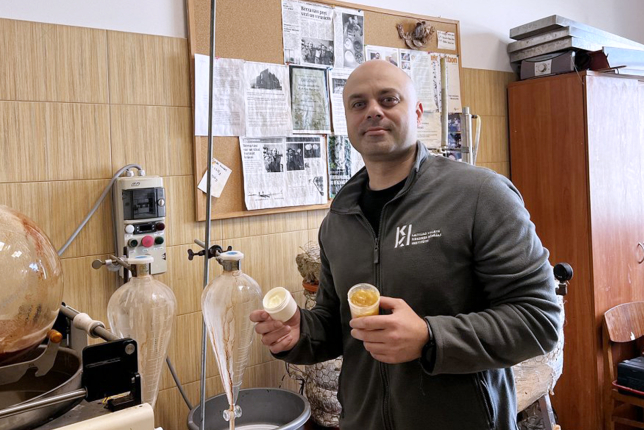
The aim of the project is to develop novel cosmetic ingredients and personal care products using birch bark extractives. Researchers are investigating how these naturally derived compounds can replace conventionally used synthetic stabilizers while maintaining the required product properties.
One of the research directions focuses on so-called Pickering emulsions, in which solid birch bark extractive particles are used for stabilization instead of traditional surfactants. This approach offers opportunities for the development of more natural and sustainable cosmetic products. In addition, birch bark extractives in such systems can serve not only as stabilizers for gels and Pickering emulsions but also as functional and biologically active ingredients.
At EUBCE 2026, researchers Sanita Vītoliņa and Rūdolfs Bērziņš presented two research posters: “Birch Outer Bark-Derived Betulin Hydrogels as Sustainable Feedstock for Pickering Emulsions” and “Oleogel-based Water-in-Oil Pickering Emulsions Stabilized Solely by Birch Outer Bark Extract Particles”. Both studies evaluated the potential of birch bark extractives for the preparation of Pickering emulsions.
An extended conference paper summarizing the research results has also been prepared, submitted for publication, and will be indexed in the Scopus database.
Participation in the conference provided an opportunity to present the project results to the international scientific community, discuss research findings with experts in the field, and establish new contacts for future collaboration. The knowledge gained and the contacts established will support further research and the development of new solutions.