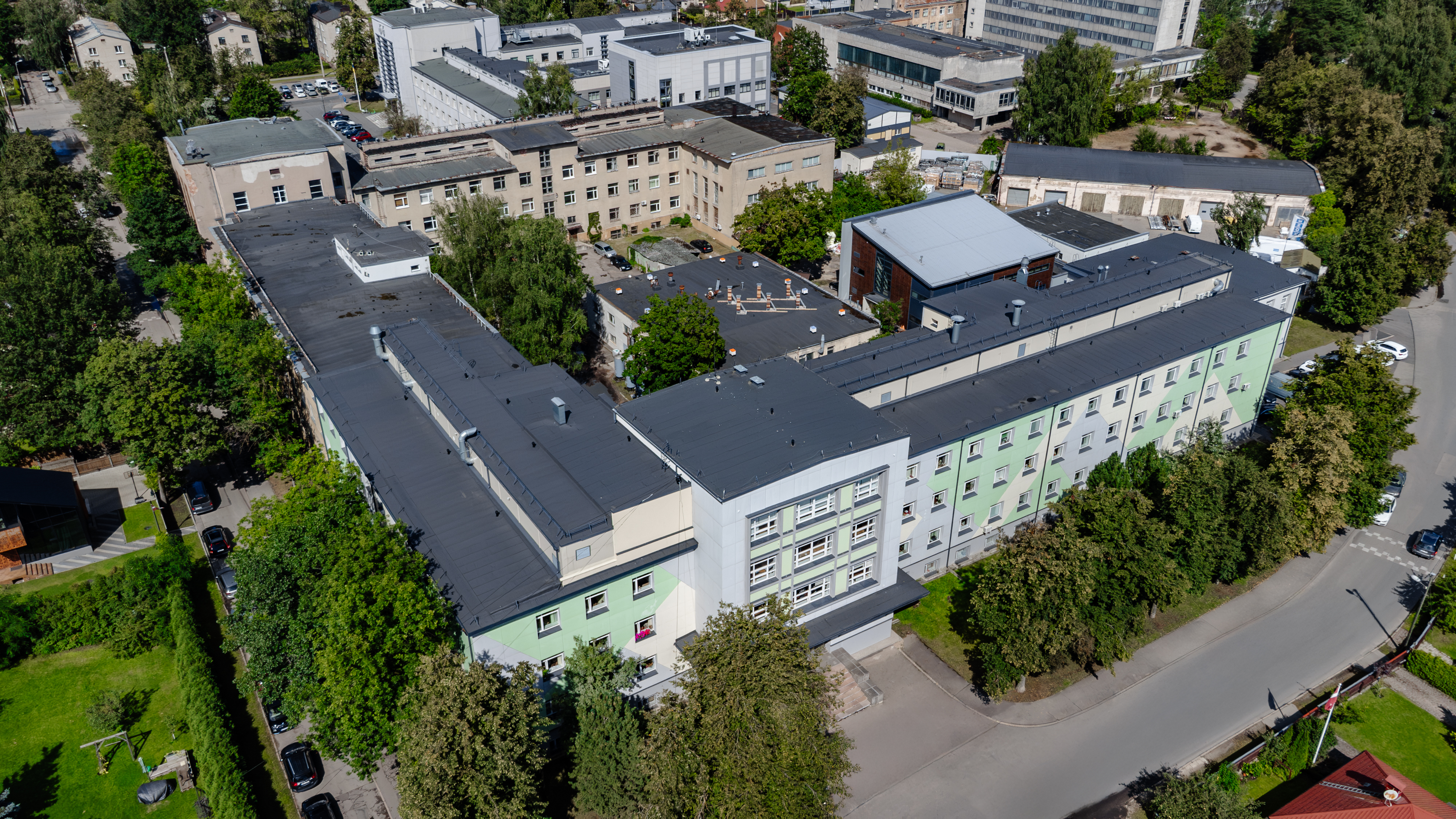
80 Years in Science and Innovation
In 2026, the Latvian State Institute of Wood Chemistry (LSIWC) celebrates its 80th anniversary. February marks the month of the Institute’s founding. In 1946, when the Latvian Academy of Sciences established 15 research institutes, the then Institute of Forestry Problems – today’s LSIWC – was among them. Since that time, LSIWC has become one of the leading wood-research centres in the Baltic region.
The Institute’s origins were grounded in expertise accumulated in the early twentieth century in forestry, wood chemistry and materials science. Already in its first year of operation, the Institute employed 60 staff members, including 38 scientists – chemists, forestry specialists and wood-processing experts. One of the central figures in the Institute’s development was Professor Arvīds Kalniņš, whose conviction that research must lead to practical application became a cornerstone of the Institute’s work.
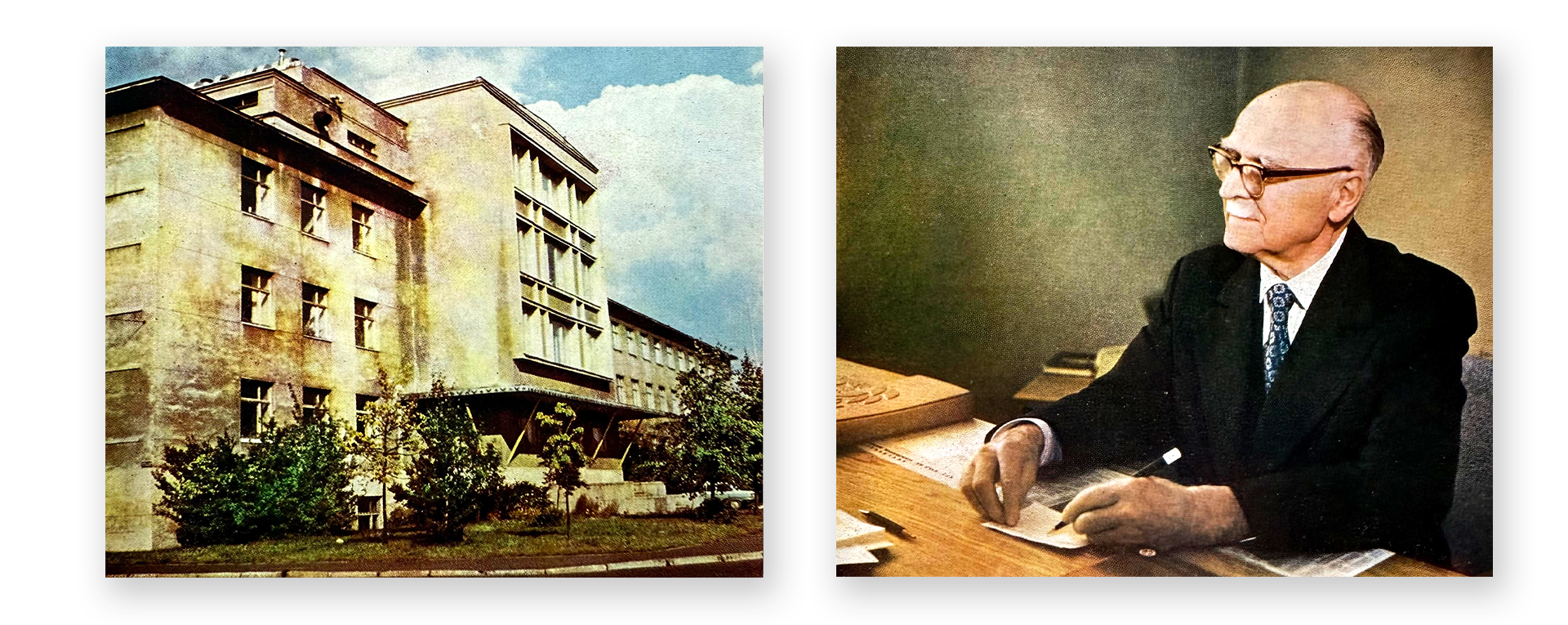
The Institute’s first Director, Professor Arvīds Kalniņš
Over eight decades, LSIWC’s research scope has expanded significantly – from early studies on lignin and cellulose structure to modern biorefinery technologies, the development of biocomposites, wood protection, pelletisation and the creation of functional materials, among many others. Many of these solutions have been implemented in practice, fostering the commercialisation of new products and the growth of enterprises in Latvia. Today, the Institute is a major centre of competence in bioeconomy and materials science in the Baltic region, with research focused on efficient resource use, circular-economy principles and European research priorities.
In recent decades, diverse studies have addressed wood-protection solutions, the development and recycling of cellulose products – including enzymatic de-inking of waste paper – as well as investigations into lignin structure, the creation of lignin-based products, the enhancement and restoration of wood materials, and the development of biocomposites for thermal and acoustic insulation.
At the same time, research has advanced in the field of microbial biomass and in biorefinery technologies employing hydrothermal, thermochemical and thermomechanical processing, as well as in the production of furfural, acetic acid and other compounds from wood and agricultural residues. Technologies and equipment for charcoal production have been developed, pelletisation and the production of activated carbon from wood-processing residues have been improved, and smoking solutions with reduced benzo[a]pyrene content have been created.
A substantial part of the Institute’s research has also been devoted to obtaining biologically active compounds from cellulose and its derivatives for cosmetic and hygiene products, developing natural polymers – including chitosan-containing food additives to support digestive health – and extracting valuable compounds from various plant materials. In parallel, environmentally friendly solutions for crop production, horticulture, agriculture and forestry – such as lignosilicon products – have been created, together with technologies for producing polyurethane foams, adhesives, coatings and varnishes.
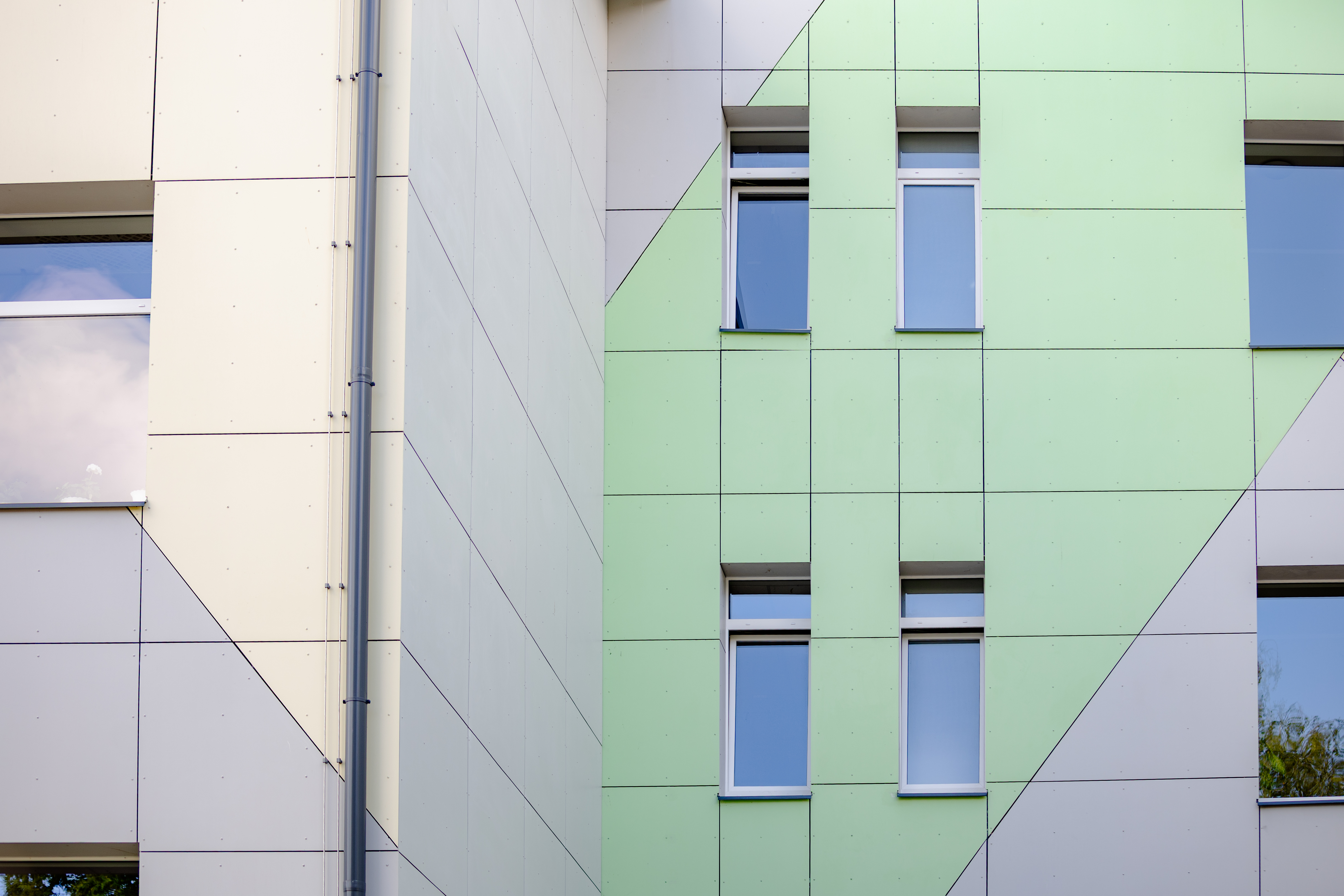
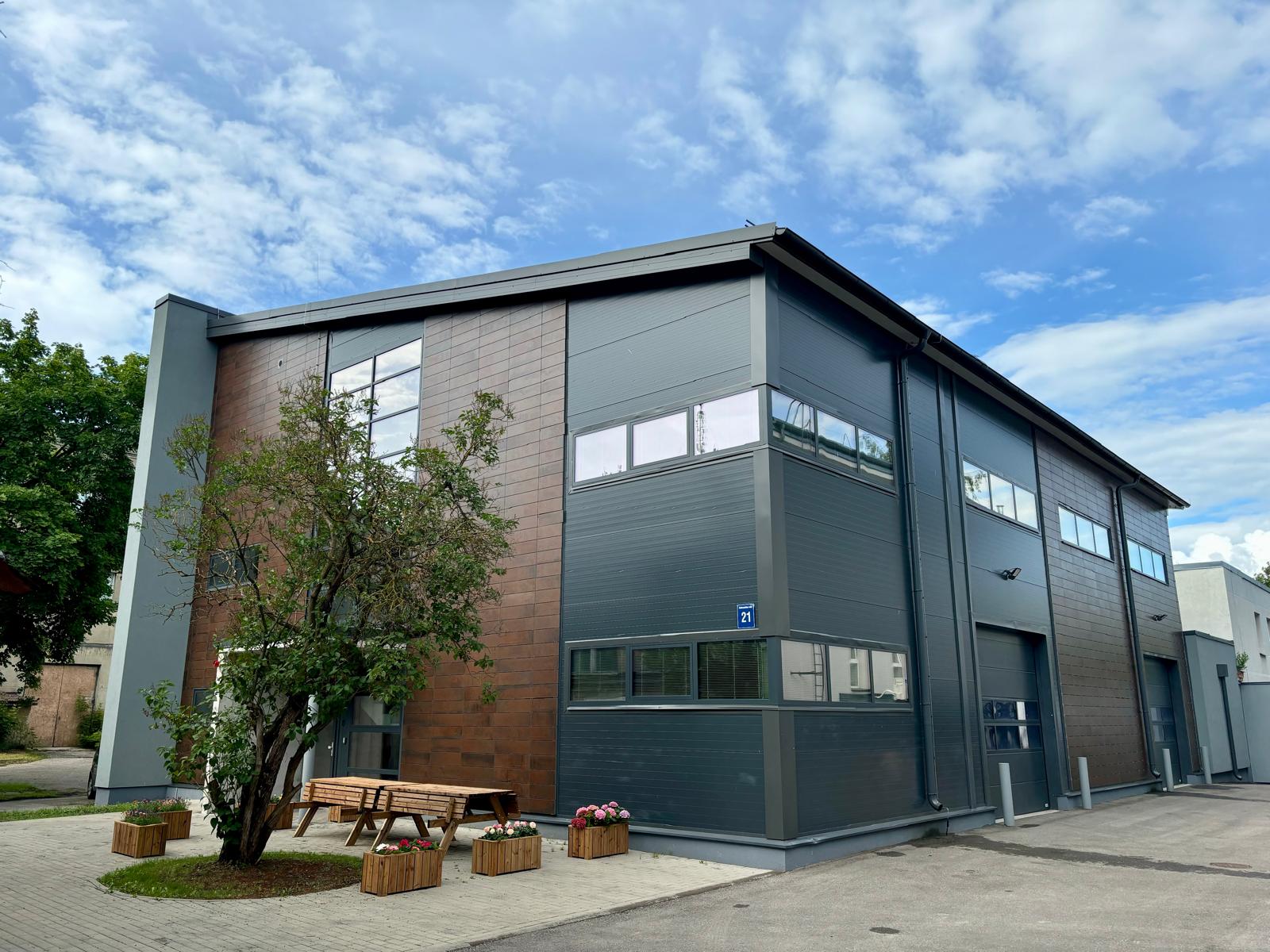
Major progress in the Institute’s development has likewise come from the modernisation of its research infrastructure: with European Union support, the main building has been renovated, a Pilot-Scale Hangar constructed, and analytical capacities expanded through state-of-the-art chromatography and spectroscopy equipment. Pilot-scale processing lines enable technologies to be advanced to Technology Readiness Levels (TRL) 4–5, ensuring a pathway from laboratory research to industrial implementation.
The Institute’s research results are widely disseminated internationally, with more than 80 peer-reviewed publications published each year, participation in Horizon Europe consortia and close collaboration with industry. The Institute also regularly organises bioeconomy conferences that bring together researchers and practitioners.
Preparing young researchers and inspiring the next generation of scientists is another central aspect of the Institute’s mission. In 2025, LSIWC hosted 15 interns and visiting researchers from eight countries, fostering international knowledge exchange and strengthening research quality. The Institute also works purposefully with school students – welcoming more than 25 school excursions in 2025 and taking part in educational initiatives and Europe-wide events that attracted hundreds of visitors.
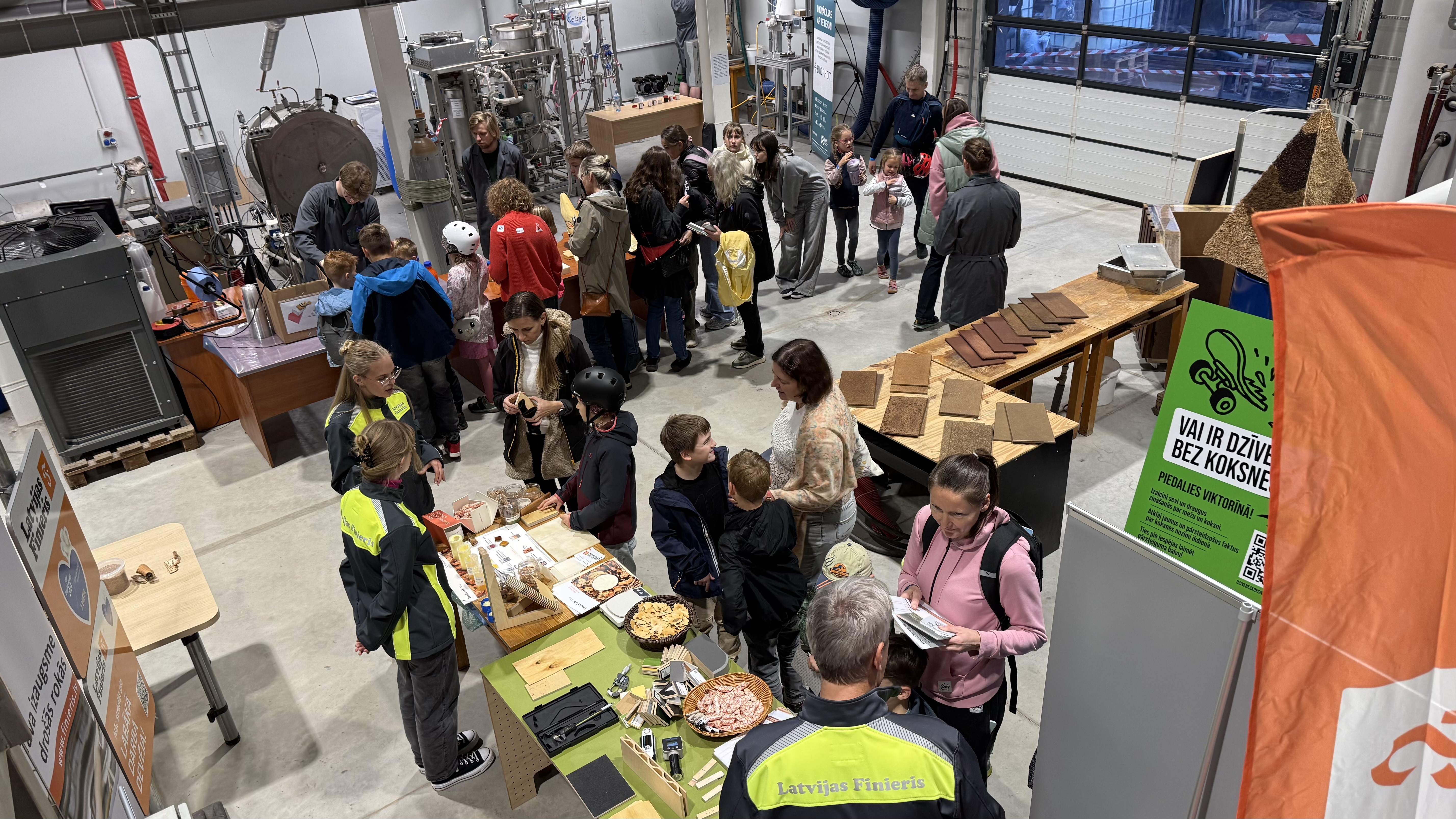
LSIWC is an active participant in career days and public-outreach activities, introducing young people to the researcher’s profession and career opportunities in science. Institute researchers are also closely involved in higher education, supervising bachelor’s, master’s and doctoral theses and co-supervising doctoral projects in cooperation with Latvian universities. This ensures a strong link between academia and the research conducted at the Institute while fostering long-term scientific continuity.
Looking ahead, the Institute plans to place strong emphasis on further developing its research infrastructure, investing in artificial-intelligence-based research tools and advanced analytical technologies, and establishing joint research laboratories with industrial partners.
LSIWC’s eighty years tell a story of continuous development, scientific ambition and tangible impact on Latvia’s economy. The Latvian State Institute of Wood Chemistry will continue along this path – creating new technologies, strengthening collaboration with industry and developing solutions that contribute to a better and more competitive future.