80 years connecting science, industry and society
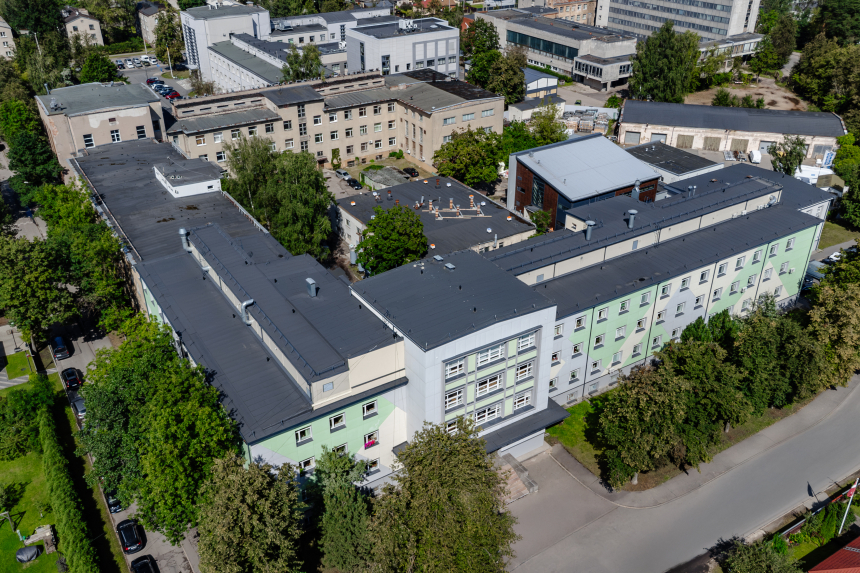
Photo: Ieva Romaško
In 2026, the Latvian State Institute of Wood Chemistry (LSIWC) celebrates its 80th anniversary. Eight decades mark continuous development — from fundamental research in wood chemistry to modern bioeconomy, biorefining, and international collaboration.
The anniversary year is structured as a series of events reflecting the institute’s activities at different levels:
20 March — anniversary year opening event with cooperation partners
6–8 May — international young scientists’ conference BTechPro 2026
November — anniversary event for colleagues
These events reflect the institute’s activities across multiple dimensions, yet they represent only part of a broader development context.
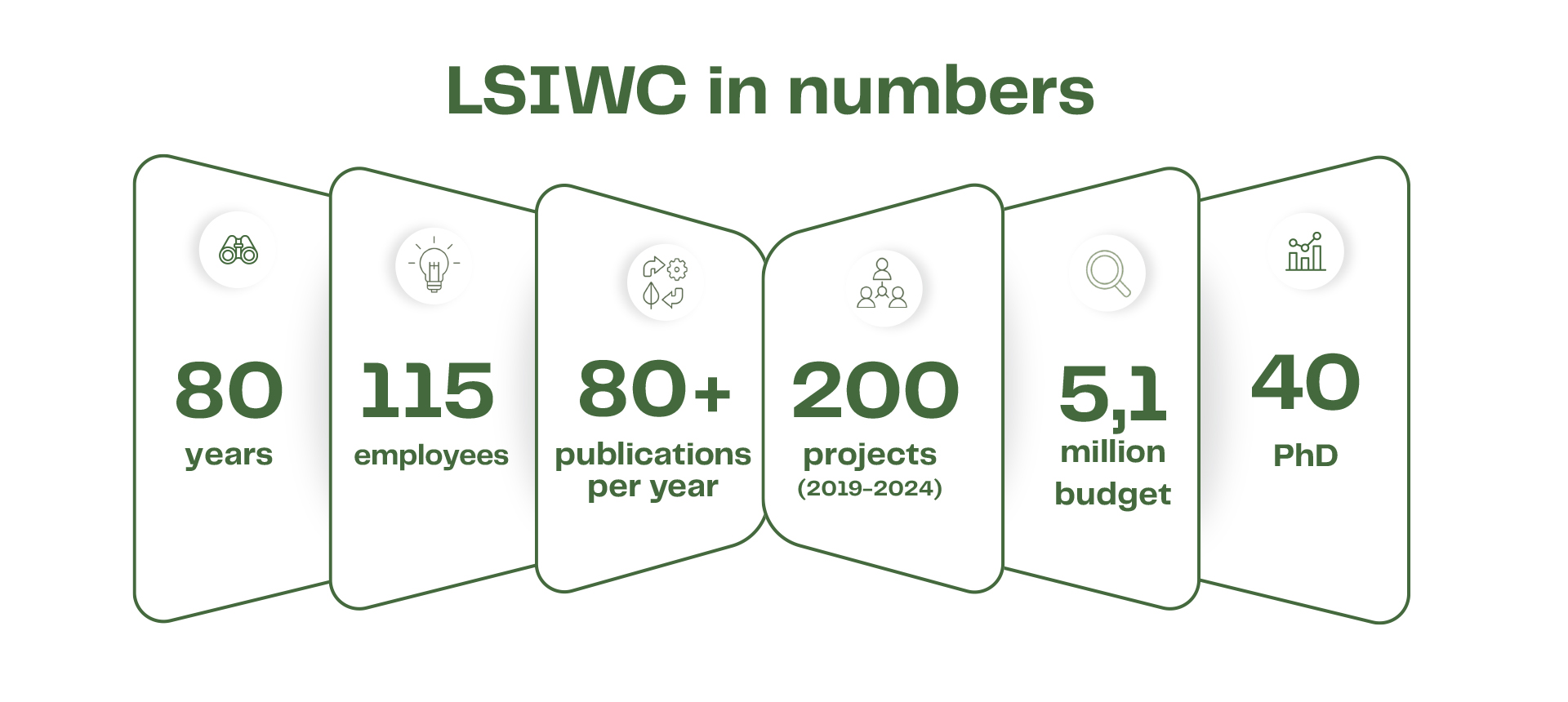
Founded in 1946, the institute is today one of the leading research centres in wood chemistry and bioeconomy in the Baltic region. It employs 115 staff members, including 40 researchers holding doctoral degrees, and in 2024 its turnover reached €5.1 million.
Between 2019 and 2024, the institute implemented approximately 200 research projects, including international Horizon programme projects, demonstrating stable competitiveness within the European Research Area. Researchers publish more than 80 scientific papers annually, and institute representatives actively contribute to science policy development.
The institute’s research is based on three interrelated directions:
wood material enhancement
biorefining
green chemistry
These areas form the basis for developing new materials and technologies that enable the replacement of fossil resources with renewable raw materials. Their practical relevance extends beyond laboratories, influencing industrial processes and product development within the bioeconomy.
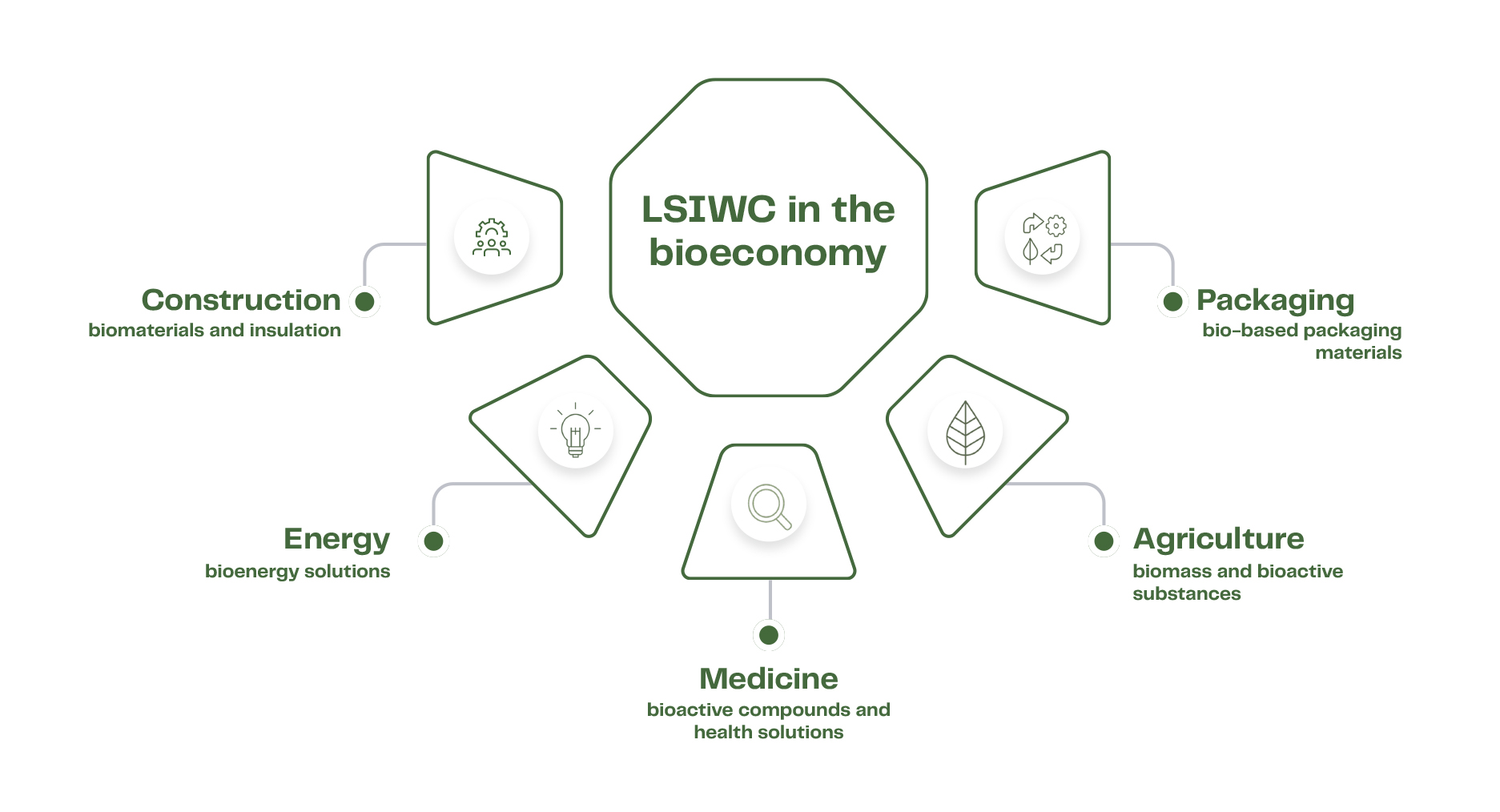
LSIWC’s activities are closely aligned with European research and innovation policy. They correspond to the objectives of the European Green Deal and the EU Bioeconomy Strategy, as well as Latvia’s Smart Specialisation Strategy (RIS3), particularly the priority “knowledge-intensive bioeconomy”.
This means that the institute not only generates new knowledge but also contributes to the practical implementation of policy directions — from climate targets to industrial transformation.
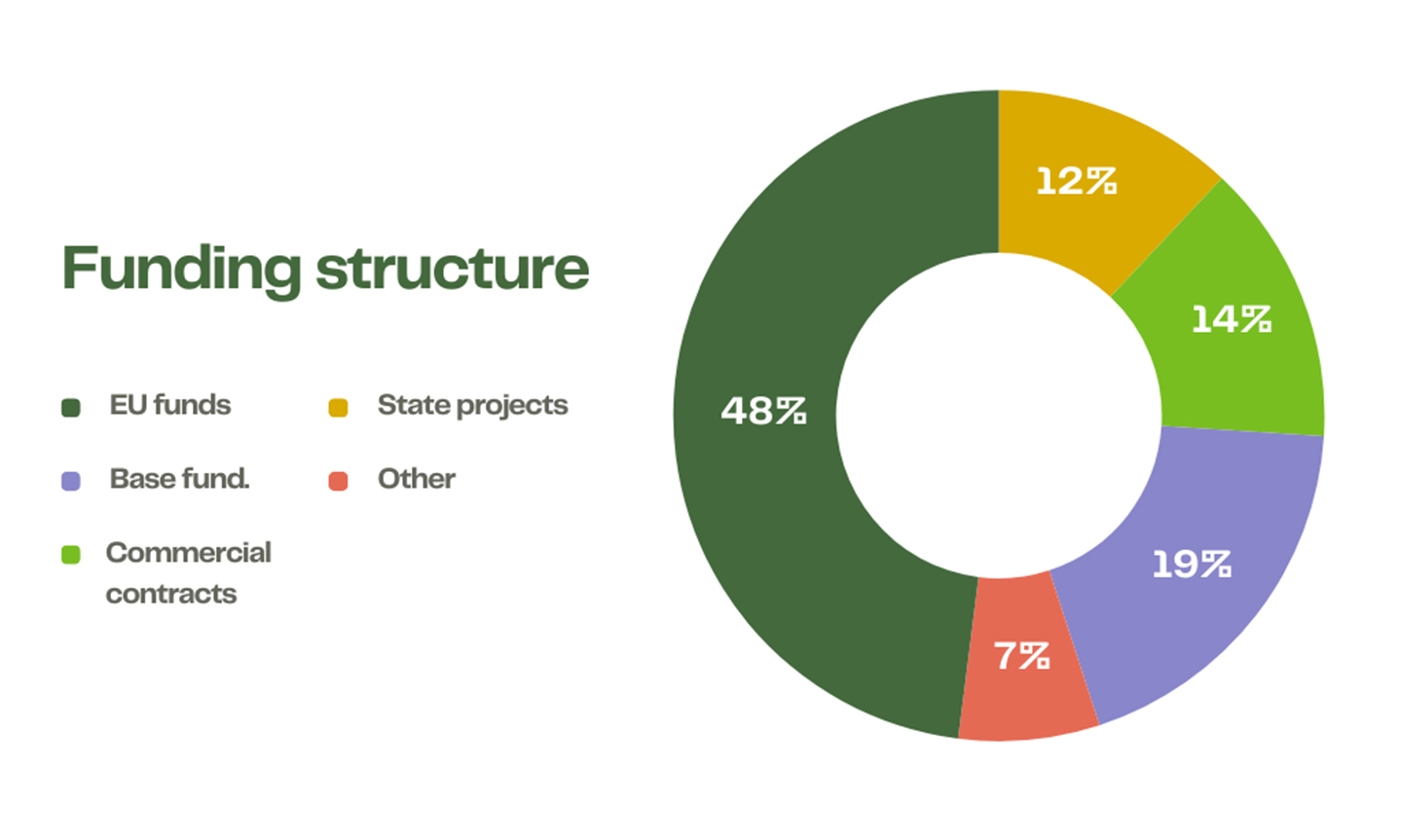
The institute’s funding structure reflects its operation across multiple systems:
48% — European Union Structural Fund projects
19% — national base funding
12% — state-funded competitive research projects
21% — commercial contracts and other income
This distribution indicates that the institute operates simultaneously within international research frameworks and in close cooperation with industry, ensuring both scientific excellence and practical applicability.
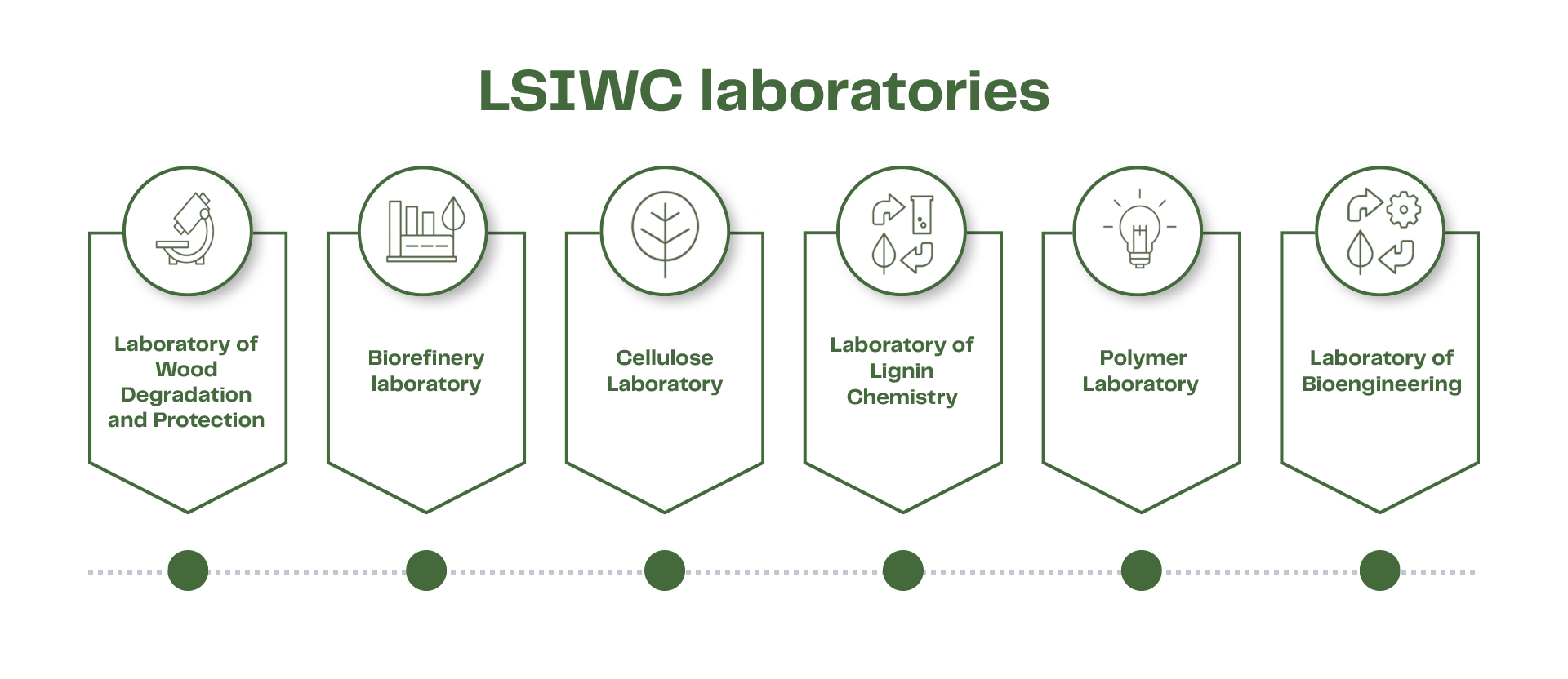
Research at the institute is organised across six laboratories, covering the full spectrum of the bioeconomy — from wood degradation and protection to cellulose materials, lignin chemistry, polymers, and bioengineering.
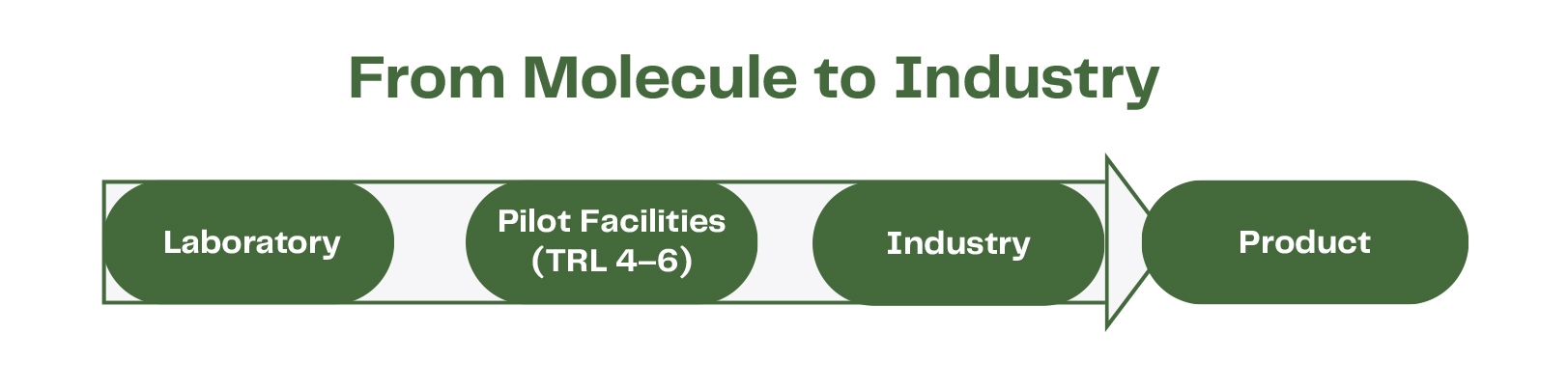
The institute is developing as a full-cycle research infrastructure — from fundamental research to technology upscaling and industrial implementation.
The Pilot-Scale Hangar, opened in 2022, enables technology development up to industrial level (TRL 4–6), facilitating the transition from laboratory results to practical applications. The institute actively collaborates with industry, engaging in joint research projects, technology development, and commercialisation.
The institute actively collaborates with industry leaders such as Latvijas Finieris, Stora Enso, Fibenol, Chempolis, and Iecavnieks & Co, among others. This collaboration includes joint research projects, technology development, and commercialisation.
This means that the institute operates across the entire innovation cycle — from idea and molecule to technology and industrial implementation.
Over eighty years, LSIWC has evolved from a fundamental research institute into a multi-level knowledge and innovation centre. The institute continues to develop as a connecting link that integrates science, technological development, and their implementation in the economy.