Towards Lighter and More Durable Beehives: LSIWC Researchers Test a New Biocomposite
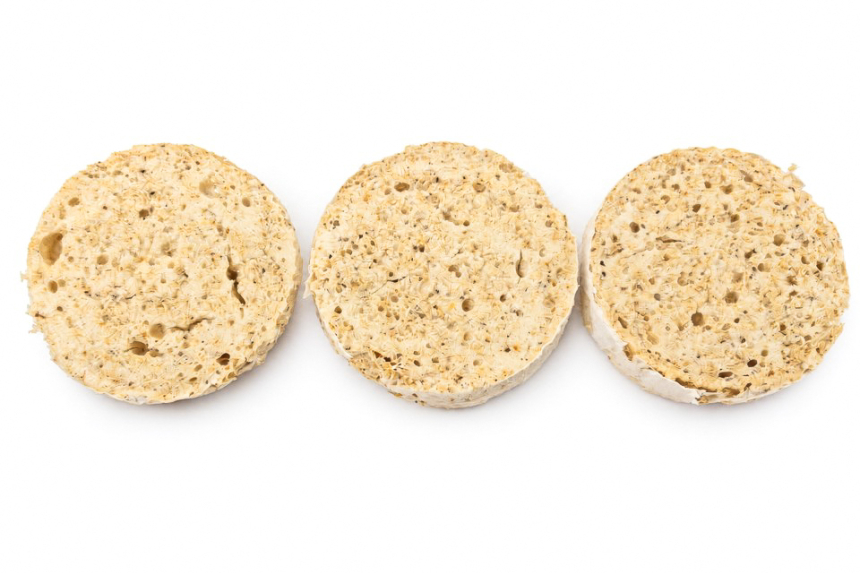
To ease the daily workload of beekeepers and provide better overwintering conditions for bees, researchers at the Latvian State Institute of Wood Chemistry (LSIWC) are developing a novel polyurethane and natural fiber composite material for beehive manufacturing. The project is being implemented in collaboration with industry partners, combining scientific expertise with practical beekeeping experience.
Challenges in Choosing Existing Materials
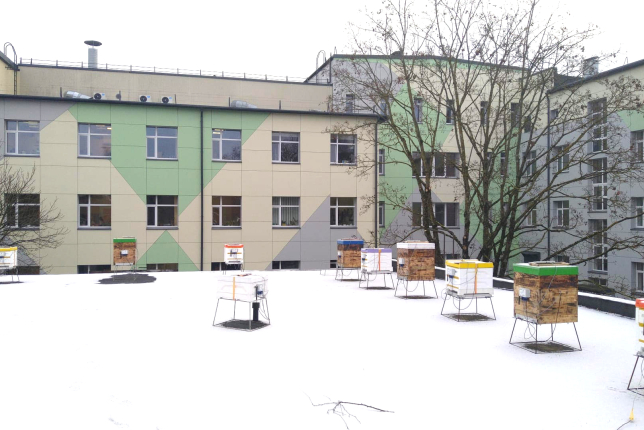
Beekeeping is physically demanding work — an empty wooden beehive weighs around 20 kilograms, while a honey-filled super (hive box) reaches a similar weight. Because of this heavy physical load, many apiary tasks often require two people, limiting the accessibility of the industry to a broader audience.
Although the basic design of wooden beehives has remained largely unchanged since 1852, none of the solutions currently on the market fully meet modern requirements:
Wooden beehives are durable, yet heavy and require additional insulation during the winter months.
Polystyrene (foam) beehives are lightweight and offer good thermal insulation, but they are mechanically fragile and made from petroleum-based products.
Combining Durability with Light Weight
While researchers worldwide have previously searched for alternative beehive materials, no solution has yet been found that fully replaces wood and polystyrene. In the LSIWC laboratory, scientists are currently testing samples of a new polyurethane and natural fiber composite, aiming to combine the best properties of both existing materials — the mechanical durability of a wooden hive with the lightness and superior thermal insulation of foam.
This new material would not only significantly reduce the physical strain on beekeepers in their daily work, making the sector more accessible to everyone, but also help bee colonies overwinter more safely amid shifting weather patterns and rapid climate change.
Collaboration with Industry Partners
Research is currently continuing at the laboratory scale, marking the first steps on the path from a scientific concept to a practical, beekeeper-friendly solution.
The study is carried out within a European Innovation Partnership (EIP) working group project supported by the European Agricultural Fund for Rural Development (EAFRD) and the Rural Support Service (RSS), in close cooperation with beekeeping companies SIA “Salix” and SIA “RS Bite”.