Professor from the World’s Top 2% of Most-Cited Scientists Visits LSIWC to Develop Sustainable Construction Materials from Food Waste
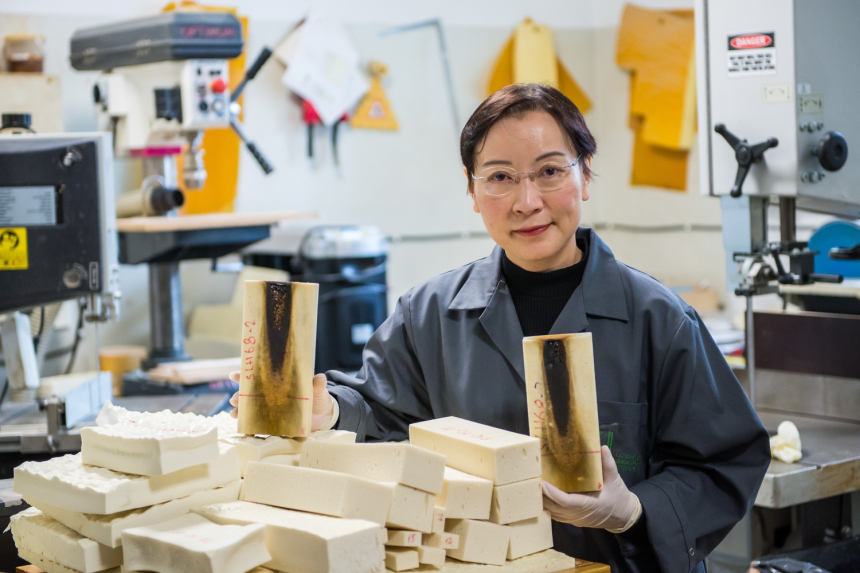
The Latvian State Institute of Wood Chemistry (LSIWC) is currently hosting Professor Carol Sze Ki Lin from City University of Hong Kong (CityU HK) for a two-month research visit. Professor Lin, who has been included among the world’s top 2% of most-cited scientists in the fields of biotechnology and environmental science since 2020, is working together with LSIWC researchers to develop sustainable and fire-safe polyurethane materials using renewable and waste-derived feedstocks. The international research collaboration has already been covered by Times Higher Education, a leading global media outlet covering higher education and research.
Professor Carol Sze Ki Lin’s research focuses on the circular bioeconomy and biorefining, exploring how biomass and different types of waste can be converted into products with higher added value. Her research group at CityU HK specialises in waste valorisation and the development of biorefining processes based on circular economy principles.
From waste to safer materials
Rigid polyurethane foam is widely used in construction, including for thermal insulation. However, conventional polyurethane materials are produced from petrochemical feedstocks. Researchers are therefore looking for solutions that can combine renewable and waste-derived feedstocks while providing the fire safety properties required for these materials.
As part of the research, the team is developing an approach in which, for example, food waste can be used as a resource for producing new polyurethane materials. This approach makes it possible to turn waste into valuable feedstocks while reducing the need for fossil resources.
Particular attention is being paid to technology scale-up. Using LSIWC’s pilot-scale infrastructure, the researchers are working to transfer processes from the laboratory to a larger scale. At the same time, the properties of the developed materials are being evaluated, including their flammability, alongside techno-economic analysis and life cycle assessment.
The collaboration brings together the complementary expertise of both institutions. CityU HK’s experience in waste valorisation and the development of circular biorefining processes is combined with LSIWC’s expertise in polyurethane chemistry, materials development, process scale-up and the assessment of flammability properties.
“It is important to us that internationally recognised researchers choose LSIWC as a partner in advancing their research. This collaboration allows us to combine Professor Carol Sze Ki Lin’s expertise in waste valorisation with our expertise in polyurethane chemistry and materials development. At the same time, it provides an opportunity to use LSIWC’s infrastructure to test solutions developed in the laboratory at a larger scale and assess their potential for practical application,” says Dr Uģis Cābulis, Vice-Director for scientific activities of LSIWC and Head of the Polymer Laboratory.
Long-term collaboration with City University of Hong Kong
LSIWC’s collaboration with CityU HK and Professor Carol Sze Ki Lin began in 2018, when leading researchers from LSIWC’s Polymer Laboratory, Dr Miķelis Kirpļuks and Dr Anda Fridrihsone, began working with Professor Lin’s research group.
“Our collaboration began with a conversation following Professor Carol Sze Ki Lin’s presentation on the complex processing of food waste. At the time, we discussed the possibility of using waste cooking oil to produce polyurethane foam instead of biodiesel. Since then, this idea has grown into a long-term and highly productive research collaboration,” says Dr Miķelis Kirpļuks.
Over the course of the collaboration, joint scientific publications have been produced, international patent applications submitted, and research project proposals prepared. The collaboration is currently continuing with the development of new bio-based material solutions.
“Over the years, the collaboration has resulted not only in joint scientific results and publications, but also in opportunities to develop new research ideas and advance them together. We are currently continuing our work on new bio-based materials, looking for solutions in which renewable and waste-derived feedstocks can replace conventional feedstocks,” says Dr Anda Fridrihsone.
This international collaboration also extends to other areas of LSIWC research. Earlier this year, Dr Uģis Cābulis, Deputy Director for Scientific Affairs of LSIWC and Head of the Polymer Laboratory, gave a guest lecture at City University of Hong Kong, introducing the institute’s work in space technologies and cryogenic insulation.
Joint LSIWC and CityU HK research gains international attention
Professor Lin’s visit to Latvia is taking place as part of the new Overseas Research Fellowship Scheme of the Hong Kong Research Grants Council. She is one of seven CityU HK researchers to receive a fellowship under the programme for international research collaboration.
Joint research by LSIWC and CityU HK has also attracted international attention. An article about the collaboration was published by Times Higher Education, one of the world’s best-known higher education and science publications.
The article, “Fire-repelling foam could save lives and upcycle waste”, explores research into new polyurethane foams made using renewable and waste-derived feedstocks, as well as the collaboration between the two institutions in developing this solution.
In the publication, Professor Carol Sze Ki Lin highlights the importance of the long-term collaboration with LSIWC and the institute’s international reputation in polyurethane chemistry. She particularly emphasises the combination of the two institutions’ complementary expertise and research infrastructure, which enables the partners to advance the research from laboratory scale towards solutions closer to practical application.
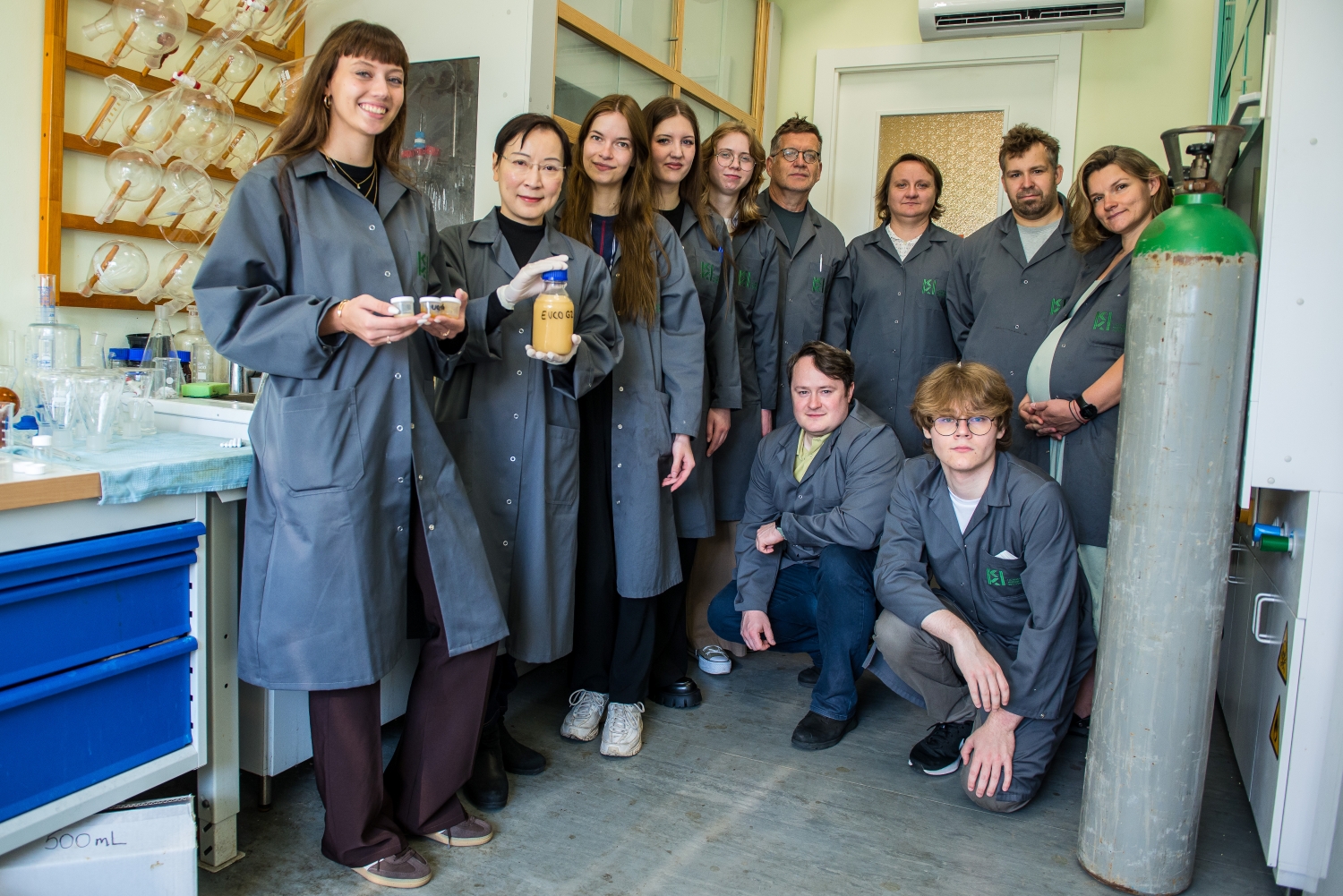
Professor Carol Sze Ki Lin with representatives of the Polymer Laboratory