Cryogenic Insulation for Hydrogen Aviation: PUR4LH2 Progress
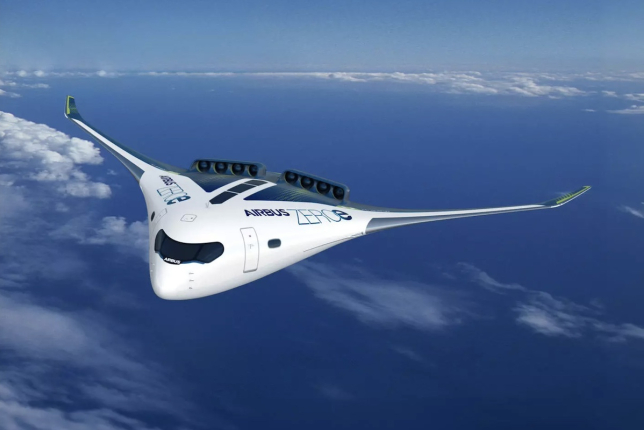
Photo: Airbus
If hydrogen becomes the fuel of future aviation, the decisive question will not concern engine technology alone. Rather, it can be formulated as follows: how can liquid hydrogen (LH₂) be stored safely and efficiently at temperatures below –250 °C?
Such cryogenic insulation systems will be required not only in next-generation aircraft, but also in airport storage terminals, refueling infrastructure, and potentially even in space-related cryogenic tanks. At the Latvian State Institute of Wood Chemistry (LSIWC), this expertise is not being developed from scratch — researchers already have experience in developing cryogenic materials for the Ariane 6 launch vehicle. The project Rigid Polyurethane Foam as Cryogenic Insulation for Future Zero-Emission Commercial Aircraft (PUR4LH2) expands this knowledge base, purposefully adapting it to the requirements of civil aviation.
From Concept to Experiment
The PUR4LH2 project was initiated in response to Europe’s ambition to transition aviation toward zero-emission solutions in the coming decades. Liquid hydrogen (LH₂) is one of the leading candidates, but it must be stored at extremely low temperatures of approximately –253 °C. This requires tank materials that simultaneously reduce heat ingress, withstand mechanical loads, and maintain stability throughout long-term operation.
The rigid polyurethane foam compositions developed in the Polymer Laboratory of the Latvian State Institute of Wood Chemistry (LSIWC) are based on bio-based polyols derived from renewable resources, heavy-metal-free catalysts, and blowing agents with low global warming potential (GWP). The objective of Dr. sc. ing. Vladimirs Jakušins, Dr. sc. ing. Uģis Cābulis, Mg. chem. Laima Vēvere, and Bc. chem. Vanesa Dhalivala is to develop an insulation system with a service life of at least 20 years that meets aviation safety and qualification requirements.
The first year of the project marks the transition from formulation development to experimental validation.
Why This Matters for Aviation
In liquid hydrogen tanks, even minor heat ingress leads to fuel boil-off, mass loss, and additional safety challenges. In aviation, this directly affects operational efficiency, structural loads, and certification processes. The sector therefore requires experimentally validated data that enable accurate modeling and qualification of insulation systems under realistic conditions.
PUR4LH2 is currently progressing from material selection toward qualification-level validation. During the first year, 70 polyurethane systems were tested in the laboratory, six of which were selected for further optimization at pilot scale. The next phase includes long-term aging tests and repeated cryogenic cycling simulations to evaluate material stability during extended operation.
From Material to Infrastructure
Cryogenic insulation is not a niche component but one of the prerequisites for hydrogen aviation. Without a reliable and predictable insulation system, neither safe flight operations nor the development of supporting infrastructure is feasible.
PUR4LH2 demonstrates how fundamental materials science evolves into a technological contribution to the European hydrogen ecosystem. LSIWC researchers continue validating the laboratory model, step by step advancing it toward a solution that could become part of the future aviation technology value chain.