LSIWC in cooperation with “Dvoretsky Distillery” develops a solution to accelerate the ageing of distillates
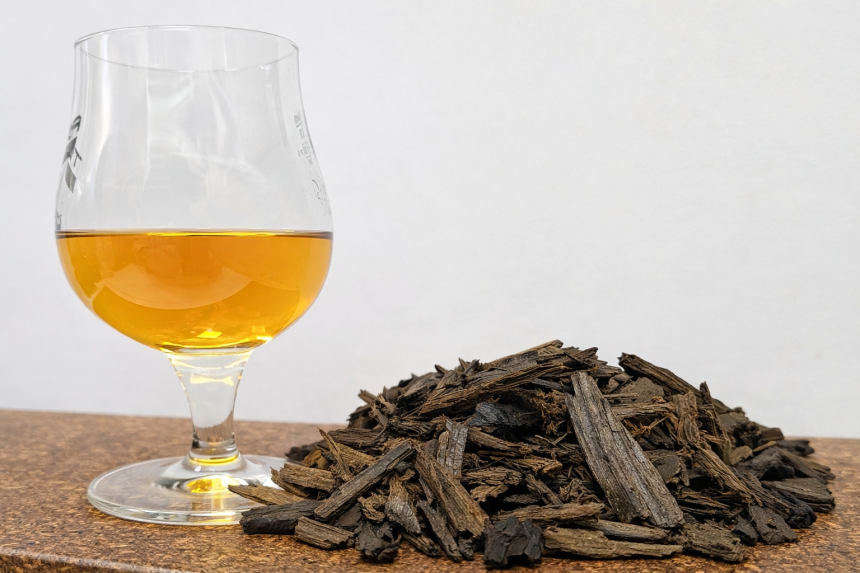
Many people know the feeling – when opening a bottle of a fine beverage, the aroma evokes notes of vanilla, caramel, or smoke. Behind these nuances, however, lies a complex interaction between wood and the beverage, a process that traditionally takes years. For this reason, global interest is growing in technologies that would make the process more intelligent and predictable (de Souza et.al, 2025; Krüger et.al. 2022; Ma et.al. 2022). The solution developed in Latvia has already attracted the attention of producers outside Europe, particularly in Asia and Latin America (Latvian Investment and Development Agency, 2026). In this context, the research carried out by LSIWC has become the scientific foundation for a new approach to the ageing of distillates.
The Latvian State Institute of Wood Chemistry (LSIWC), in cooperation with the Latvian beverage producer SIA Dvoretsky Distillery, has implemented the experimental development project “Development and approbation of a thermal treatment and extraction reactor prototype.” The project was carried out with the support of the Latvian Investment and Development Agency (LIAA) Innovation Voucher, combining LSIWC’s expertise in wood chemistry with the company’s practical experience in distillate ageing.
LSIWC research on the impact of oak wood on distillates
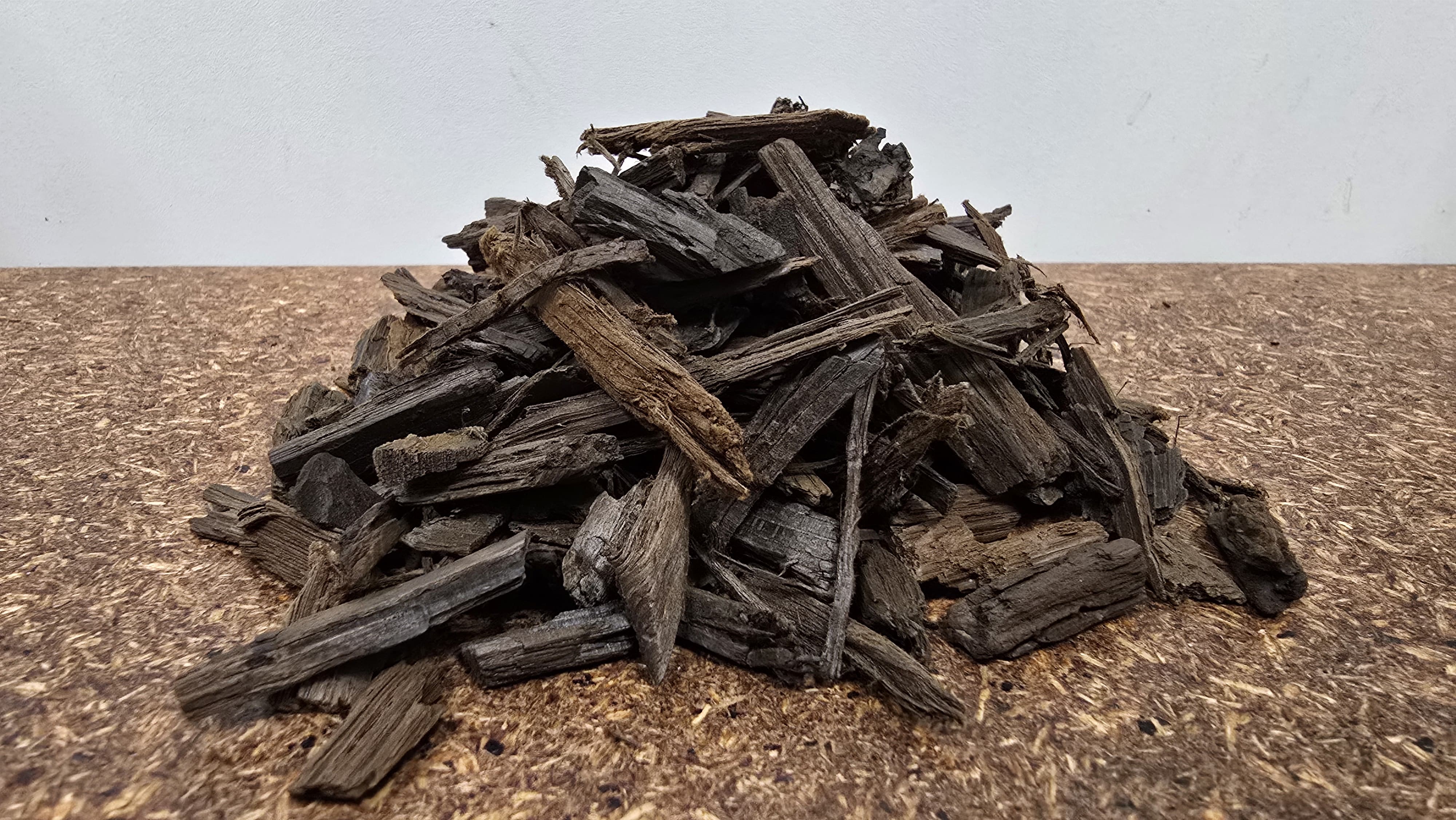
Within the project, LSIWC conducted research on the use of oak wood modified under different temperature regimes for the ageing of distillates. As a result of thermal treatment, chemical reactions of varying intensity occur in wood, involving transformations and partial degradation of lignin, hemicelluloses, and cellulose.
Influenced by these processes, oak wood gradually weaves a whole palette of sensations into the beverage – from gentle shades of vanilla and caramel to warm nuances of nuts, chocolate, and coffee, sometimes complemented by a light touch of smoke, forming a rich and multilayered bouquet of aroma and flavour.
As part of the study, products aged with oak wood underwent detailed chemical composition analysis using the gas chromatography method, while organoleptic analysis allowed the evaluation of the obtained products from the perspective of human sensory perception.
The research at LSIWC was carried out by a team of scientists, bringing together the expertise of the Institute’s Biorefinery and Cellulose Laboratory: Ph.D. Mārtiņš Andžs, Ph.D. Daniela Godiņa, and Dr.sc.ing. Inese Fiļipova.
About the cooperation partner – “Dvoretsky Distillery”
The Latvian beverage producer Dvoretsky Distillery is a family company founded in 2022, which has so far offered niche products created according to traditional craft methods and recipes. Having worked for many years with the distillate ageing process and observing both its complexity and the growing market demand for innovation, the company has launched a new development direction – the creation of technology to accelerate beverage ageing.
“The most expensive element in whisky, brandy, or cognac is not the raw material – it is time. Years are required in oak barrels for the beverage to acquire the desired bouquet of aroma, taste, and colour. The main goal of our innovation is to accelerate this process,” says company representative Ivans Dvoreckis.
The idea of the reactor
Traditional ageing in barrels is a process with many variables – wood structure, temperature fluctuations, oxidation dynamics. The equipment developed by the company aims to replicate these processes in a controlled environment, simulating the influence of an oak barrel on the flavour and colour of the beverage.
Within the framework of the LIAA Innovation Voucher project, a prototype of the device was created in cooperation with LSIWC and a series of tests were carried out.
“Our testing showed that the first three days in the reactor correspond to approximately one year in an oak barrel. After that, the processes slow down and the ratio is no longer linear,” notes Ivans Dvoreckis.
The company is currently assessing the possibilities of patenting the technological process and sees interest from Asia, Latin America, and industrial-scale producers.
Funding
The programme is financed within the framework of the European Union Cohesion Policy Programme 2021–2027, Specific Objective 1.2.1 “Strengthening research and innovation capacity and the introduction of advanced technologies in enterprises,” Measure 1.2.1.4 “Support for the improvement of the technology transfer system.”
The purpose of this publication is to inform about scientific research and innovations. Alcohol consumption may be harmful to health.