LSIWC Develops Birch Wood for Osteosynthesis Implants
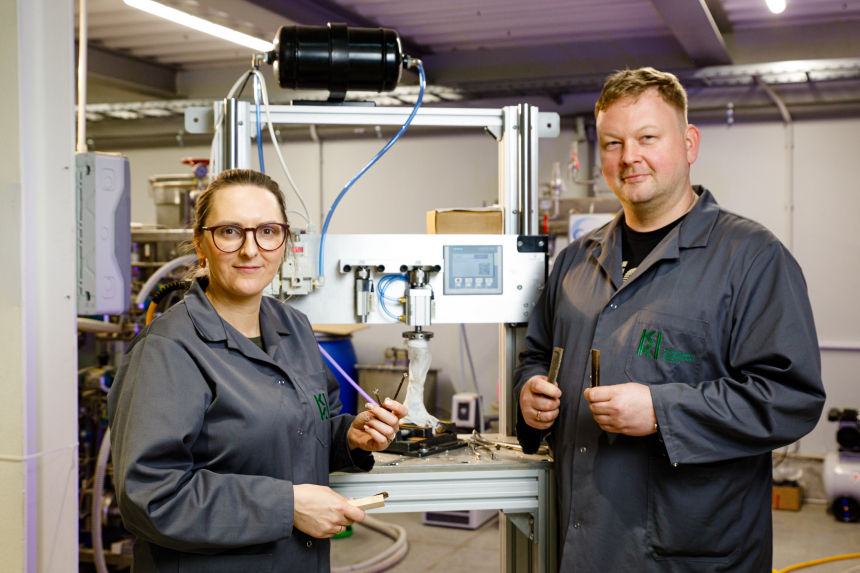
Photo: Dmitrijs Sulžics
In osteosynthesis – the fixation of bone fractures – metal implants, most commonly stainless steel or titanium, remain the gold standard. These materials are mechanically strong and clinically well established; however, they are not suitable for all patients. Approximately 2–5% of patients experience metal intolerance, allergic reactions, or chronic inflammation around the implant site. In such cases, revision surgery or alternative treatment solutions may be required.
In addition to immunological risks, metal implants differ significantly from the mechanical properties of bone – they are considerably stiffer than natural bone tissue. This mechanical mismatch may affect load distribution and the healing process. In such situations, biologically compatible, non-metallic materials with controlled mechanical performance are needed.
Scientific Basis: Mechanical Stability without Aggressive Chemistry
In a recent publication by the OsteoWood team within the BioPhoT platform project (IVPP-EM-Innovation-2024/1-0002), “NaOH-Only Pretreated Wood Densification: A Simplified Sulfite-Free Route Across Wood Species,” it was demonstrated that high mechanical stability can be achieved through simplified alkaline treatment with sodium hydroxide (NaOH), without sulfites and without extensive lignin removal. In practical terms, this means that the wood is not “dissolved” or fundamentally degraded but becomes more plastic and more amenable to densification.
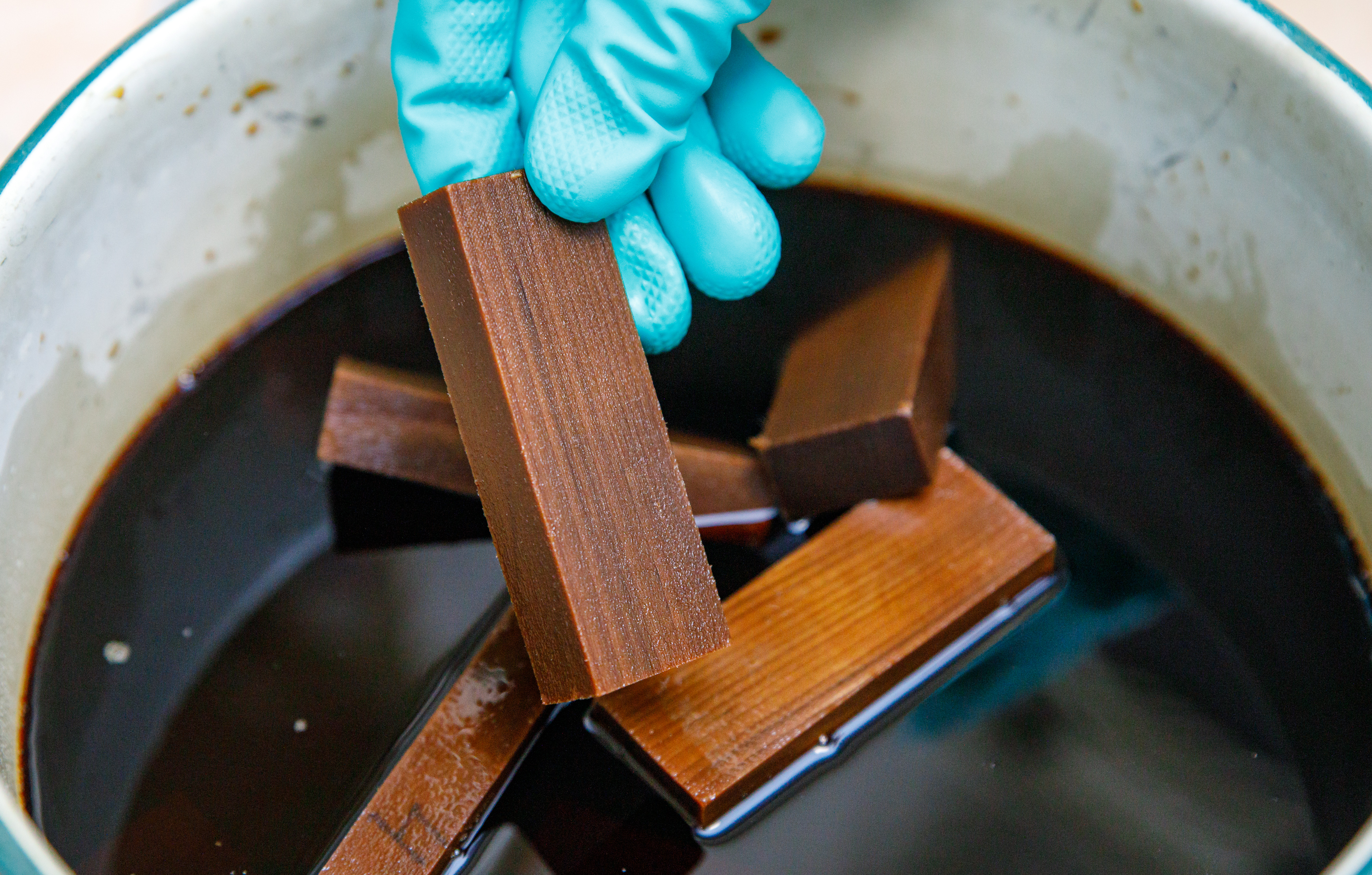
The researchers found that moderate NaOH treatment primarily cleaves acetyl groups and partially rearranges bonds between wood polymers, increasing cell wall plasticity. In other words, the material becomes more flexible internally while retaining its structural framework.
During pressing, cell lumina collapse almost completely, resulting in a highly compact structure – similar to compressing a porous material into a dense block. As a result, density reaches approximately 1200–1250 kg/m³, while mechanical properties increase severalfold. In the case of birch, the modulus of elasticity (MOE) reaches around 30 GPa, and bending strength up to approximately 400 MPa.
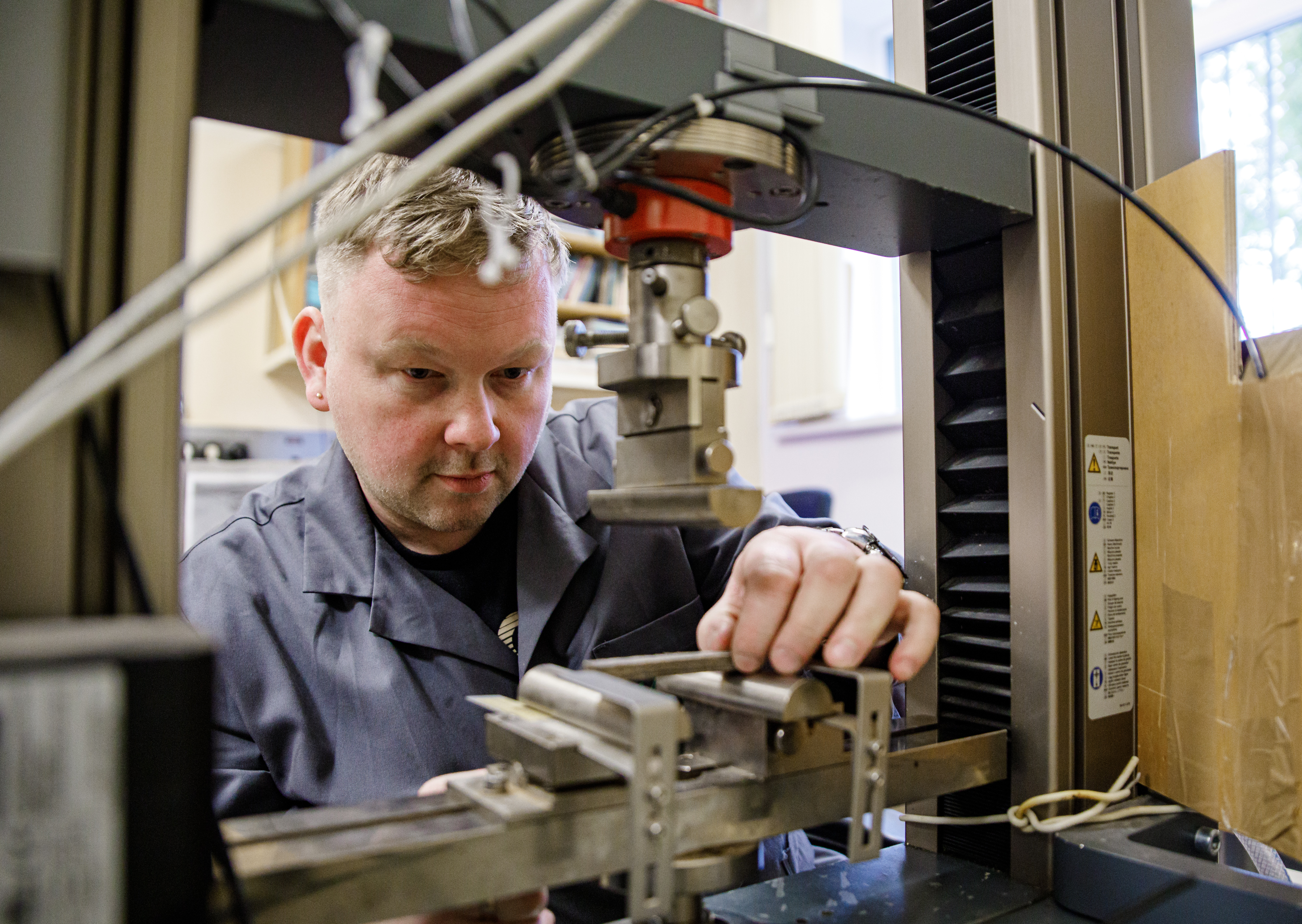
PhD Mārtiņš Andžs
Importantly, this effect is achieved without the use of aggressive chemical reagents. It is not a process in which the material is dissolved and rebuilt; rather, it resembles a careful internal reorganization of structure.
This principle – activating the structure rather than degrading it – is also crucial in biomaterials development, where preserving the natural polymer framework while achieving enhanced mechanical stability creates the preconditions for evaluating the material in a medical context.
Extension of Fundamental Research toward Biomaterials
These mechanical and structural results provide the foundation for the next stage – evaluating the material in a biomaterials context. Within the OsteoWood project, the wood densification principle is further developed to assess its suitability for osteosynthesis applications.
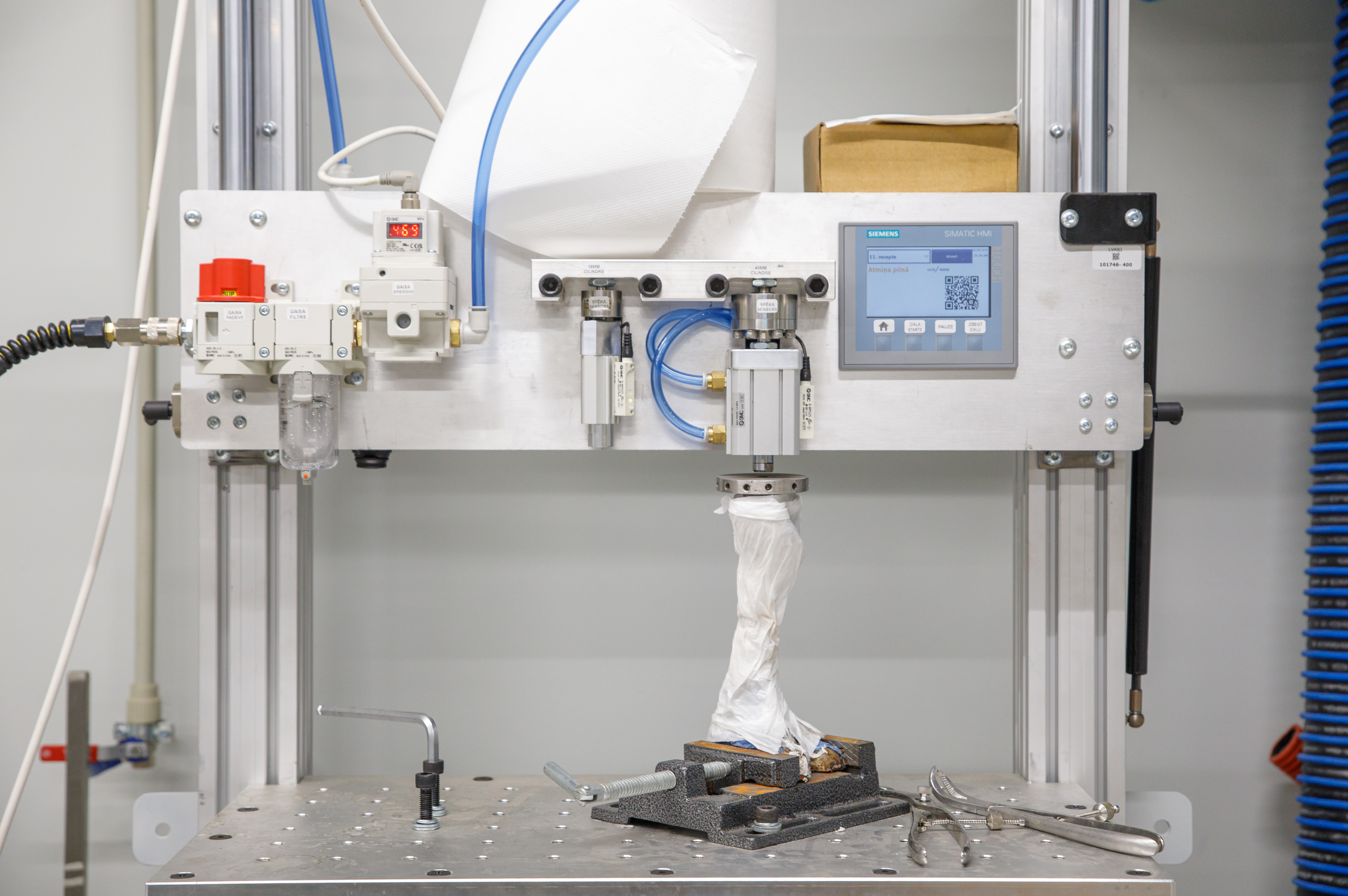
At this stage, attention is directed not only to mechanical parameters but also to chemical modification, surface properties, and in vitro cell compatibility (TRL3). In addition to mechanical and structural analysis, functional modification is carried out by incorporating oligochitosan into the material in order to enhance cell attachment and potential interaction with bone tissue.
To ensure that the developed material is not only mechanically compliant but also safe in a biological environment, our scientists, in collaboration with the Institute of Organic Synthesis, conduct laboratory cell compatibility tests. These tests assess how cells respond to the material surface, whether they adhere, proliferate, or exhibit any cytotoxic response. This stage corresponds to TRL3, experimental proof of concept under laboratory conditions.
“Overall, the OsteoWood research is not an attempt to simply replace metal with wood. It is a systematic effort to develop, from a locally available renewable resource, a mechanically stable and biologically compatible material for specific, clinically defined indications. We are working to ensure that this material is biocompatible with the human body – non-toxic, stable, and suitable in aqueous or physiological environments,” emphasizes project leader Dr. chem. Laura Andže. “If a stiffness level comparable to cortical bone could be achieved, such a material could become an alternative to metal implants.”
Research Development Perspective
The OsteoWood project represents a logical continuation of fundamental research in wood chemistry and mechanical performance. In parallel, participation in the BioPhoT platform extends the work beyond the laboratory environment. It enables dialogue with medical, innovation, and industry partners, supporting the evaluation of potential application scenarios and further development pathways.
Such continuity allows for a systematic assessment of wood’s potential in niche medical applications, grounded in experimentally validated data.

No IVPP-EM-Innovation-2024/1-0002 "Long-term national research programme project "Biomedical and Photonics Research Platform for Innovative Products"