45 Years Ago – The “Lotoss” Device Created by LSIWC Scientists Went to Space

In 1980, on board the space station Salyut-6, the first chemical technology experiment in the history of astronautics was carried out in Earth’s orbit.
For the first time, polyurethane foam was produced under microgravity conditions, providing new insights into the behavior of chemical and technological processes in weightlessness.
The experimental device “Lotoss”, designed at the Latvian Institute of Wood Chemistry, was developed by Arnolds Alksnis. It was intended for studying polymerization reactions in space, and its construction made it possible to safely mix and observe component reactions in an environment where the concepts of “up” and “down” no longer apply.The experiment was a success, and in orbit a small figure of the mascot of the 1980 Summer Olympic Games – the Olympic Bear – was cast.

This was the first chemical-technological experiment ever performed beyond Earth’s surface, demonstrating the creativity, precision, and courage of Latvian scientists to bring new ideas into the realm of space materials science.
The success of this experiment later inspired the development of advanced cryogenic insulation materials such as “Ripors”.
From Wood to Space
Since the mid-1960s, Latvian scientists have actively advanced research in polymer chemistry, developing new types of polymer foams as effective thermal insulation materials. Initially obtained from petroleum derivatives, these materials were later produced from wood-processing by-products, demonstrating the potential of bio-based resources.
In 1978, researchers at the Latvian State Institute of Wood Chemistry began developing cryogenic insulation materials, creating “Ripors-2”, which was later used in the spacecraft “Buran” and its “Energia” launch vehicle. The material was patented and also applied in space probes sent to Mars.
Researchers Arnolds Alksnis, Uldis Stirna, and Indulis Gruziņš developed a technology based on the idea of replacing costly petroleum products with tall oil. This innovation transformed industrial waste into a cost-effective and highly efficient insulation material, becoming a hallmark of Latvian excellence in polymer chemistry.
Ariane-6
The tradition of space materials science at the Latvian State Institute of Wood Chemistry continues to this day.
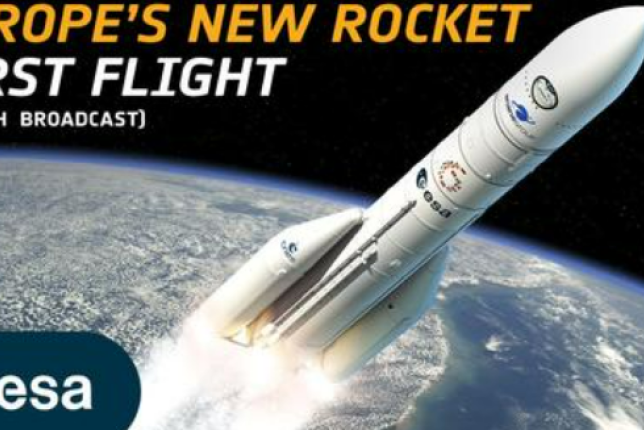
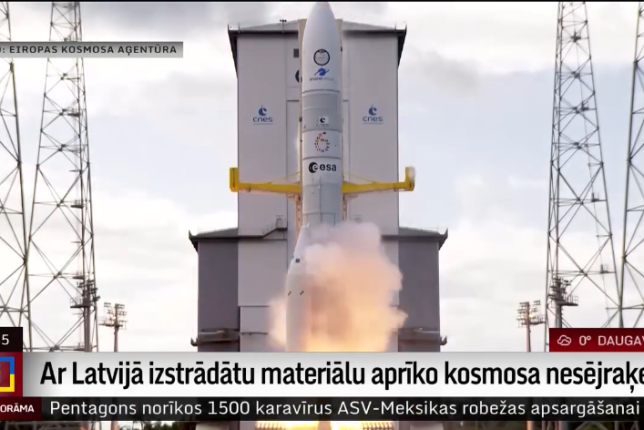
In the summer of 2024, the Institute’s cryogenic insulation material was used for the first time in the maiden flight of the European next-generation launch vehicle “Ariane-6” – marking LSIWC’s return to space research after several decades.
This material withstands extreme conditions down to –253 °C and high mechanical stress, ensuring the safe storage of liquid hydrogen and oxygen during flight. The innovation was developed in collaboration with ArianeGroup GmbH, the European Space Agency (ESA, ESTEC), and MT Aerospace, covering the full technology development cycle from TRL3 to TRL9.
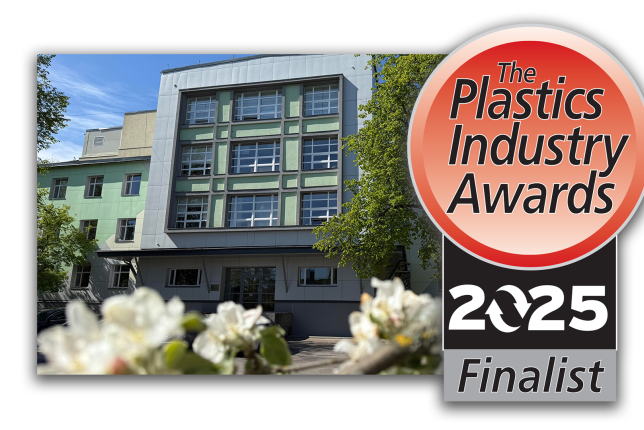
For this achievement, LSIWC Scientific Director Dr. Uģis Cābulis and his team have been shortlisted for the “Plastics Industry Awards 2025” in the category Polyurethane Innovation.
This prestigious international recognition highlights the Institute’s scientific competence and global impact in materials research and innovation.
Looking to the Future
The work of LSIWC scientists continues to thrive in new forms – in international innovation, education, and public scientific engagement.
The Institute has been invited to collaborate with the Space Exploration Centre in Cēsis, to include information about Latvia’s achievements in space materials science and to jointly develop educational content for young learners.
The mission of the Space Exploration Centre is to spark children’s and young people’s interest in science, engineering, technology, and mathematics (STEM) by explaining their importance and revealing them through the lens of space.

Credit: The Space Exploration Center