Final Conference of the State Research Programme “GreenAgroRes” and “Forest4LV”: Collaboration Between Science, Policy and Industry
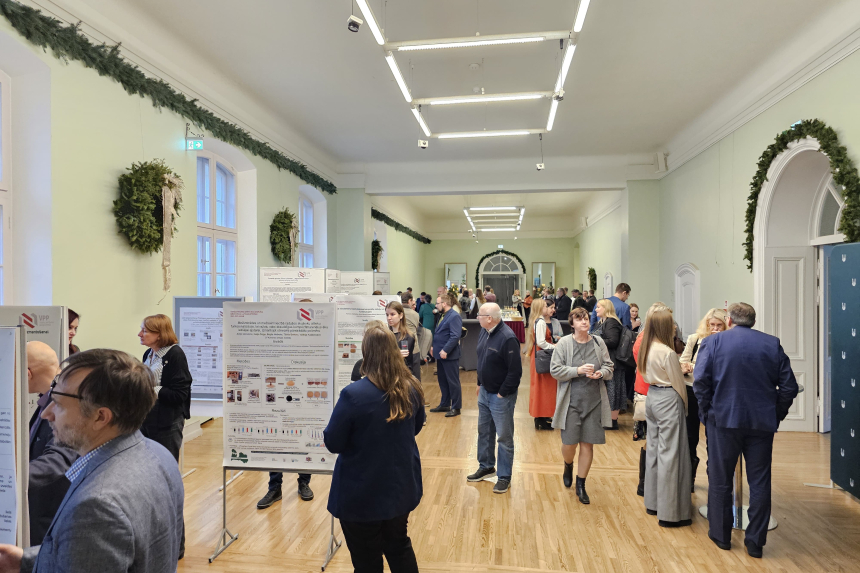
On 10 December 2025, the final conference of the State Research Programme “GreenAgroRes” and “Forest4LV” took place in Jelgava, bringing together researchers from the agriculture, food production and forestry sectors, policymakers, industry representatives and the wider public. The aim of the event was to critically assess what had been achieved in a very short period – just 16 months – and to outline the next steps for the development of Latvia’s bioeconomy.
Conference Opening
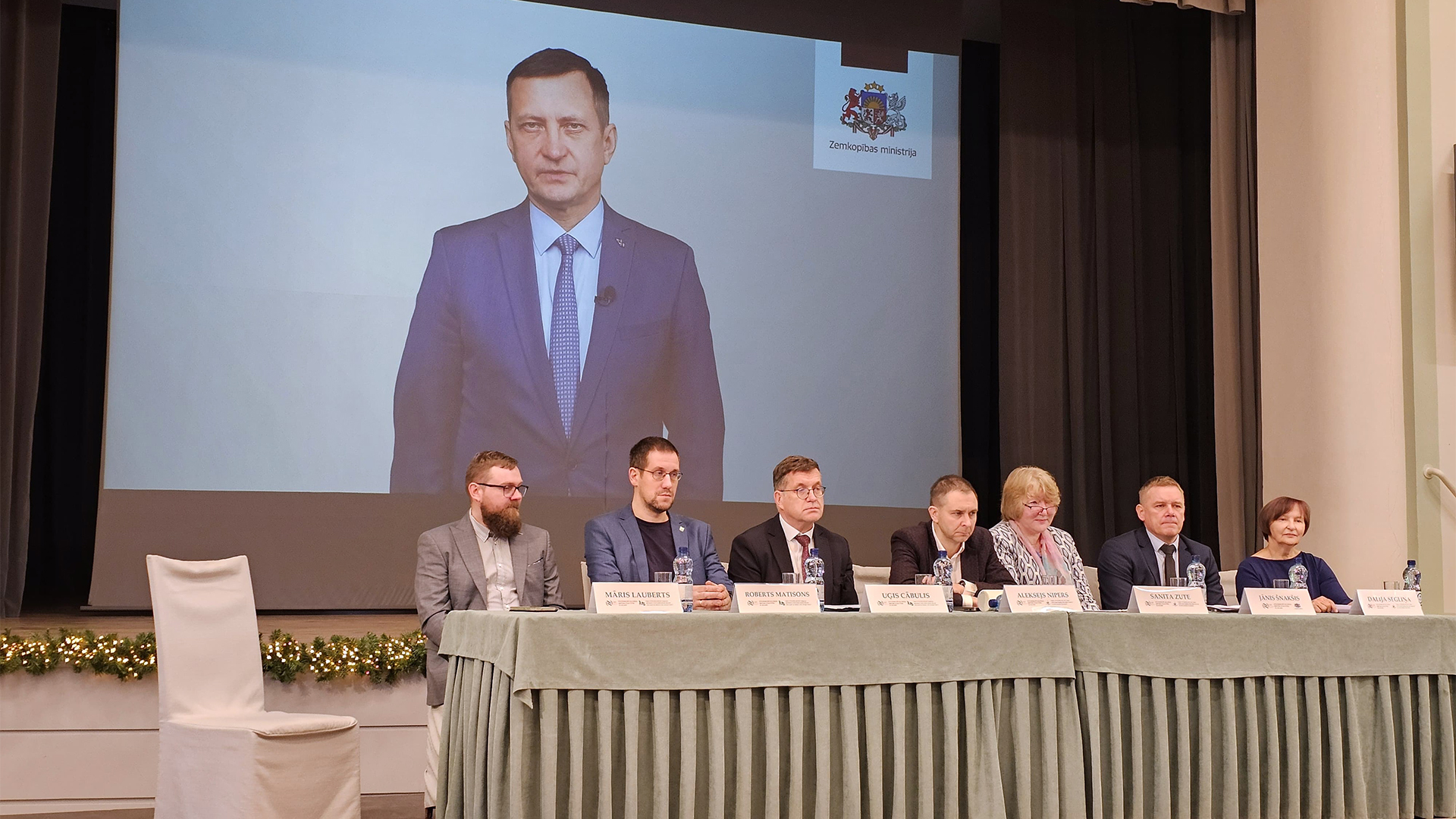
The conference was opened by a video address from Minister of Agriculture Armands Krauze, who highlighted the importance of the programme in strengthening long-term, responsible management practices and in fostering synergy between science, industry and public administration. He drew attention to significant achievements in agricultural and forestry research, including technological innovations, advances in food safety, and new forest management solutions, as well as the active involvement of the next generation of researchers. The Minister stressed:
This programme is our joint response to the question of how to use Latvia’s natural resources wisely and sustainably, while strengthening the country’s competitiveness and improving people’s well-being.
A keynote address was also delivered by Elita Zondaka, Director of the International Cooperation Programmes Project Department at the Latvian Council of Science, who placed particular emphasis on the contribution of the projects to the development of new technologies, more rational use of local resources, and the strengthening of scientific capacity. She noted the significant results already achieved: from prototypes and innovative materials to scientific publications, public outreach and the involvement of students and early-career researchers. Zondaka expressed optimism regarding the continuation of the programme:
“We can clearly see how substantial and significant the results of this programme are, and I am confident that their impact will be visible both in everyday life and in the wider national economy.”
Conference participants were also welcomed by Irina Arhipova, Rector of the Latvia University of Life Sciences and Technologies (LBTU), who underlined the university’s role in the growth of Latvia’s bioeconomy and the importance of interdisciplinary cooperation. Her remarks emphasised science’s capacity to deliver practical solutions and influence sustainable development processes.
Dr.sc.ing. Dalija Segliņa presented the main results of the “GreenAgroRes” project, highlighting improvements in agricultural technologies, food quality and safety, as well as key recommendations for policymakers and industry stakeholders. She stressed that the project’s solutions were developed through close cooperation between research institutions and industry, ensuring practical applicability.
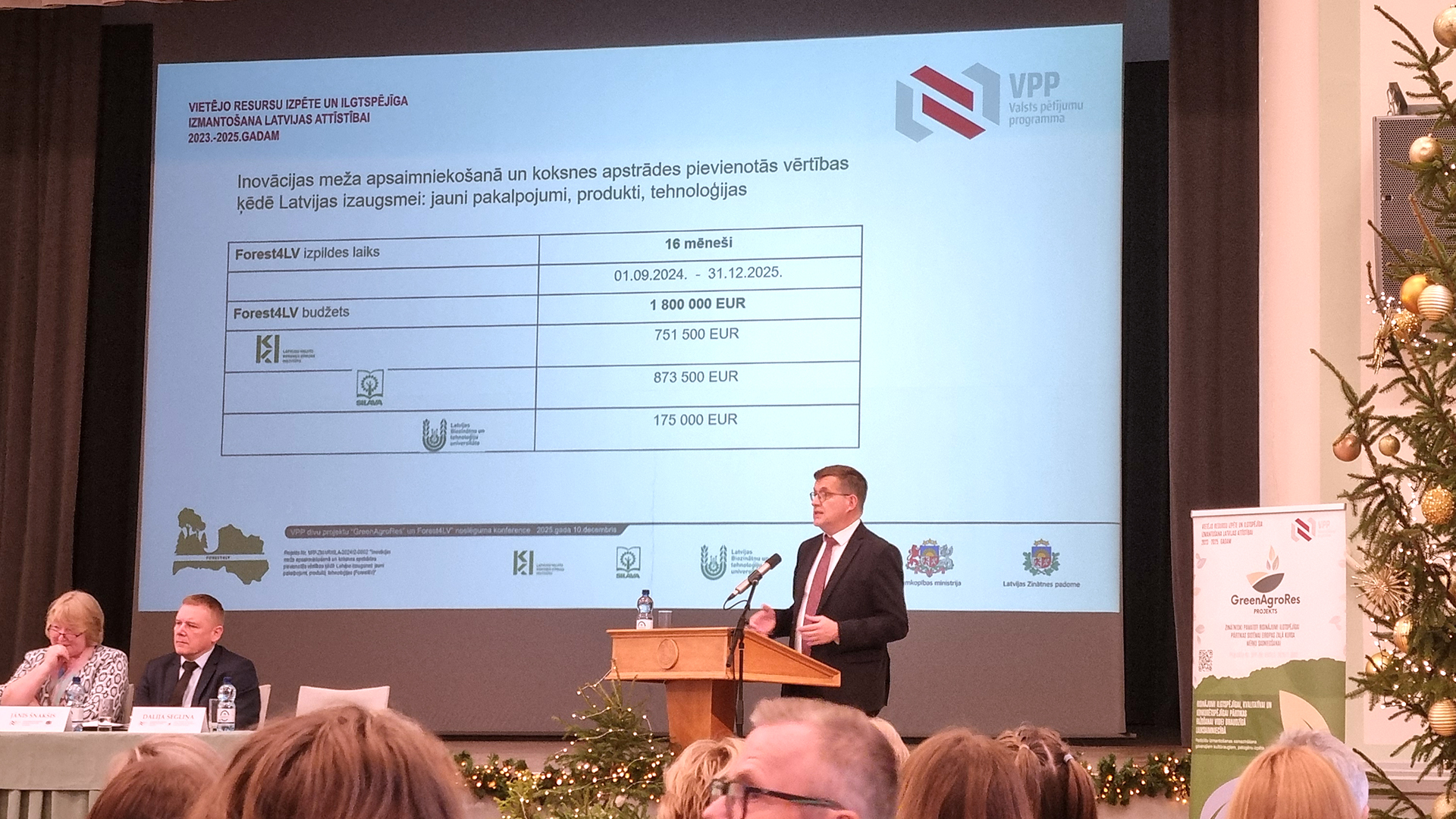
Forest4LV Results – Presentation by Dr. Uģis Cābulis
The results of the Forest4LV project were presented by the project leader – Dr.sc.ing. Uģis Cābulis, Scientific Director of the Latvian State Institute of Wood Chemistry and Head of the Polymer Laboratory. His presentation outlined the scientific achievements of the project, structured around three core areas:
- Forest ecosystem data and modelling
Detailed measurements of Latvia’s forest resources, climate impact models and analyses of wood biomaterials, all directly applicable to policy planning. - New products and technologies
Development of lignocellulosic composites, innovative binders and foam materials, and improved wood processing methods enabling higher added value and more efficient biomass utilisation. - Scenarios and policy development
Adaptation of forest management to climate change, integration of socio-economic factors and forward-looking scenarios for Latvia up to 2035.
U. Cābulis also outlined a SWOT profile of Latvian forestry, identifying strengths (extensive forest resources, long-standing expertise, institutional cooperation), weaknesses (shortage of human resources, limited industrial capacity), opportunities (EU bioeconomy policies, new clusters and partnerships) and threats (public polarisation, policy instability, increasing regulatory burden).
Linking Forest4LV to EU Policy Directions
Dr. Cābulis demonstrated how the project’s outputs align with major European policy frameworks. He highlighted the EU Bioeconomy Strategy, which opens opportunities for Latvia to build new value chains where wood becomes a feedstock for bioplastics, biocomposites, construction materials and other high-value products. He also emphasised the importance of the circular bioeconomy – the ability to utilise both primary biomass and secondary resources.
Referring to the EUFORE Strategic Research and Innovation Agenda (SRIA), Dr. Cābulis underlined four EU priorities crucial for Forest4LV:
- strengthening resilient forest landscapes and ecological research;
- implementing evidence-based, region-specific forest management;
- accelerating the shift to renewable, non-fossil materials;
- ensuring inclusive, transparent and science-based policymaking.
He noted that Forest4LV results – from genetically diverse planting stock to new bio-based materials – match these priorities with high precision.
Dr. Cābulis also discussed European Commission communications on competitiveness, investment scaling and sustainable biomass use, pointing out that Forest4LV technologies and resource-use scenarios align with the EU’s expectations for modernising forestry and wood-processing sectors.
In closing, Cābulis highlighted the multidimensional value of forests and the importance of strengthening public understanding of their role:
A forest is not just trees. It is a living resource that provides oxygen, habitat for wildlife and sustainable opportunities for the future. By caring for the forest and using its resources wisely, we care for all life.
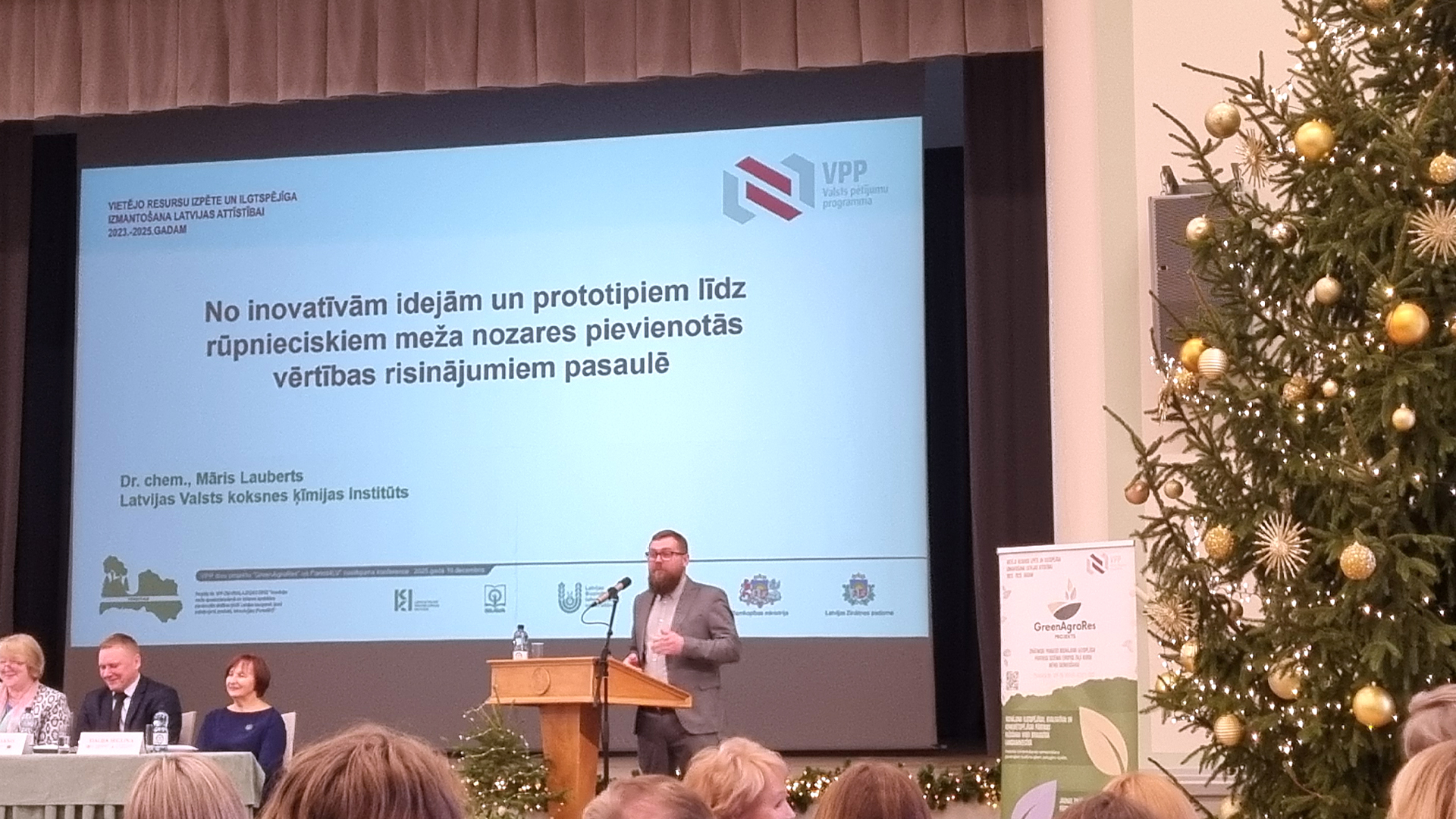
Dr. chem. Māris Lauberts presented solutions developed within the Forest4LV project aimed at increasing value added in the forest-based sector, demonstrating the pathway from fundamental research to practical prototypes. He highlighted the potential of locally available wood resources – particularly bark – for the development of new bio-based products, including skin-healing and antibacterial formulations. Presentations were also delivered by our partners from the Latvian State Forest Research Institute "Silava".