Chitosan coating improves the durability and moisture resistance of mycelium-based composites
Researchers at the Latvian State Institute of Wood Chemistry (LSIWC) have published a new scientific paper in the international journal Next Materials, investigating how chitosan coating can improve the performance of mycelium-based composites (MBCs).
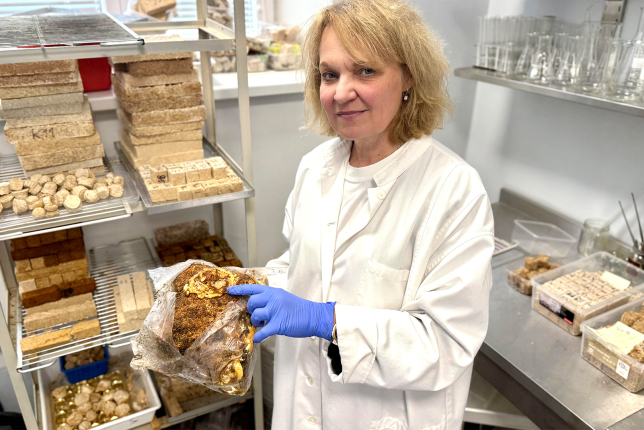
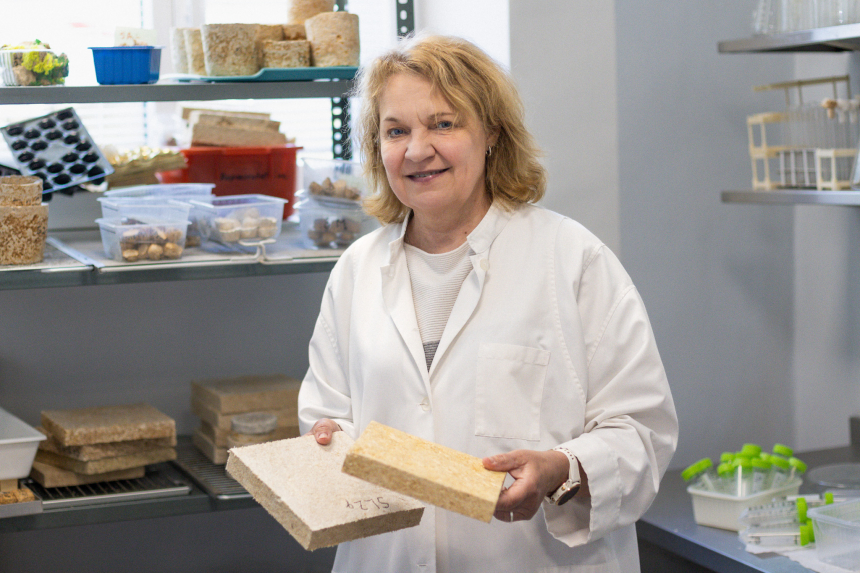
Mycelium-based composites are sustainable materials produced by growing fungal mycelium on lignocellulosic substrates derived from wood-processing and agricultural by-products. These materials are attracting increasing attention as potential alternatives to synthetic packaging, insulation and other conventional materials due to their renewable origin and biodegradability.
In the study, researchers developed mycelium-based composites from birch sanding dust and wheat straw using the living mycelium of Trametes versicolor. The key innovation of the research was the application of a chitosan coating to enhance the properties of these materials. Chitosan is a naturally derived biopolymer capable of forming a protective surface layer and improving resistance to moisture.
The results demonstrated that chitosan coating reduced water absorption by up to 30% in wheat straw-based composites while also improving flexural strength. The study further showed that substrate type significantly influenced the physicomechanical performance of the composites. Materials based on birch sanding dust exhibited superior mechanical properties compared with those produced from wheat straw.
The research provides new insights into improving the performance of mycelium-based composites while maintaining their biodegradability and reliance on renewable resources. The findings contribute to the development of sustainable materials that could help reduce the use of fossil-based resources in packaging, construction and other industrial applications.
The study was carried out by an interdisciplinary team of LSIWC researchers: Ilze Irbe, PhD; Mikus Kampuss, BSc; Martins Andzs, PhD; Inese Filipova, PhD; and Laura Andze, PhD. The researchers represent the Cellulose Laboratory and the Biorefinery Laboratory, where new bio-based materials and their applications for sustainable product development are being developed.
The full research article is available here: https://www.sciencedirect.com/science/article/pii/S2949822826007264